

Munir Virani / MBZ Raptor Fund
Trouble in the Baobabs: Sooty Falcon Research Yields Surprising Results
For the second consecutive year, a team of international researchers traveled to the Alley of the Baobabs in western Madagascar to study the Sooty Falcon, a Vulnerable species that breeds across the Middle East and North Africa before migrating to Madagascar each winter.
Known as Project Onyx, the project is a formal partnership between the Mohamed bin Zayed Raptor Conservation Fund (MBZRCF) and our Madagascar Program. After placing GPS transmitters on nine individuals during the inaugural field season in 2025, the team set out with hopes to at least match the prior year’s totals—but almost immediately, things stopped going according to plan.
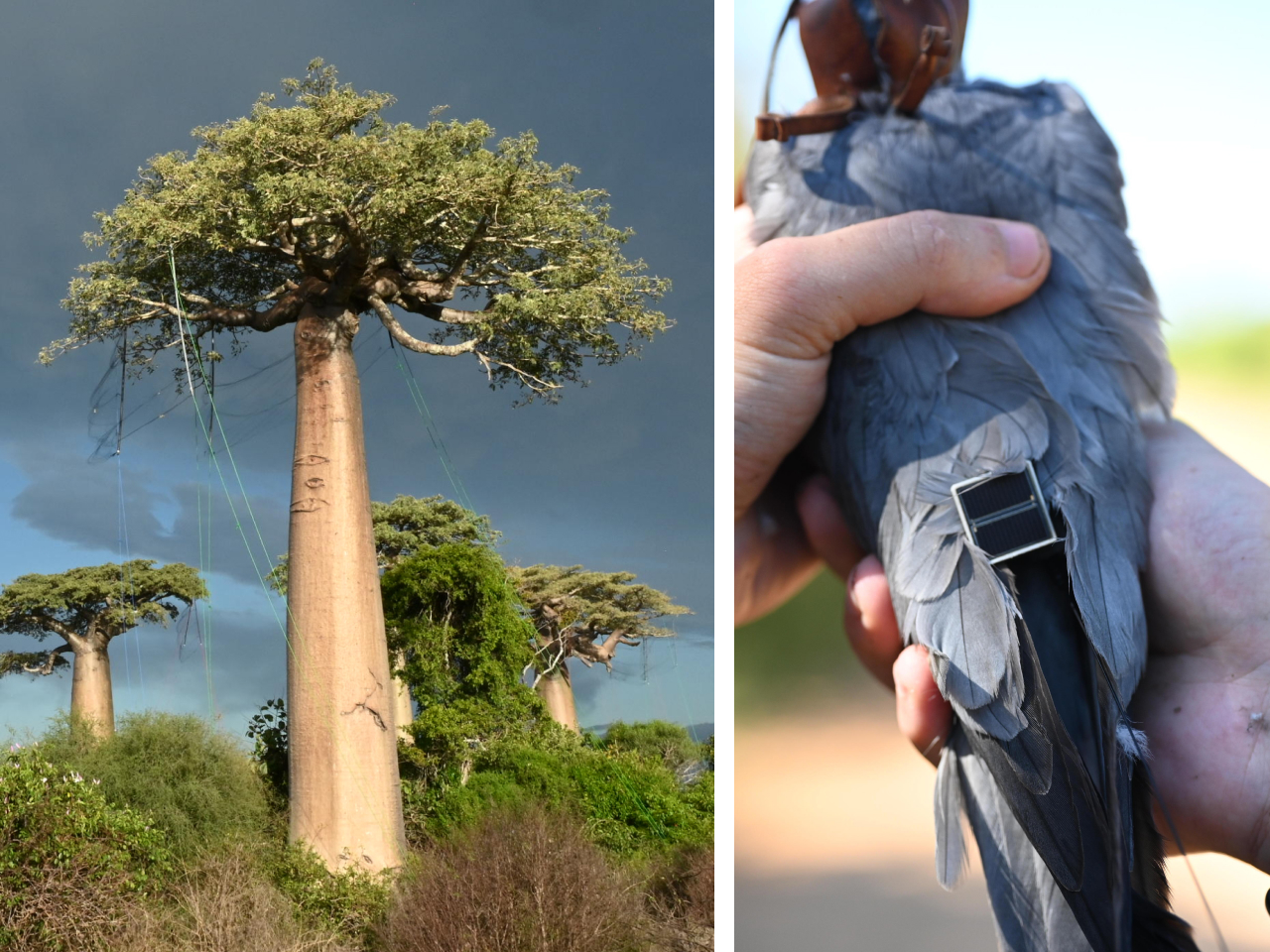
“The most striking observation was the dramatic reduction in the number of falcons present at the site,” reports MBZRCF Chief Operating Officer Dr. Munir Virani. Where approximately 120 individuals were estimated at the Alley of the Baobabs during the 2025 expedition, the 2026 count was roughly 40. But Munir notes that this drop is not necessarily reflective of a population-wide issue. The birds counted here last year could simply be elsewhere in 2026: either at other wintering locations, or perhaps having departed earlier for northern breeding grounds. “We went to the site almost two weeks later than we did in 2025,” he notes.
This was not the only setback. Falcons were captured by mist nets placed high between Madagascar’s iconic baobab trees… but very quickly, the birds seemed to catch on. “As fieldwork progressed, trapping became increasingly difficult,” reports our Madagascar Program Director Dr. Lily-Arison René de Roland. “The remaining birds appeared to grow more cautious and learn to avoid the mist net locations.” Ultimately, just five falcons were captured during the 2026 field season. GPS transmitters were fitted—three of the five were tagged with a new pelvic mount rather than a traditional backpack harness—and blood samples were taken for genetic testing that will lay the groundwork for a potential future reintroduction program in the UAE.
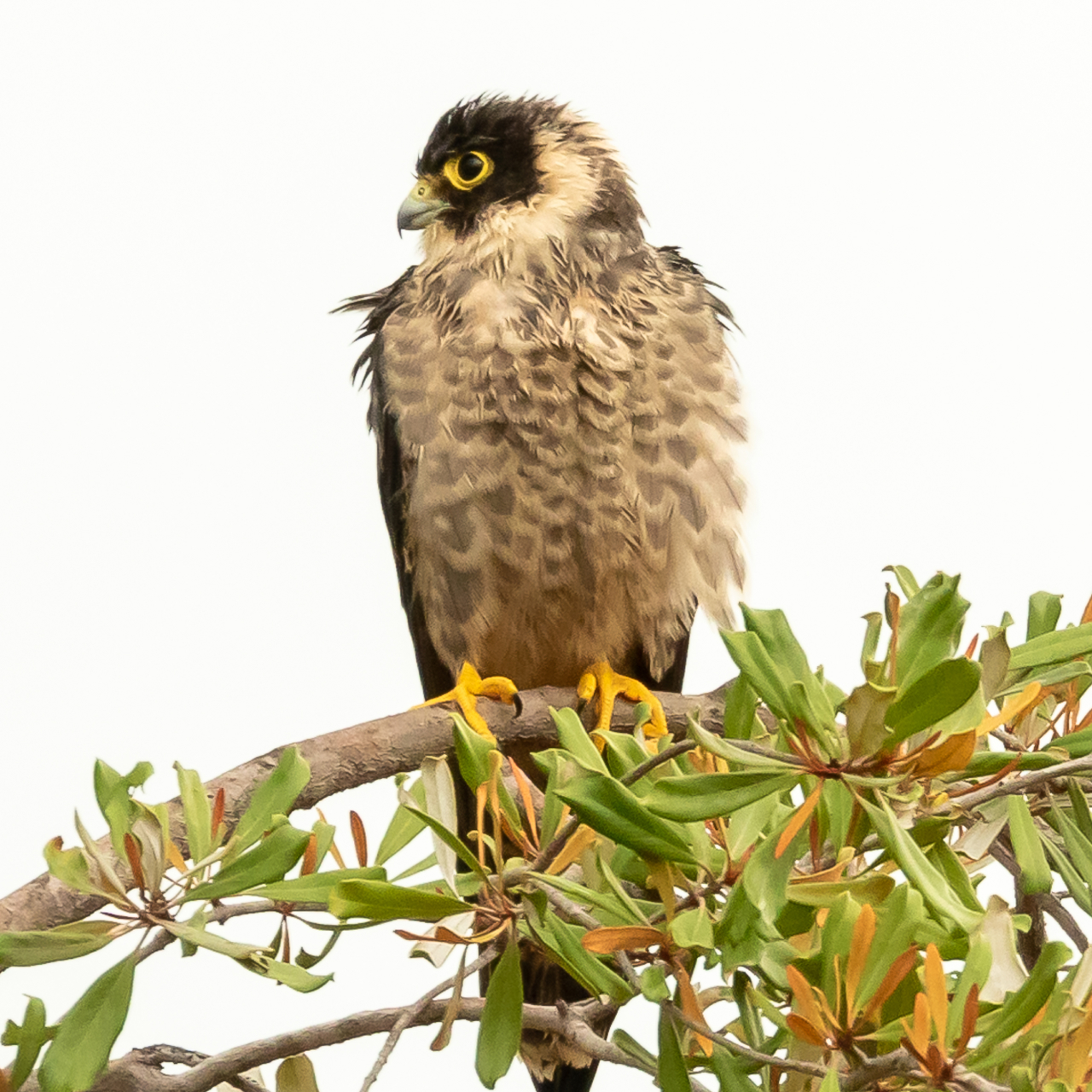
While the season may not have gone entirely as expected, it is a perfect example of the evidence-to-action pipeline that is a core facet of our Complete Conservation™ strategy. The results have generated valuable new information that will direct future research, and the lessons learned from these two seasons have put the program in a stronger position going forward. “It should also be acknowledged that the primary objective of the tagging program has been achieved,” notes Munir. “The satellite tracking data have identified breeding distributions, migration pathways, and key stopover areas, providing the geographic framework needed to inform the planned genetic study.”
A return expedition is planned for 2027: an expedition improved by the unexpected lessons learned in 2026.