
Photo by Collin Smith; licensed under CC BY-NC 4.0
Shedding Light on an Elusive Owl of the North
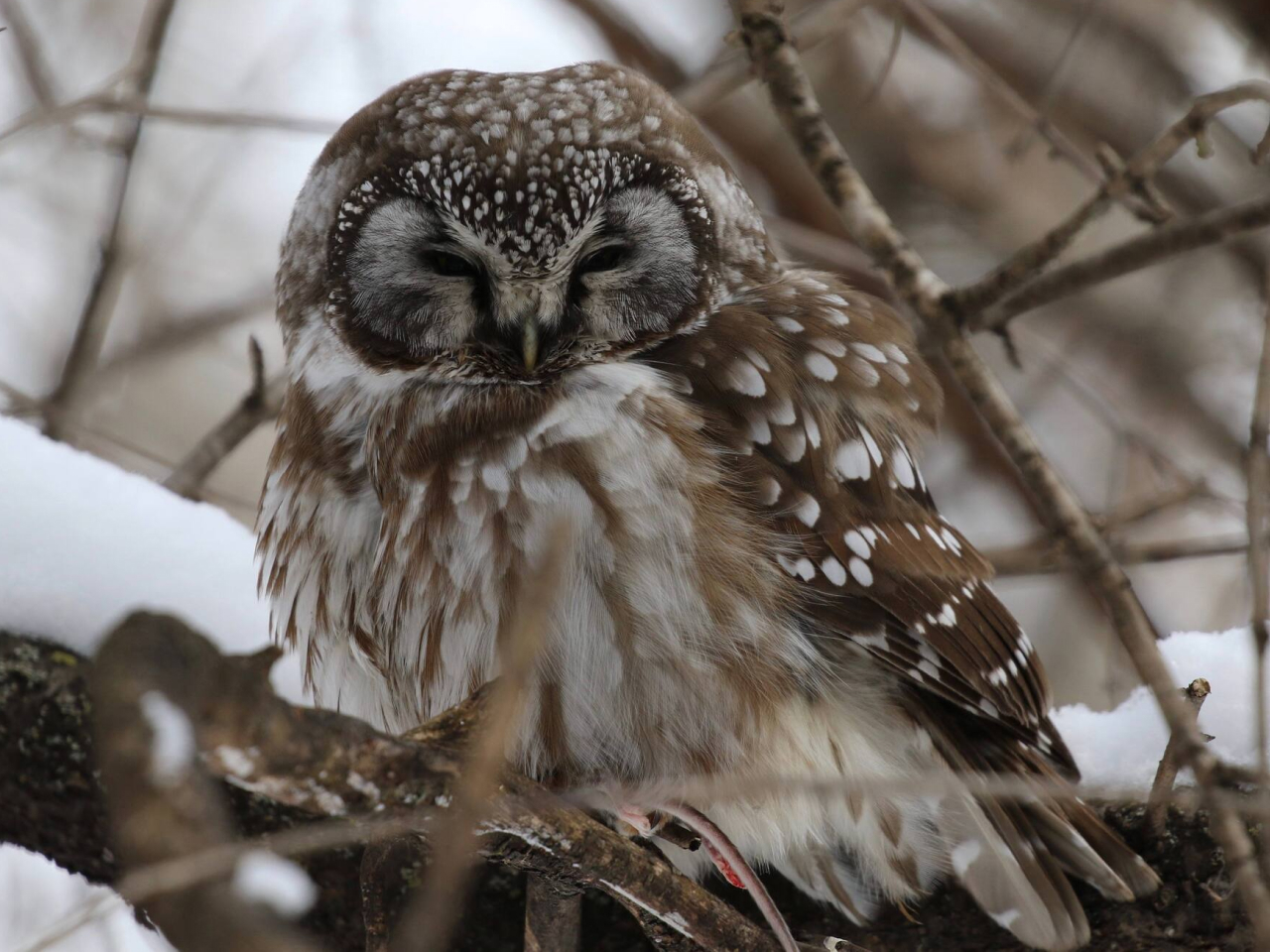
The mysterious Boreal Owl is primarily a denizen of the dense northern forests from which it takes its name. Its nocturnal habits and remote range (marked in red in map below) make it a particularly difficult species to find, let alone monitor. As a result, very few long-term datasets have been collected, making a precise determination of the species’ population trend difficult. Various indices suggest the Boreal Owl (like many other boreal species) is declining… but is this assessment accurate?
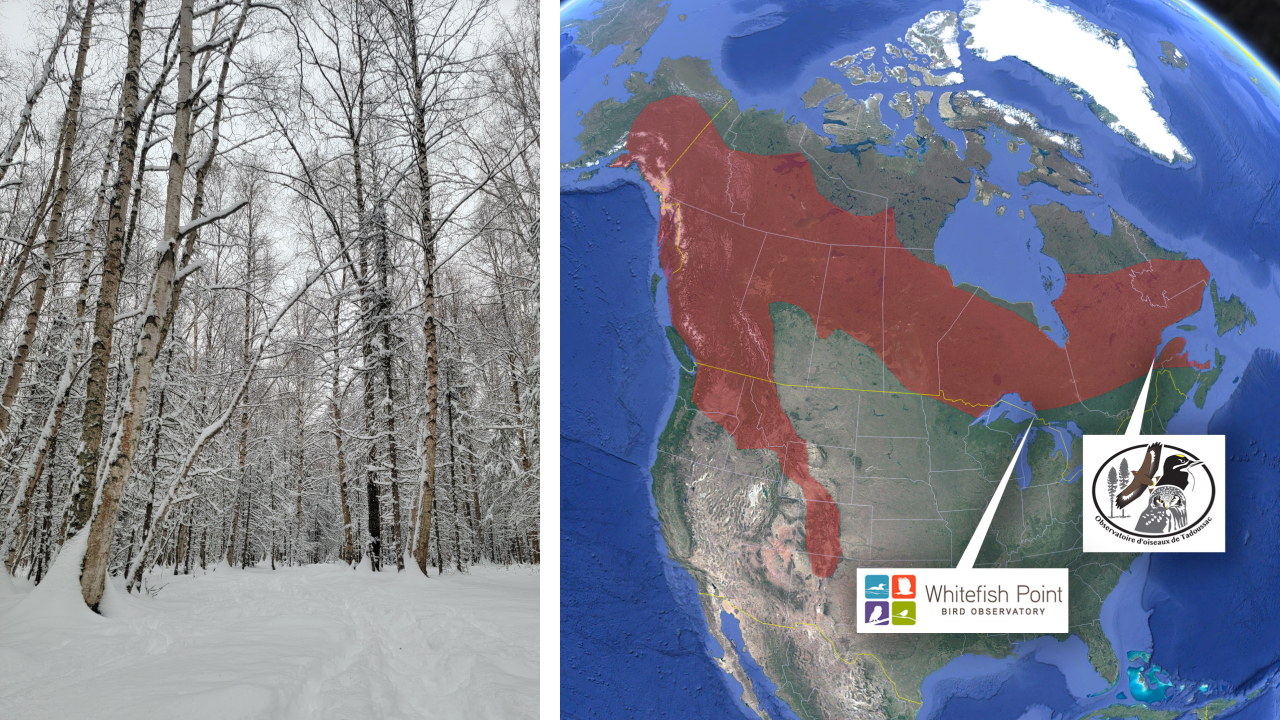
A new study published in the Wilson Journal of Ornithology, co-authored by The Peregrine Fund’s Dr. Brian Rolek and Dr. Chris McClure, seeks to answer this question. Combining community science data from eBird and autumn migration monitoring data from banding efforts at Québec’s Tadoussac Bird Observatory and northern Michigan’s Whitefish Point Bird Observatory (see map above), the authors examined several variables including relative abundance, proportion of juveniles, and body condition. The first of these provides clues to the size of the overall population, while the latter two can indicate breeding success and habitat conditions in the breeding territory, respectively.
Several interesting trends were revealed. First, abundance was strongly cyclical, with noteworthy peaks every four years—but these peaks have been getting lower over time, indicating a drop in the overall population. A decline in the average annual fat score was also observed over time, a sign of potential habitat deterioration in the boreal forest that is the species’ summer home. In a more positive finding, the proportion of juveniles did not decrease over the study period, indicating that reproductive success has remained stable.
The authors make several recommendations for further areas of study to understand these findings. Establishing nest box monitoring programs would provide crucial reproductive data, while genetic analysis would allow the study of these trends by sex and age. How environmental conditions drive these trends also needs further study, and this information could be used to develop comprehensive management plans to ensure the Boreal Owl and all residents of the boreal forest remain in these northern climes for many years to come.