
courtesy of Daniel Byers
The People of The Peregrine Fund: Loukman
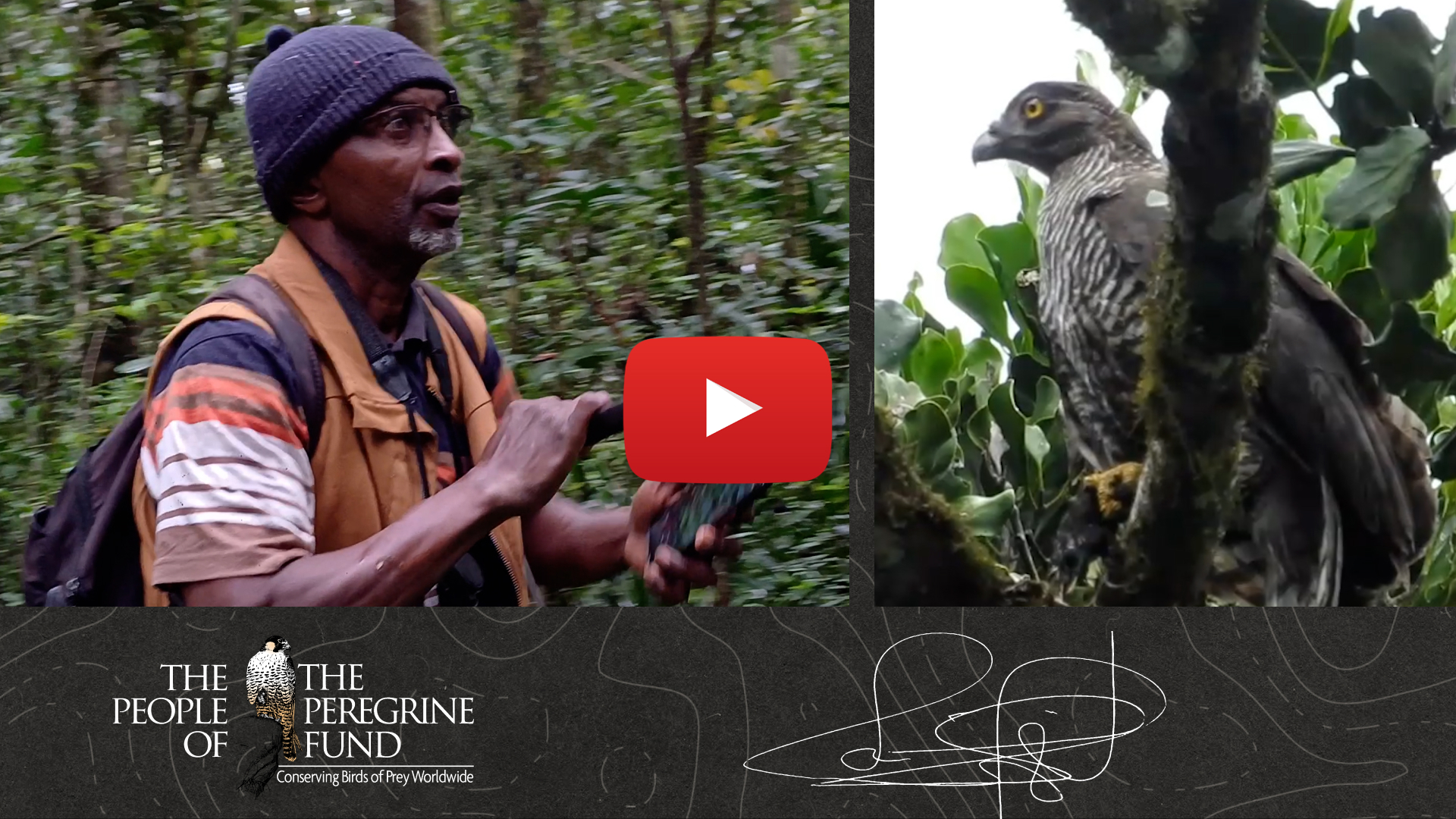
“I started my journey with The Peregrine Fund in 1993,” remembers Loukman Kalavah—better known to our team by just the mononym Loukman. In June of that year, a team of university students and Tsingy de Bemaraha National Park staff was studying common brown lemurs from a base camp at a TPF field site in the park in western Madagascar. Loukman, a native Malagasy and Bemaraha staff member, was working on the site in parallel to our team.
“I was doing all types of tasks, building shelves, collecting firewood, cooking, whatever and whenever I was asked to, both for the lemur team and the TPF team,” he explains. His dedication caught the eye of Richard Lewis, then The Peregrine Fund’s director, who was coincidentally in the field and at the site at the time. And so, a few days before the end of the mission, a job offer was made that would change the direction of Loukman’s life: a position as a technician with TPF.
“The TPF project had a very different mentality,” he recalls. At the time, conservation efforts in developing countries often relied on outside expertise from researchers in developed nations. Known as “parachute conservation,” this phenomenon creates a power imbalance and often fails to benefit or even acknowledge local communities. By contrast, our efforts in Madagascar rely on community-based conservation, addressing the needs of local communities and empowering them to manage their own natural resources, ensuring conservation is both effective and ethical. Revolutionary at the time, this conservation model is now being emulated all around the world. “The values matched mine,” says Loukman. “So I accepted the job.”
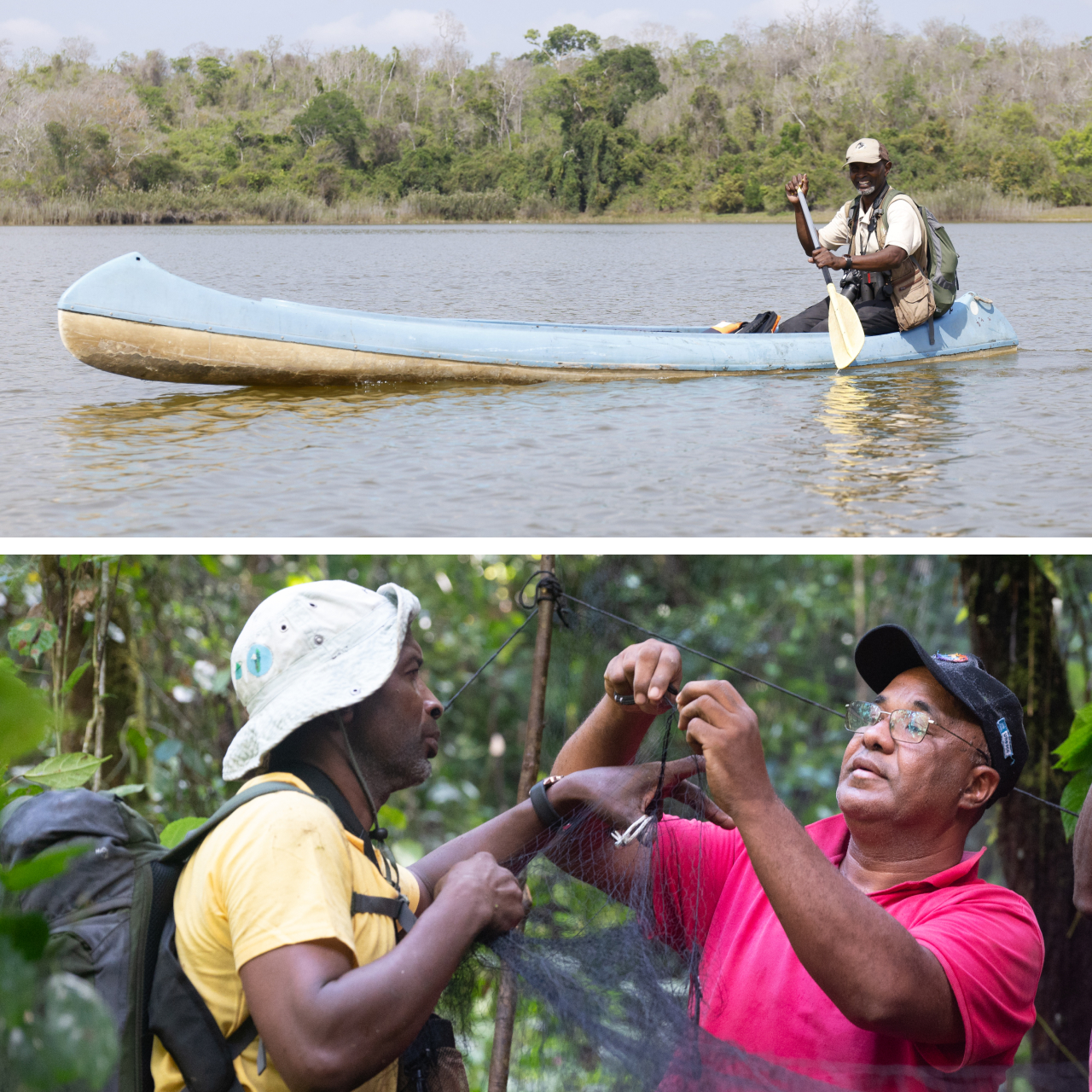
Within two days, he was out in the field… WAY out. “The first job I did for TPF was the Madagascar Fish-eagle counting tour,” describes Loukman. “We walked something like 300 km (180 miles) during this mission, as at that time, there were no bicycles or motorcycles available. We checked all possible Madagascar Fish-eagle nesting sites on foot. And we did the tour twice a year.”
Such an experience might have been enough to scare off even seasoned field biologists, but Loukman was unfazed. That was more than three decades ago, and he has been a pillar of our Madagascar team ever since. “I have known Loukman since 1993, and there’s one thing I have always noted,” says Dr. Lily-Arison René de Roland, our Madagascar Program Director. “He is never tired, and he is always thinking about his work.” (In the bottom photo above, Loukman is seen in the yellow shirt setting up a mist net with Dr. René de Roland.)
Today, Loukman serves as the Field Manager for our Bealanana site, and his current duties are a far cry from what he was doing when he was first introduced to The Peregrine Fund. “Trust in me has really evolved,” he notes. “The responsibilities I’m given are much larger. I handle financial matters. I must make sure everything is going well with all of our field agents. I help and oversee students who carry out their studies at our field sites.” Some of the students Loukman saw in his early years have gone on to become managers for our Madagascar team themselves, a powerful example of conservation leadership at work.
“This job brings me health,” says Loukman. “I really work with my soul and heart. I do not give half, but I really give it all when I work, whether it is rainy or dry season, far or close places, day or night, I still put in mind that I can do it.” Regardless of the hardships, it’s “not a big deal,” he adds. “I love the job. I love the forest. And I’m really committed.”