

Evan Buechley
New Research from Madagascar: Leucism in Birds and Cannibalism in the Madagascar Fish-eagle
In Madagascar, many of the species our team works with are understudied, difficult to reach, and in some cases barely documented at all. That means some of our most meaningful scientific contributions aren't sweeping analyses—they're careful, firsthand observations, published so the world knows something it didn't know before. Two new papers from our Madagascar Program are exactly that.
A Case of Leucism in the White-faced Whistling-duck in Madagascar
The first involves a duck with an unusual appearance. In the waterbody of Tsimbazaza Botanical and Zoological Park in Antananarivo, our team observed an adult White-faced Whistling-duck exhibiting a pigmentation anomaly known as leucism. Due to the condition, the bird showed striking white patches on its back, wings, and legs, standing out clearly among its normally colored companions.
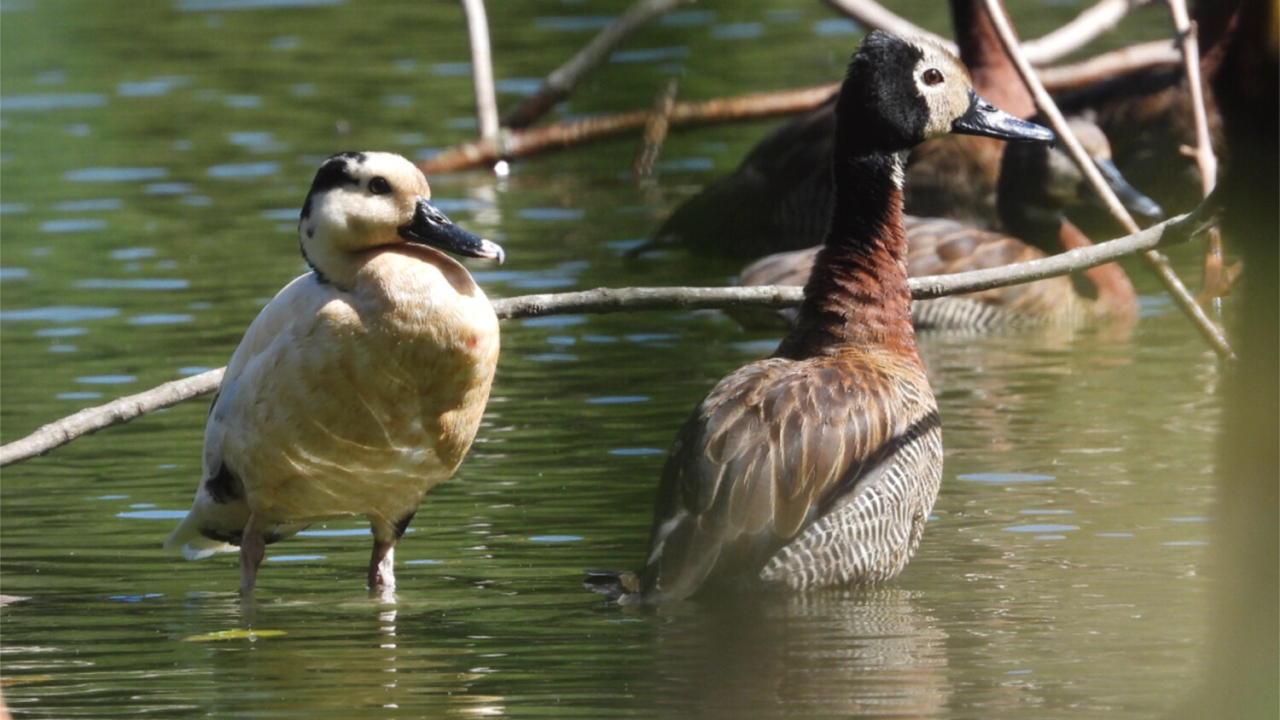
Leucism has been recorded in many bird species worldwide, but this marks the first peer-reviewed scientific documentation of the condition in this species in Madagascar. The duck appeared healthy and fully integrated with its group, a small but significant detail for understanding how such anomalies affect wild birds.
Camera Traps Reveal Cannibalism in the Critically Endangered Madagascar Fish-eagle
The second paper documents something far more dramatic. In the wetlands of the Tsimembo Manambolomaty Complex Protected Area in western Madagascar, our team placed camera traps at two nests of the Critically Endangered Madagascar Fish-eagle. For the first time on record, the cameras documented not just siblicide—the killing of one nestling by another, a known behavior in this species—but cannibalism. In both nests, the adult female consumed the deceased nestling and fed portions of it to the surviving young bird.
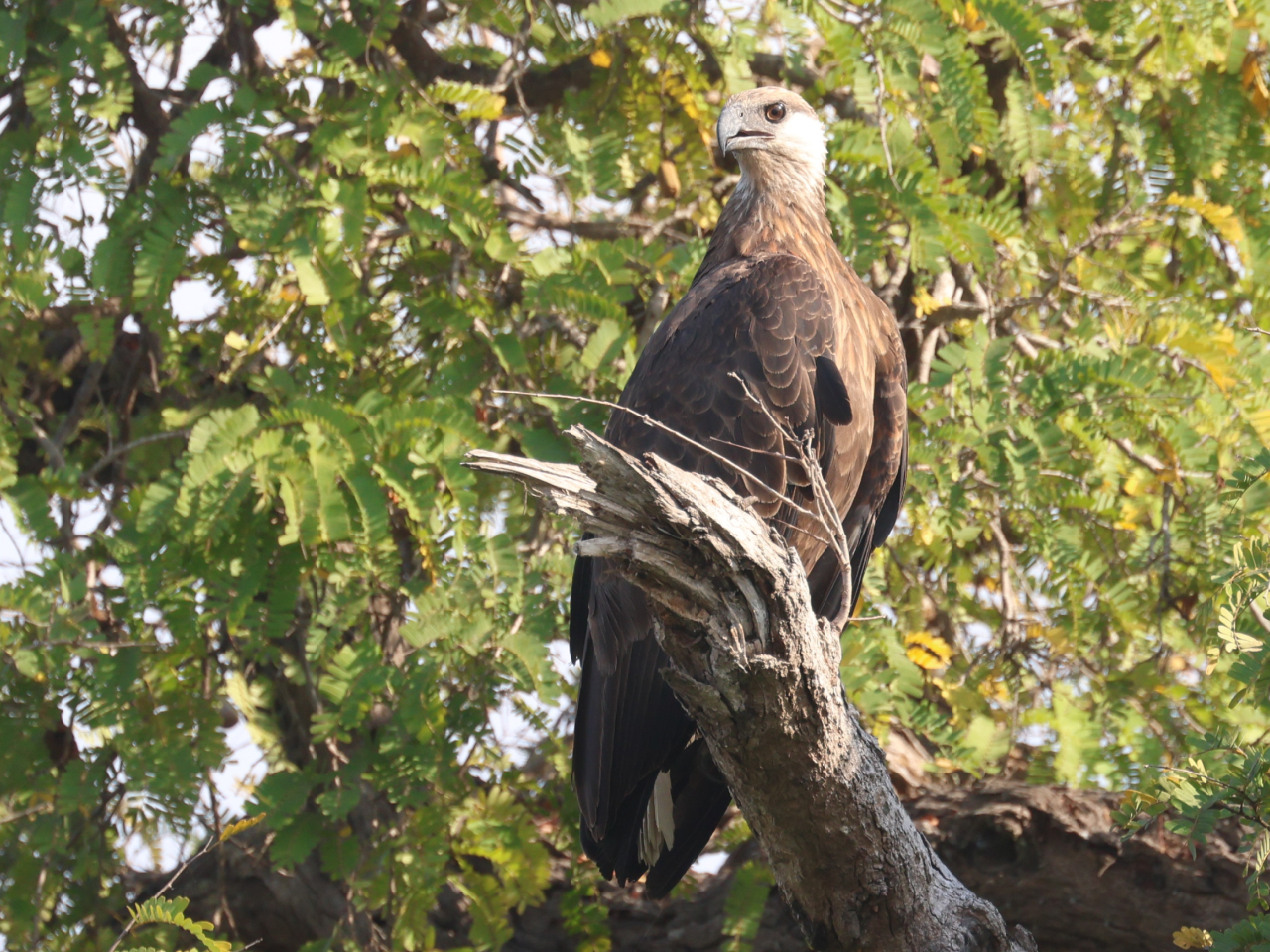
Cannibalism in raptors is rarely documented. Here, it was captured twice, independently, at two separate nests in the same season. For species as rare as the Madagascar Fish-eagle, every confirmed observation of behavior and biology is a building block for the conservation work that follows.