
Sara Remmes
Rebuilding Recovery: Inside Our Revived Aplomado Falcon Captive Breeding Program
A new generation of Aplomado Falcons has arrived in Boise. After years of laying the groundwork, The Peregrine Fund is relaunching a small-scale Aplomado Falcon captive breeding program in Boise, welcoming young falcons from the wild population in South Texas to help rebuild a species still recovering from Hurricane Harvey.
In 1993, after six years of captive breeding, TPF released the first Aplomado Falcons back into their historical range along the Texas Gulf Coast. By 2013, the population was thriving on its own, and we ended the captive breeding program. The population continued recovering until 2017, when Hurricane Harvey—the costliest natural disaster in Texas history at the time—wiped out 30 percent of the population overnight. Nearly a decade later, the wild population still hasn't fully recovered on its own, and without additional support, isn't likely to. Captive breeding is once again part of the answer, giving the population the boost it needs to recover.
This new chapter looks different from the program of the past. When we first began breeding Aplomado Falcons, the wild population was starting from zero, which called for large-scale captive breeding and releases. That isn't the case today. While the population is still recovering from Hurricane Harvey, it isn't starting from nothing, so a small number of breeding pairs and smaller, more targeted releases are what it needs to get back on track. A U.S. Fish and Wildlife Service Recovery Challenge Grant has made that work possible, giving our team the chance this year to bring young Aplomado Falcons from the wild population back to Boise and build the numbers and genetic diversity this new program needs.
From the Wild to Boise
Bringing those birds to Boise took three separate trips spread out over several weeks. Nestlings can be transported most easily and safely at around twenty to twenty-six days old, and since not every nest reached that window at the same time, each new group required its own trip.
Propagation Manager Chelsea Haitz made the first run in late May, driving roughly 2,000 miles round trip to Albuquerque, New Mexico, the midpoint between Boise and the South Texas coast, to meet Vice President of Conservation for Domestic Programs Paul Juergens. She returned with three young Aplomado Falcons.
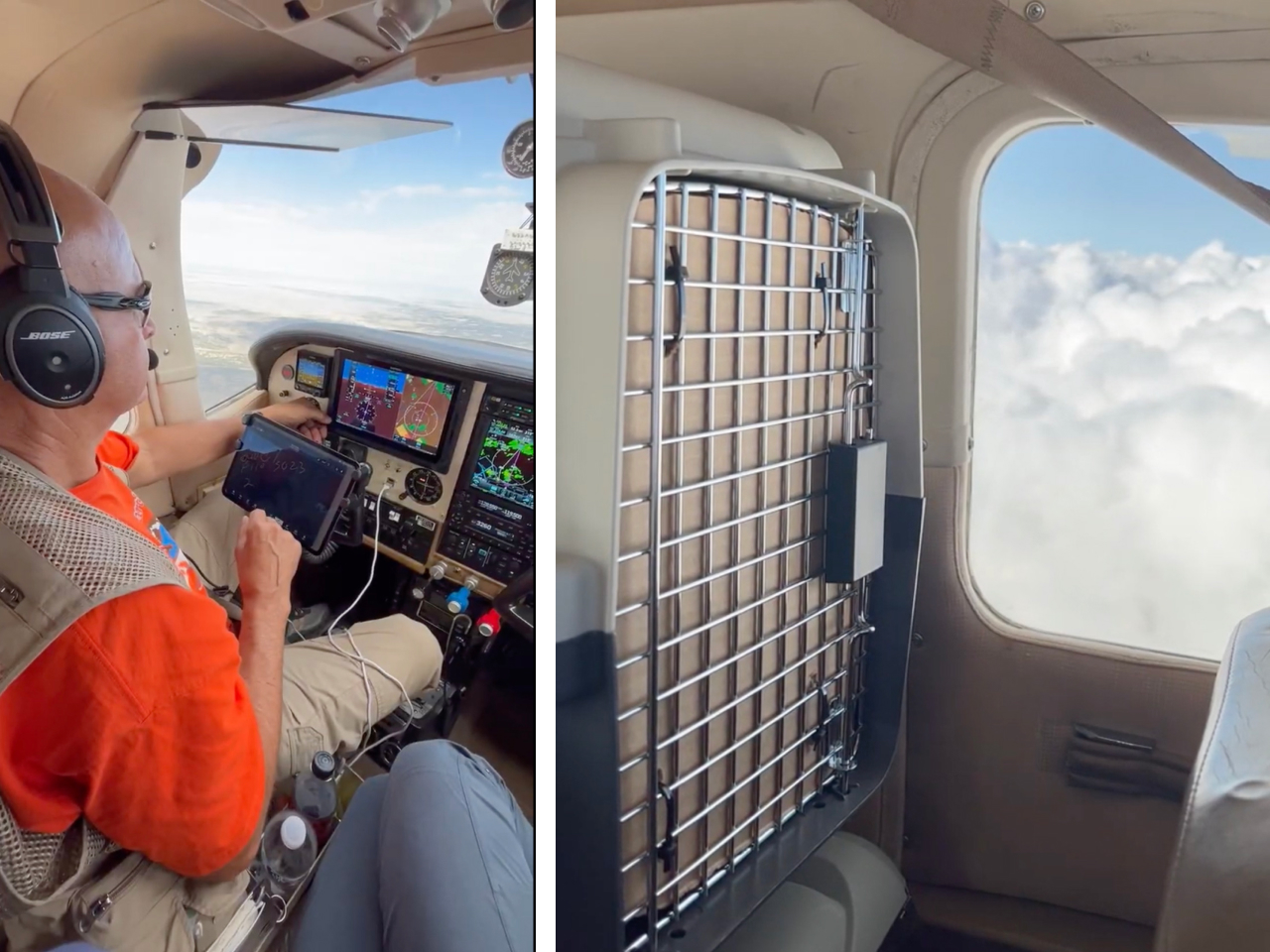
The second trip came with its own logistics. On June 8, Propagation Specialist Sara Remmes partnered with Don Reiman, a volunteer pilot who donated his time and plane, for a ten-hour flight to the Texas coast. After meeting the on-the-ground recovery team, Sara made the ten-hour flight back to Boise on June 9 with five Aplomado Falcon nestlings, plus one more passenger with a story of her own. A sixth bird, a second-year female Aplomado Falcon, had been struck by a car in July 2025 and treated by Last Chance Forever Bird of Prey Conservancy, but a lasting wing injury left her non-releasable. Rather than end her story there, she joined our captive breeding program, where she'll help recover her species.
A third trip rounded out the effort: on June 14, Propagation Specialist Kyle Domenick drove to Salt Lake City to collect one more young falcon from Field Biologist Zach Gorman, bringing this season's total to ten.
What Comes Next
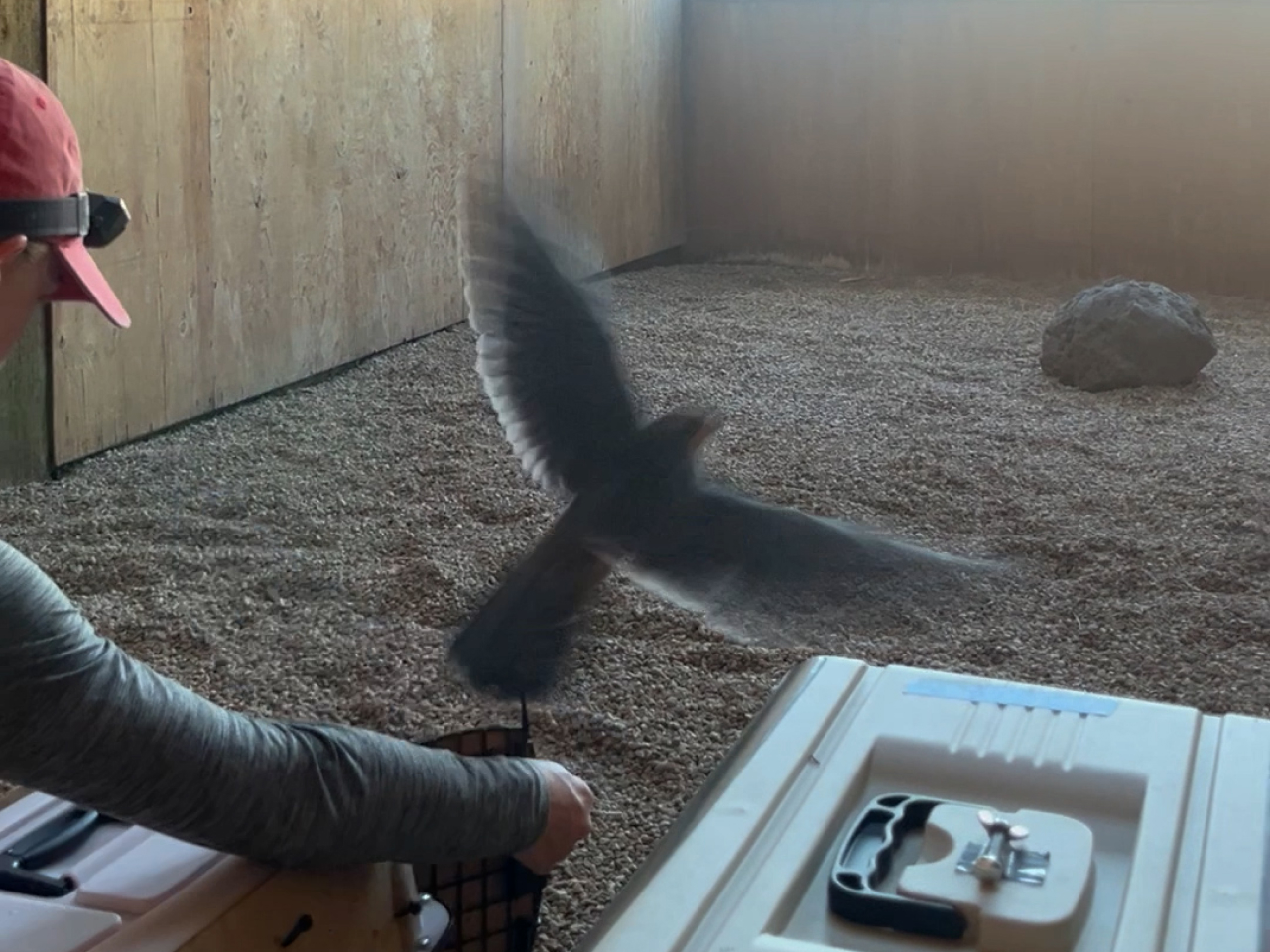
All of the newly arrived falcons spent a month in quarantine, standard procedure to protect our existing population, before moving into breeding pens. Within a couple of years, they should begin contributing to the program, and the young they produce will eventually be released along the Texas Gulf Coast to help the population recover from Hurricane Harvey.
Our goal hasn't changed since 1993: a wild, self-sustaining population of Aplomado Falcons that no longer needs our help. Extensive, ongoing prairie restoration work along the coast has opened up additional habitat for the falcons, and research is helping guide targeted releases to those sites. We reached self-sufficiency once, and with this new program underway, we're working to get there again, but with increased resilience against natural threats like hurricanes.