

Evan Buechley
New Book Helping Build Youth-Led Culture of Conservation in Panama
In several remote and biodiverse Indigenous territories in the district of Chepigana, Darién, Panama, a group of young Indigenous mentors is leading an environmental education initiative supported by The Peregrine Fund’s Panama Program, with field activities led by our close collaborator Fundación Rapaces y Bosques de Panamá (FRBP). These emerging leaders are part of a community-based training process that seeks to strengthen connections between people and ecosystems by integrating traditional knowledge, scientific research, and local experience.
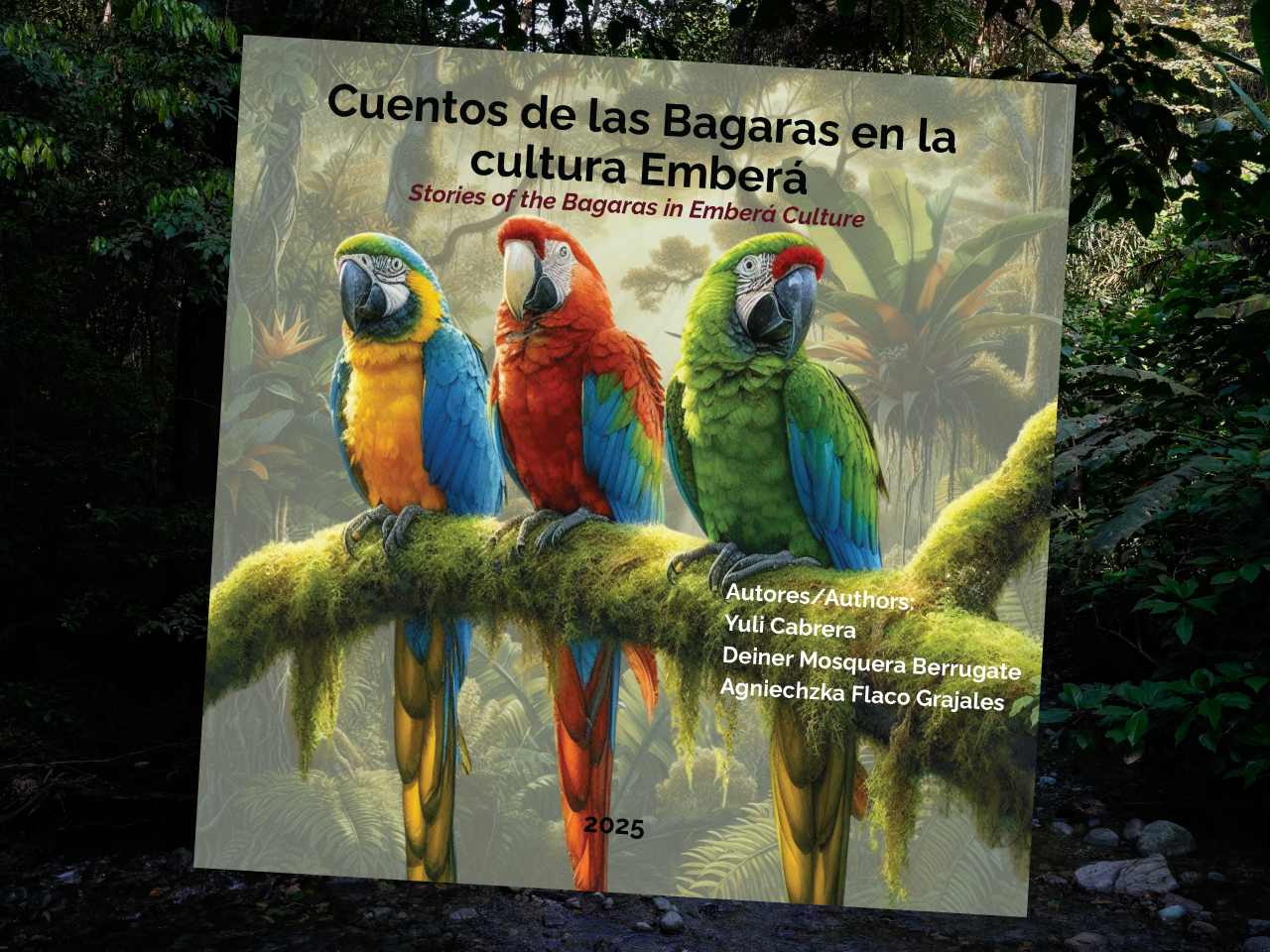
One of their newest educational tools is a new book Stories of the Bagaras in Emberá Culture (seen above), a collaboration between TPF, the FRBP, and the La Marea Biodiversa Organization (OBC). It brings together three tales created by children from the community of La Marea, Darién, where macaws and the Harpy Eagle become living symbols of the connection between culture and nature. These tales emerged from a participatory process in which grandparents shared their knowledge with their grandchildren, transforming oral tradition into narratives that convey identity, values, and a commitment to conservation.
“Community mentors are using the book as part of education sessions conducted throughout the region in the Indigenous Emberá or Wounaan languages, depending on the community,” explains Program Manager José de Jesus Vargas Gonzalez. “This ensures that conservation messages are culturally relevant and easily understood.” The book itself comes in two bilingual editions (Spanish–Emberá and Spanish–English).
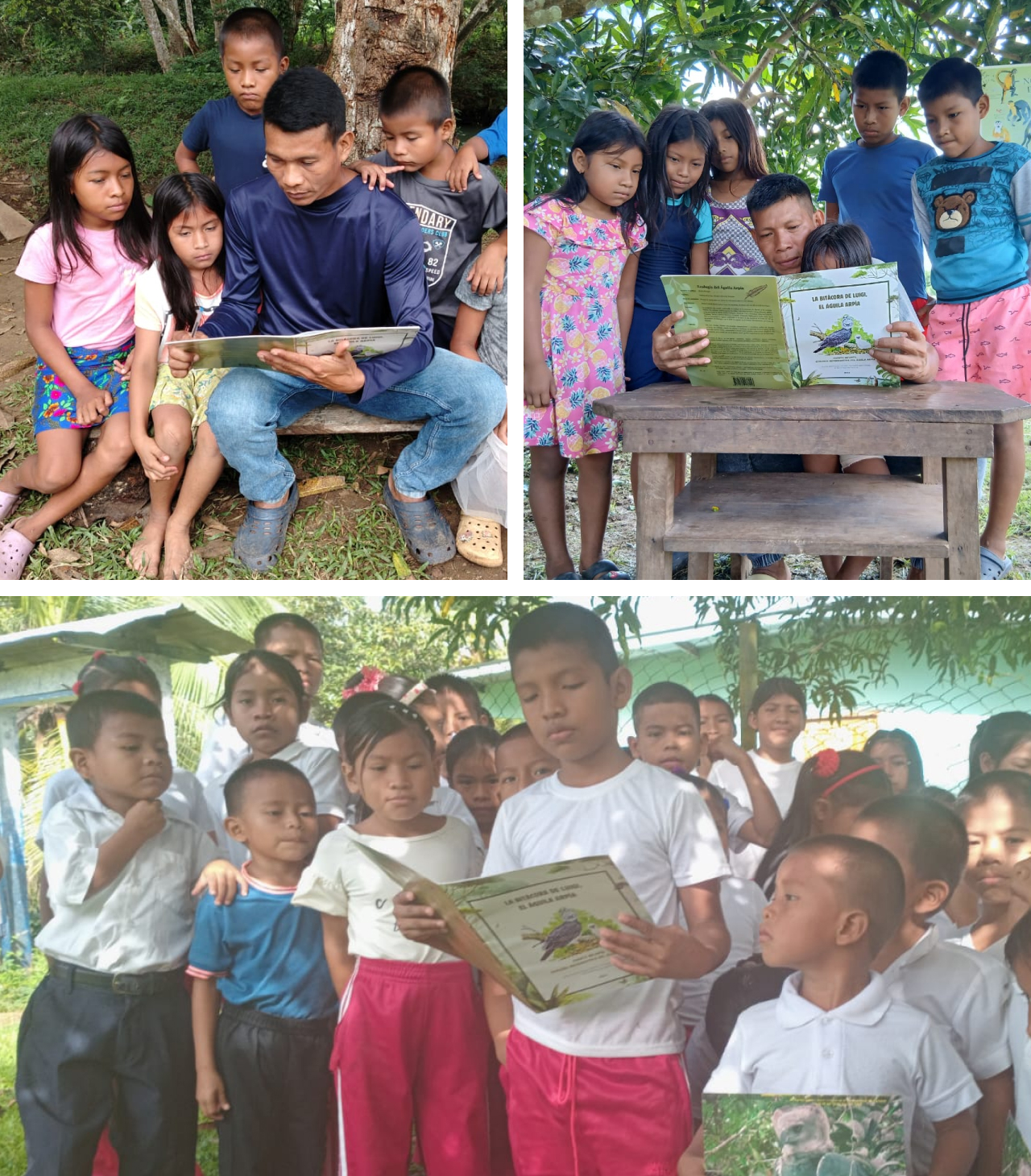
Education sessions are typically conducted outdoors, where the natural environment becomes an integral part of the learning experience. Children participate actively, identifying forest elements, asking questions, and connecting what they learn with their own experiences, such as family walks, stories shared by elders, or encounters with wildlife. “This setting makes scientific concepts easier to understand, as they relate directly to the environment familiar to the children,” explains José. “The children learn how the behavior of the Harpy Eagle aligns with what they observe in their own lives.” (Scenes from three such education sessions are seen above.)
In this way, a culture of conservation is strengthened from early childhood, driven by youth leadership, and built through direct experience with nature. “Children not only learn about the Harpy Eagle, but also understand their own role in protecting the forest and the biodiversity that surrounds them,” says José. “This integration of science, language, and local identity makes the conservation message accessible, meaningful, and relevant.”