

Arpit_nature; licensed under CC BY-NC 4.0
A Wolf Among Wild Dogs: A Rare Sighting in Central India
In the forests of central India, researchers set out to survey owls. What they found along the way stopped them in their tracks.
During field surveys for the Endangered Forest Owlet in Melghat Tiger Reserve, Maharashtra, a team from the Wildlife Research and Conservation Society (WRCS) India—supported by The Peregrine Fund—made an unexpected discovery: a lone male Indian wolf traveling and resting alongside a pack of dholes, a type of wild dog native to Asia. Published in the journal Canid Biology & Conservation, the sighting marks the first documented wolf–dhole interaction in Melghat Tiger Reserve and only the third such record in all of India.
This was no fleeting glimpse. Over two months, from late March to late May 2025, the team recorded three separate sightings of the wolf with the dhole pack—two adults and, by the second encounter, three pups. In each sighting, neither the wolf nor the dholes showed any signs of aggression or fear. During the third encounter, the group was found resting together before calmly moving off into the forest. Even the pups seemed completely at ease with the wolf nearby.
Both species face serious challenges. The dhole is globally Endangered and has lost nearly 60% of its range in India over the last century. The Indian wolf is classified as Vulnerable. So what brought these two together?
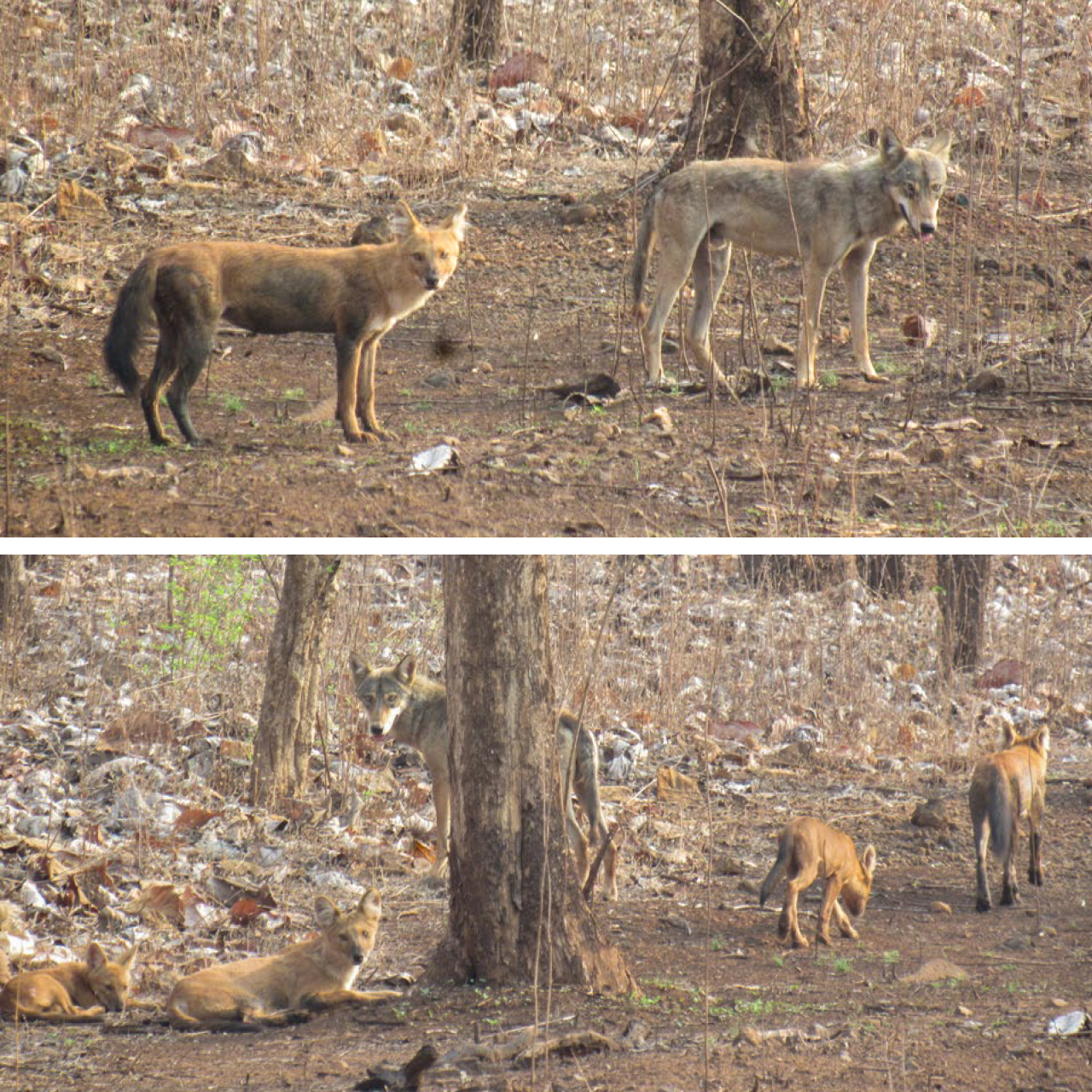
Researchers propose that this wolf may have been traveling alone and, without a pack of his own, sought out the company of another social canid. All three sightings took place near the edge of the reserve's core and buffer zones, where forest cover and prey availability shift, and where animals sometimes behave in unexpected ways.
Moments like this remind us how much there is still to learn, even in places that have been studied for years. Thanks to the dedication of field teams willing to spend long days in challenging conditions, discoveries like this one don't slip by unnoticed.