
Munir Virani
When Every Minute Counts: How Technology Is Saving Africa’s Vultures
Across Africa, vultures face a poisoning crisis that is pushing several species toward extinction. Whether intentional or incidental, poisoning events can kill hundreds of birds at once—and they are happening with alarming frequency. It is one of the most devastating threats these birds face, and the scale of it demands an urgent, coordinated response.
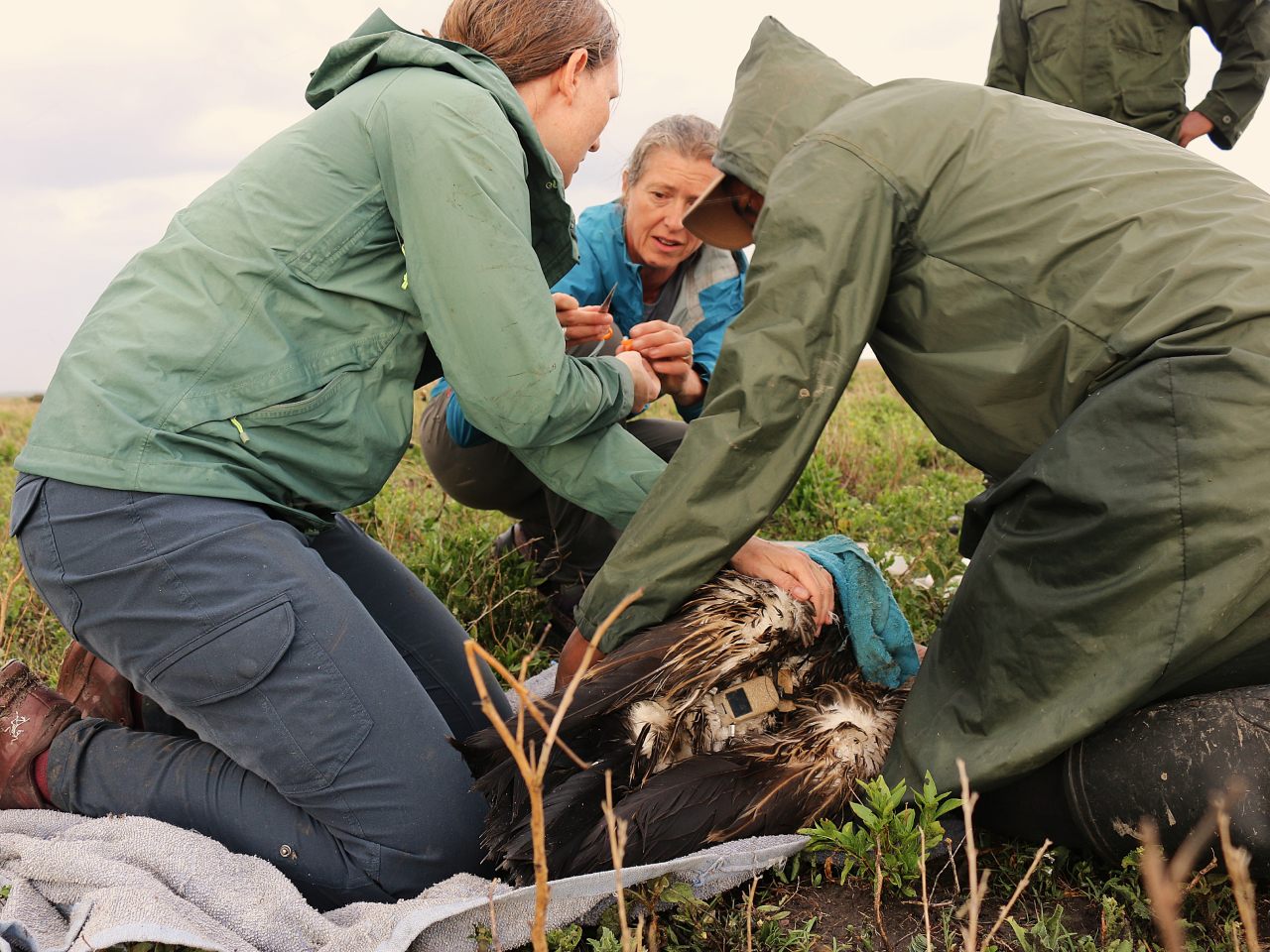
That response is exactly what The Peregrine Fund, the Endangered Wildlife Trust, and the North Carolina Zoo have been building. Together, they developed the Eye in the Sky program—a near-real-time mortality monitoring network that uses GPS tags attached to vultures to detect when something is wrong. When a tagged bird stops moving, an alert goes out. Teams on the ground are mobilized. And the race to reach the site begins.
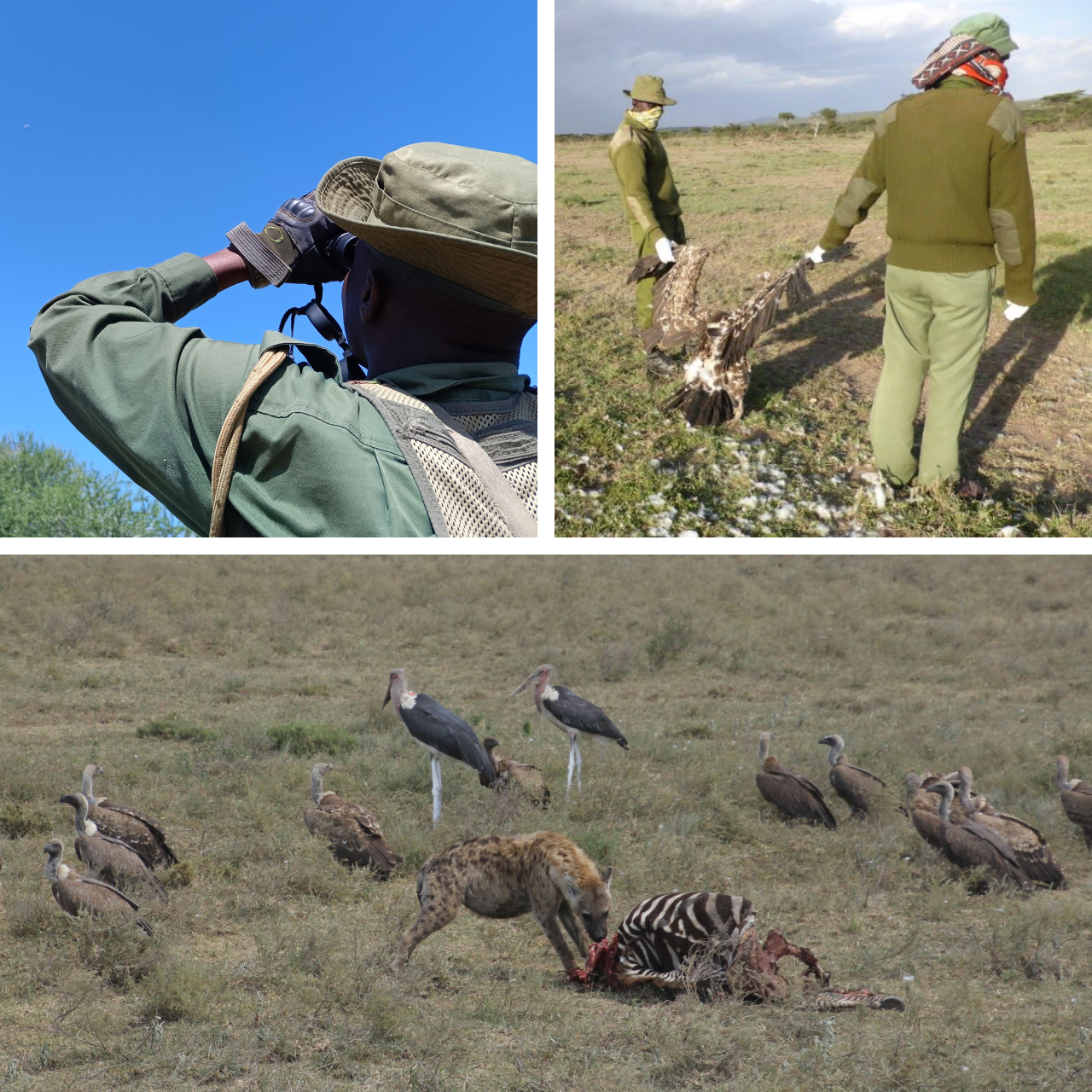
Speed is everything. Research shows that getting to a poisoning site within hours can mean the difference between a contained event and a mass mortality. The Eye in the Sky network now spans 15 countries, covers more than 400 tagged birds, and connects more than 30 partner organizations across roughly nine million square kilometers of southern and eastern Africa. Since mid-2023 alone, the program has detected 46 wildlife poisoning events and 30 poison baits—and by a conservative estimate, has helped save approximately 2,500 vultures.
The Peregrine Fund’s Southern Africa Program Director, Dr. Corinne Kendall, and Tanzania Program Manager Dr. Claire Bracebridge are among the co-authors of a new letter published in Conservation Letters that outlines how the program works, the challenges of operating at this scale, and what it will take for other programs to adopt similar approaches. Their message is clear: the technology exists, the partnerships are possible, and the results are real.