
Seth B.
What Snakes Can Teach Us About Lead in the Food Web
Lead poisoning is the leading known cause of death for California Condors, but it affects many other wildlife species as well. For condors and other scavengers, a common source is the remains of animals shot with lead ammunition. But that is not the only way lead enters an ecosystem. Lead can come from many other sources, including spent ammunition, past vehicle emissions, and mining. Once it is in the environment, it can stay in soil for hundreds of years and can pass from one animal to the next through the food web, where even small amounts can be toxic.
To fully understand the problem, scientists need to know how lead moves across the landscape and into animals that rarely make headlines. A new study led by The Peregrine Fund's Energy Scientist Dr. Vincent Slabe takes a closer look at one of those animals: snakes.
Published in the journal Ecotoxicology, the study was a collaboration with Conservation Science Global, the U.S. Geological Survey's Forest and Rangeland Ecosystem Science Center, the Idaho Army National Guard, Idaho Department of Fish and Game, and the U.S. Fish and Wildlife Service.
Filling a Knowledge Gap
Lead exposure is well documented in birds and mammals, but far less is known about its prevalence in reptiles, and only a few studies have focused on snakes.
The research took place in the Morley Nelson Snake River Birds of Prey National Conservation Area in southwestern Idaho. The area was established in 1980 for its nesting raptors. It is also popular for recreational shooting and includes a military training area where lead enters this landscape mostly through shooting activities.
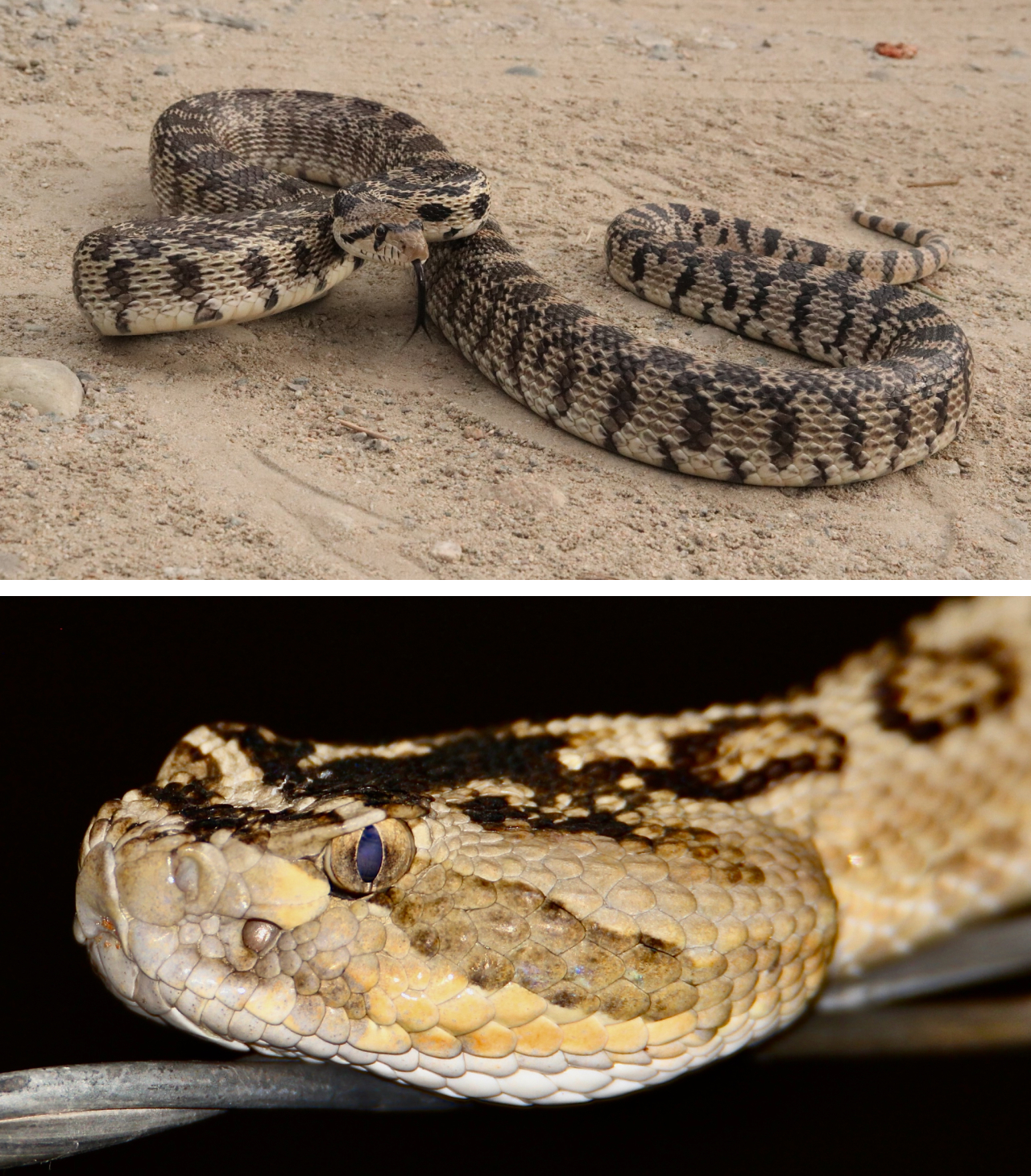
From 2018 to 2021, researchers collected 24 gophersnakes (top photo above) and 12 Great Basin rattlesnakes (bottom photo above) found dead along roads. Both are large, long-lived snakes that eat squirrels and other small mammals. The team measured lead in each snake's liver, which reflects recent exposure, and in its bones, which can store lead over a lifetime. They also tested soil where each snake was found.
What the Researchers Found
Every soil sample contained some lead, and lead turned up in the tissues of both snake species. Lead concentrations were generally higher in bone than in liver, suggesting that many snakes were exposed over time. One gophersnake stood out with very high lead concentrations.
The amount of lead in the soil where a snake was found generally did not predict how much lead was in the snake. Snakes can travel widely, so a roadside location may not reflect where a snake has spent most of its life or found its last meal.
The researchers suspect that snakes take in lead mainly through their food. Ground squirrels are important prey for both species, and a 2024 study led by Slabe found that ground squirrels in this same conservation area can build up lead in their bodies over time, simply by living in a landscape where lead is present. Their lead concentrations were highest in military target training areas and lowest in areas without shooting. Snakes may also take in lead by eating squirrels that were shot with lead ammunition, and the gophersnake with high lead levels may have done exactly that.
Why It Matters for Raptors
These findings matter for raptors, too. Red-tailed Hawks and other birds of prey eat snakes, so lead in snakes could become lead in raptors. This study gives scientists important baseline data for understanding how lead moves through ecosystems and which species may be at risk.