

Jane Naillon
Four California Condors Take Flight at Vermilion Cliffs, Marking 30 Years of Recovery
On December 12, 1996, six young California Condors took their first flights from the top of Vermilion Cliffs in northern Arizona. It was the first time condors had soared over the state in decades, and it marked the start of the Arizona–Utah population we still manage today. Nearly thirty years later, on September 26, 2026, four more young condors joined the wild flock from that same spot.
From Boise to the Cliffs
Condors 1365, 1341, 1382, and 1353 were hatched and raised at our Propagation Facility at the World Center for Birds of Prey in Boise, Idaho. Condor 1353 was raised in Barn 4, a breeding facility expanded through WECAT LLC's 15-year commitment to California Condor recovery. Like the other young condors in our breeding program, these four grew up alongside adult mentors who taught them survival skills that no human can teach. In early September, they traveled to Arizona to prepare for their release.
Release Day
On National Public Lands Day, The Peregrine Fund and the Bureau of Land Management welcomed the public to Vermilion Cliffs to celebrate the release. Hours before the doors opened, people began gathering at the viewing area below the cliffs. As the morning went on, the crowd grew to nearly 900 people, and the excitement grew with it. Eyes stayed fixed on the cliff top, everyone hoping for a first glimpse of the young condors. Before the doors opened, speakers from The Peregrine Fund and our partners reflected on three decades of condor recovery, honoring the progress made while reminding the crowd that the journey isn't over. About 50 more people joined our watch party in Boise, and the livestream drew 4,658 views. Thanks to a partnership with Merlin, the bird identification app from the Cornell Lab of Ornithology, news of the release reached about 90,000 app users across five western states.
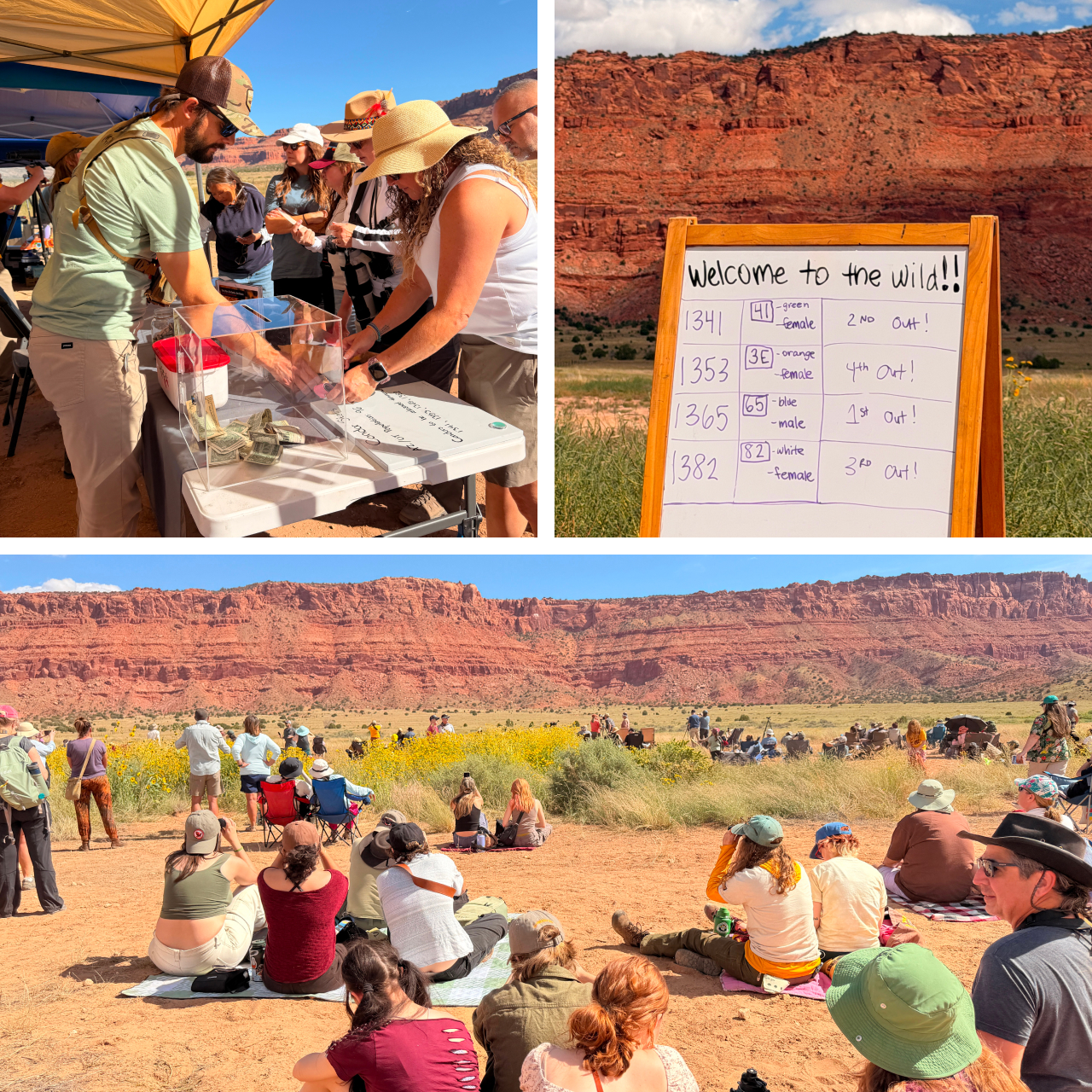
At 11 a.m. MST, the release pen doors opened, and the crowd held its breath. The wait lasted just under 20 minutes. Then Condor 1365 became the first to leave the pen and take flight. About 35 minutes after the doors opened, Condor 1341 followed. At the 45-minute mark, Condors 1382 and 1353 left the pen just seconds apart.
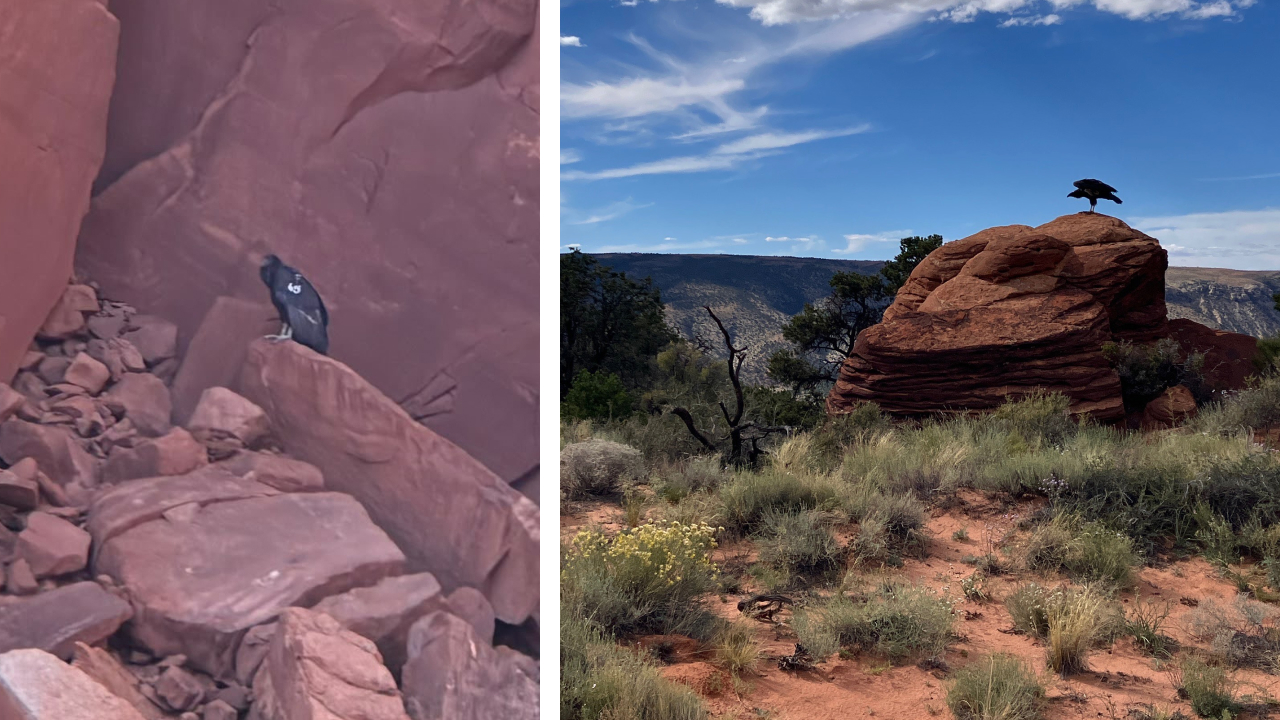
Their first days in the wild have brought encouraging signs. All four have shown strong, controlled flight above the cliff rim, and all have found and eaten from the carcass our team provides near the release site. This is exactly the kind of early progress our biologists hope to see. Our field team will keep a close watch on each bird as they settle into life in the wild.
Thirty Years of Progress
In the 1980s, only 22 California Condors remained on Earth. Today, nearly 100 condors fly free across Arizona and Utah. Worldwide, there are more than 600 California Condors, and over half of them live in the wild. But there is still work to do. Lead poisoning remains the leading cause of death for condors.
The 30th anniversary milestone belongs to many. The Arizona–Utah recovery effort is a cooperative program with partners that include the Bureau of Land Management, U.S. Fish and Wildlife Service, Arizona Game and Fish Department, Utah Division of Wildlife Resources, National Park Service, U.S. Forest Service, tribal partners, and supporters like you.
These four young condors now join a flock that began with just six birds 30 years ago. Their next chapter has begun. Thank you for being part of it.