

Julio Gallardo
Searching Forest Fragments for a Fabled Lost Owl
Deep in the fragmented forests of northeastern Brazil, a small team of scientists is searching for one of the world's most elusive birds—and refusing to give up hope.
After an initial fact-finding mission in September 2024, we launched a search in the fall of 2025 for the Pernambuco Pygmy-owl, a tiny raptor that hasn’t been reliably recorded in more than a quarter of a century. The species is considered Critically Endangered and Possibly Extinct by the International Union for Conservation of Nature… but for our International Programs Conservation Biologist Julio Gallardo and his team, that word “possibly” matters.
It wouldn’t be the first time one of our scientists has located a “lost” bird, with past successes including our Madagascar Program rediscovering the Madagascar Red Owl in 1994, the Madagascar Pochard in 2006, and most recently, the Dusky Tetraka in 2022. Julio and his team are hoping to replicate their success in a similarly biodiverse—and similarly imperiled—region.
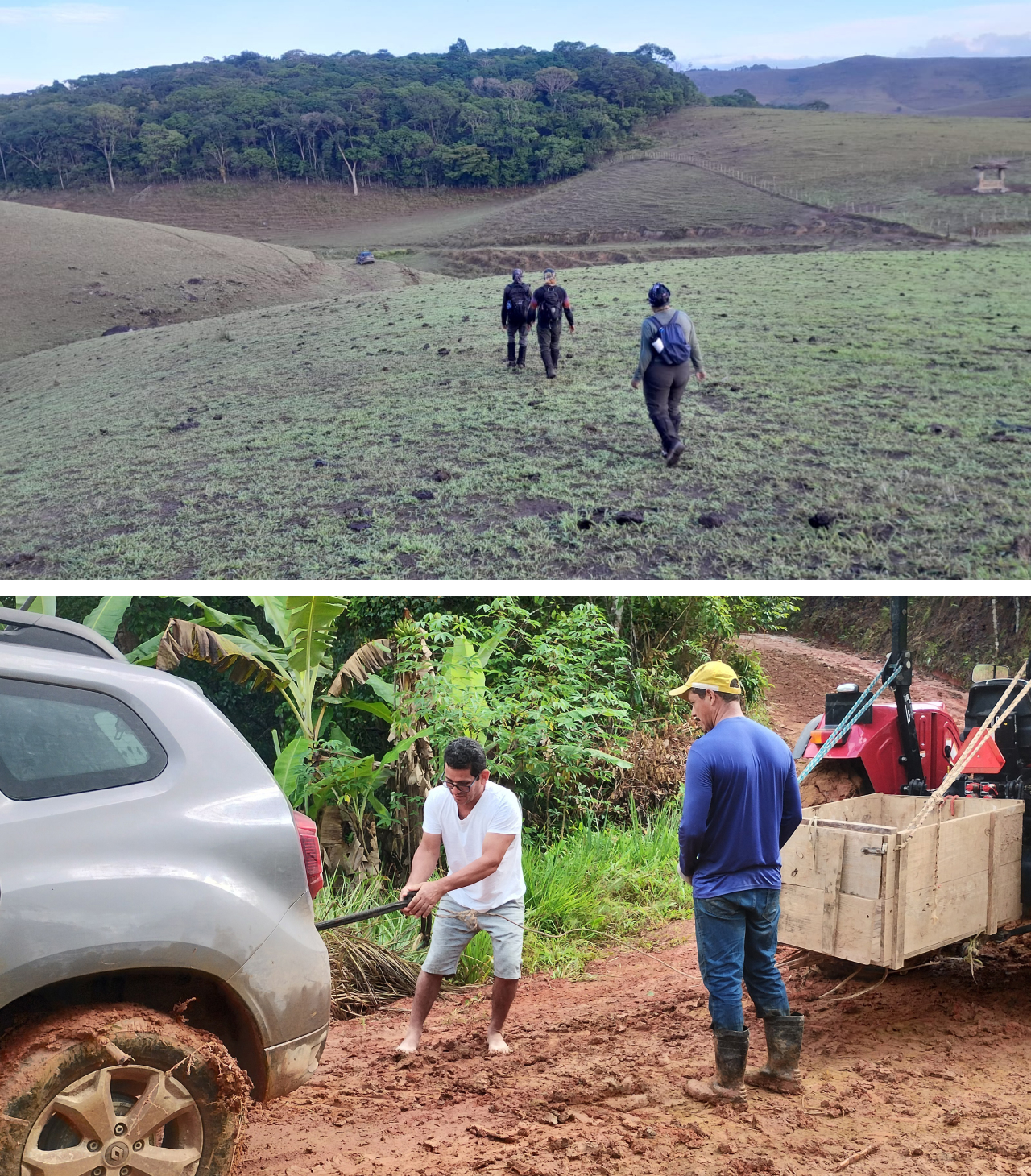
The search is no easy task. The team is surveying remnant patches of Atlantic Forest across the Brazilian states of Paraíba, Pernambuco, and Alagoas, a landscape where less than 10% of the original forest survives, mostly in small fragments surrounded by what Julio describes as an endless sea of sugarcane. The conditions are grueling. Crew members hike for hours through dense, trailless forest, navigating flooded terrain, thorny vegetation, and the occasional swarm of wasps. Vehicles regularly get stuck in the mud. Yet the team presses on.
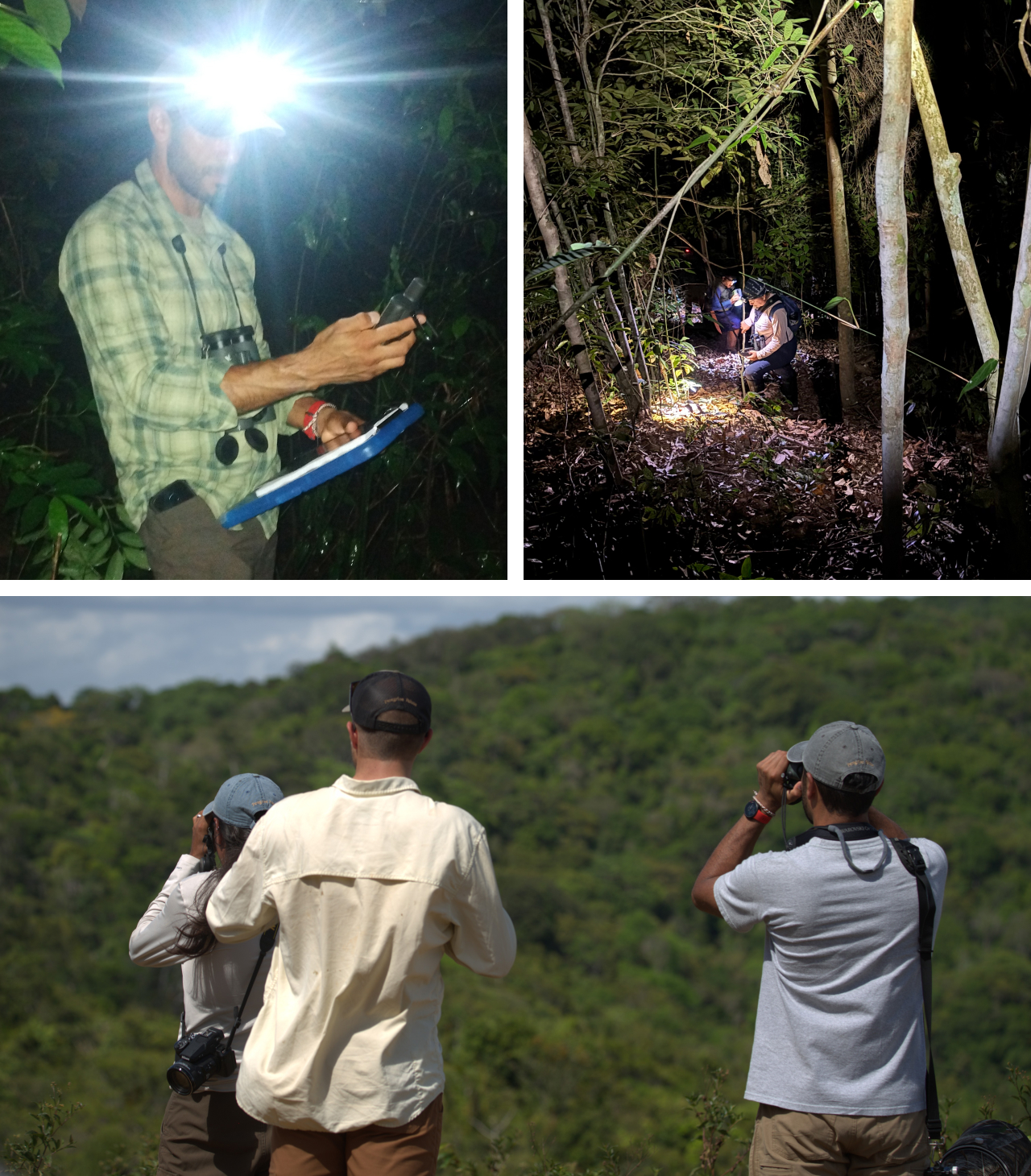
Working in two daily survey windows around dusk and dawn, the team is using recorded pygmy-owl calls to try to draw out a response. They’ve completed nearly 400 survey points so far. The forest, though battered, is still alive with wildlife, including the charismatic Buff-fronted Owl, the Near Threatened Rufous Crab-hawk, and the Endangered White-collared Kite. Unfortunately, the list does not include any confirmed detections of the Pernambuco Pygmy-owl—yet.
But according to Julio, there is still reason for optimism. “Forest cover in the region has remained stable for nearly two decades,” he notes, indicating that the species’ decline—likely driven heavily by habitat loss—could also have stabilized. And in the same region, another bird species feared to be extinct, the Critically Endangered Alagoas Antwren, was recently rediscovered after 15 years without records.
The team plans to conclude surveys at the end of the dry season later this month before returning in October to continue the search. “Sometimes I can’t avoid the bittersweet flavor of this adventure, the melancholy of hearing the voice of a bird through the speaker that may not be here to answer,” says Julio. “But we’re here, with our boots on the ground, bearing hope, and keeping on going. We’re The Peregrine Fund. We have the moral responsibility to give this species a chance to be found.”