

Elif Ilkel
Rare Harpy Eagle Sighting in Mexico Is the First Documented Record in Over a Decade
On June 12, 2023, deep in the Lacandona rainforest of Chiapas, Mexico, an observer came across a large eagle on the forest floor. Startled, the bird rose from a fallen log with prey in its talons, dropped its meal into the brush, and landed on a tree branch about 21 feet up. It stayed there for roughly four minutes, long enough for the observer to capture photos and video on a cell phone (seen below) before the eagle flew off to the north.
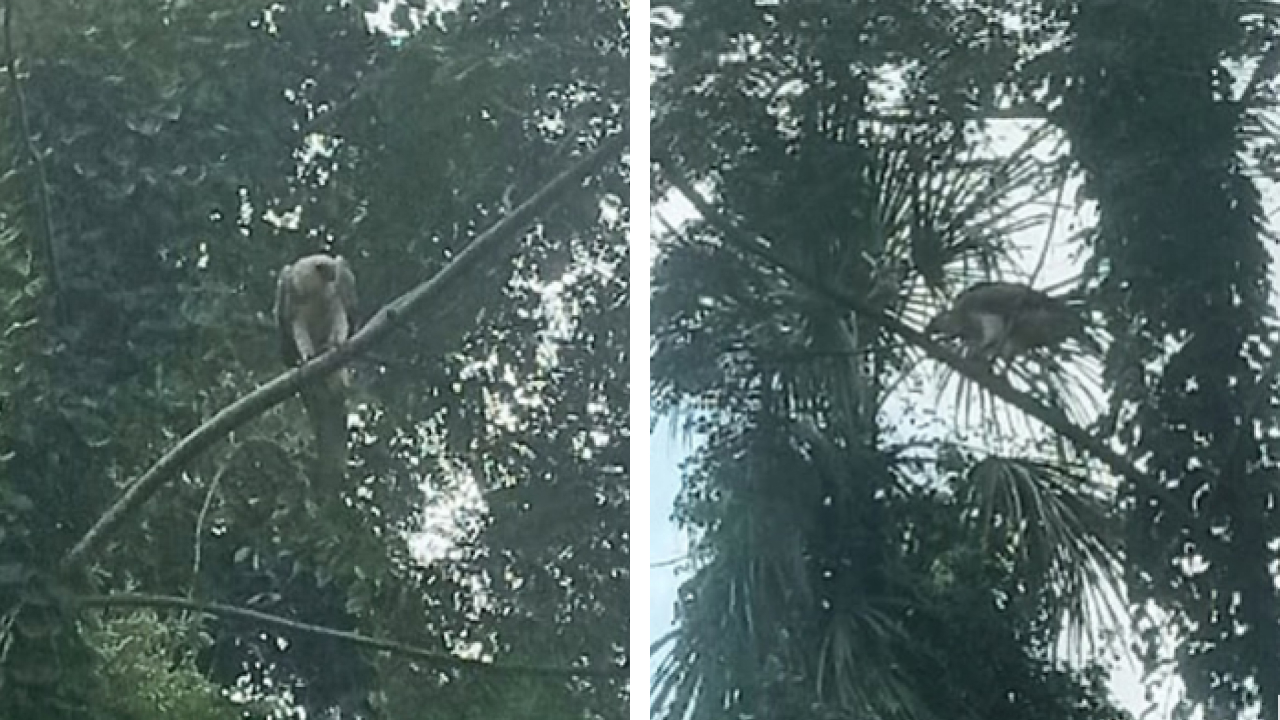
That brief encounter turned out to be a big moment for science. The bird was an immature Harpy Eagle, and the sighting is the first record of the species in Mexico backed by photos and video in more than a decade. The findings were recently published in Huitzil, the Mexican Journal of Ornithology.
Why a Harpy Eagle in Mexico Matters
To understand why this sighting is so exciting, it helps to know how rare Harpy Eagles have become in Mexico. As one of the largest birds of prey in the world, the Harpy Eagle once ranged widely through the lowland tropical forests of southern Mexico, Central America, and South America. Habitat loss and illegal hunting have since caused the species to vanish from large parts of that range. Today it is listed as Vulnerable worldwide and Endangered in Mexico, and scientists consider its northern populations, from Mexico to Costa Rica, among the most threatened. Sightings in Mexico are so rare that this new record is only the second documented in the country in the past 25 years. The last was an adult photographed in 2011 at Yaxchilán Natural Monument, also in the Lacandona rainforest.
Researchers and Communities Working Together
The observation was documented by Román López-Gómez, a local field collaborator involved in a raptor monitoring initiative led by Dimensión Natural. The program pairs researchers with trained local community monitors. Together, they survey rivers and forest trails and talk with residents to learn where rare raptors live.
The study's authors include José de Jesús Vargas, our Panama Program Manager, and Dr. Félix Hernán Vargas, our retired Conservation Director of Neotropical Programs. Lead author Alan Monroy-Ojeda received support from our Conservation Leadership program for his master's degree. His graduate research mapped places in Mexico where Harpy Eagles could potentially nest, work that helped guide where the team now searches.
Clues to a Nearby Nest
The presence of a young eagle suggests that breeding may still occur somewhere within the Maya Forest. Based on its appearance, the researchers estimate it was about 28 to 38 months old, an age when young Harpy Eagles begin traveling farther from where they hatched in search of a territory of their own. The location of the eagle’s hatch and of any potential nesting territory remain unknown. Additional field surveys will be necessary to determine whether an active breeding pair is present in the region.
Hope for the Maya Forest
While this discovery offers hope, the forest the eagle depends on is under pressure. More than two-thirds of the Lacandona rainforest's original cover has been lost, and Harpy Eagles need large areas of healthy forest to survive. There is reason for optimism, however. In 2025, Mexico, Guatemala, and Belize created the Great Maya Forest Biocultural Corridor, which covers more than 14 million acres and includes the site of this sighting.
Looking ahead, the authors note that the active involvement of local communities will be key to conserving Harpy Eagles and the forests they call home.