

Munir Virani
The Peregrine Fund Returns to Nepal to Tag Critically Endangered Vultures
Two decades ago, The Peregrine Fund played a pivotal role in one of the most urgent wildlife investigations of the modern era. Working with partners across South Asia, our scientists helped unravel the mystery behind a catastrophic collapse of vulture populations in the region. The Asian Vulture Crisis was caused by diclofenac, a veterinary anti-inflammatory drug that proved lethal to scavengers feeding on the carcasses of treated livestock. That crisis drew global attention and galvanized a generation of conservation action in the region.
Now, TPF is re-investing in Nepal—this time focusing on two species that have received less attention from existing regional conservation programs.
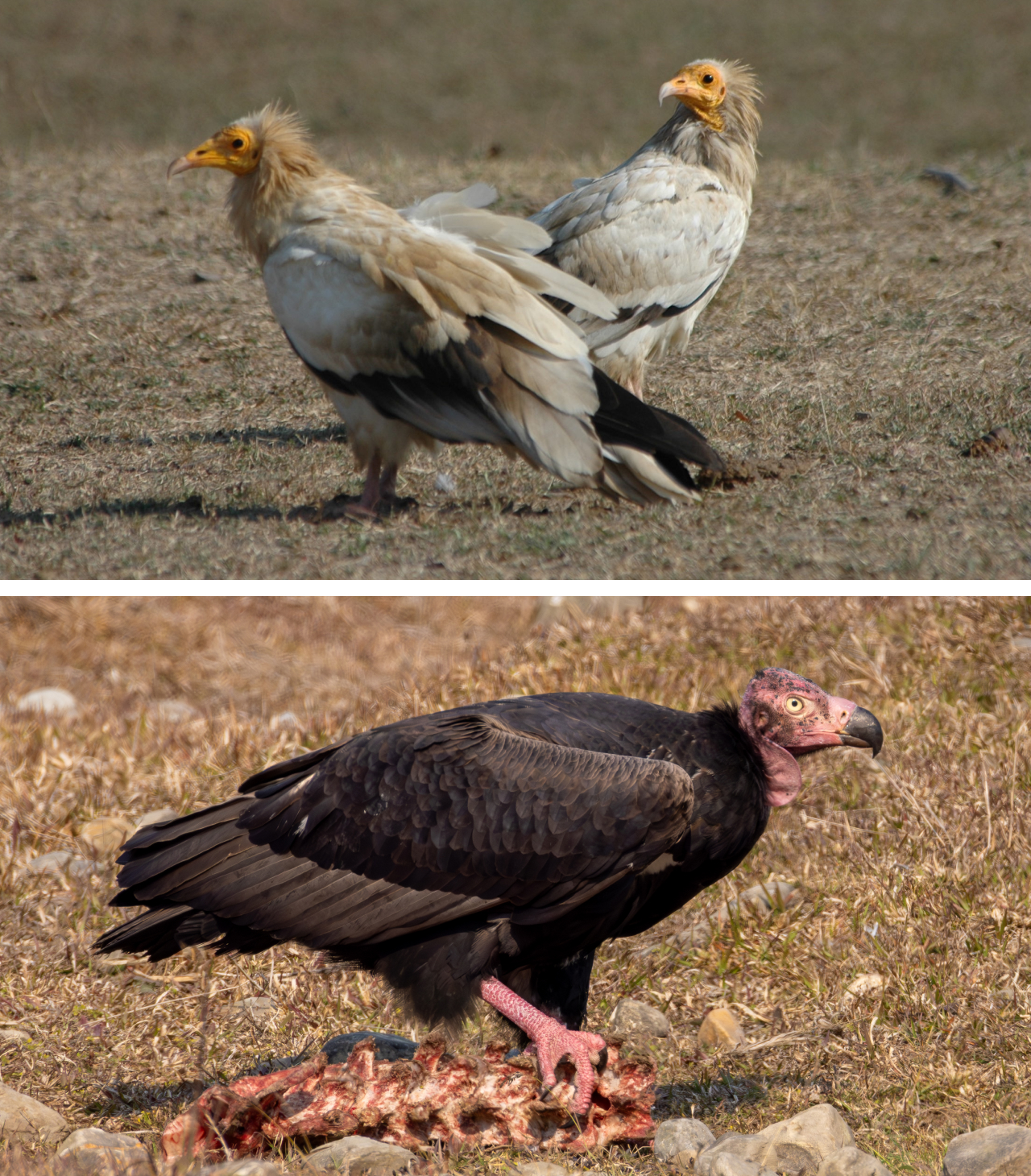
The Egyptian Vulture (pictured in top photo above) and the Red-headed Vulture (pictured in bottom photo above) are ranked as the fifth and sixth highest-priority raptor species for conservation globally according to the EDGE metric. Their populations are suspected to be declining from a combination of habitat loss, unintentional poisoning, electrocution and collision with powerlines, human disturbance, and food shortage. But the data to confirm or quantify those declines simply doesn't exist yet. And that's where this new partnership comes in.
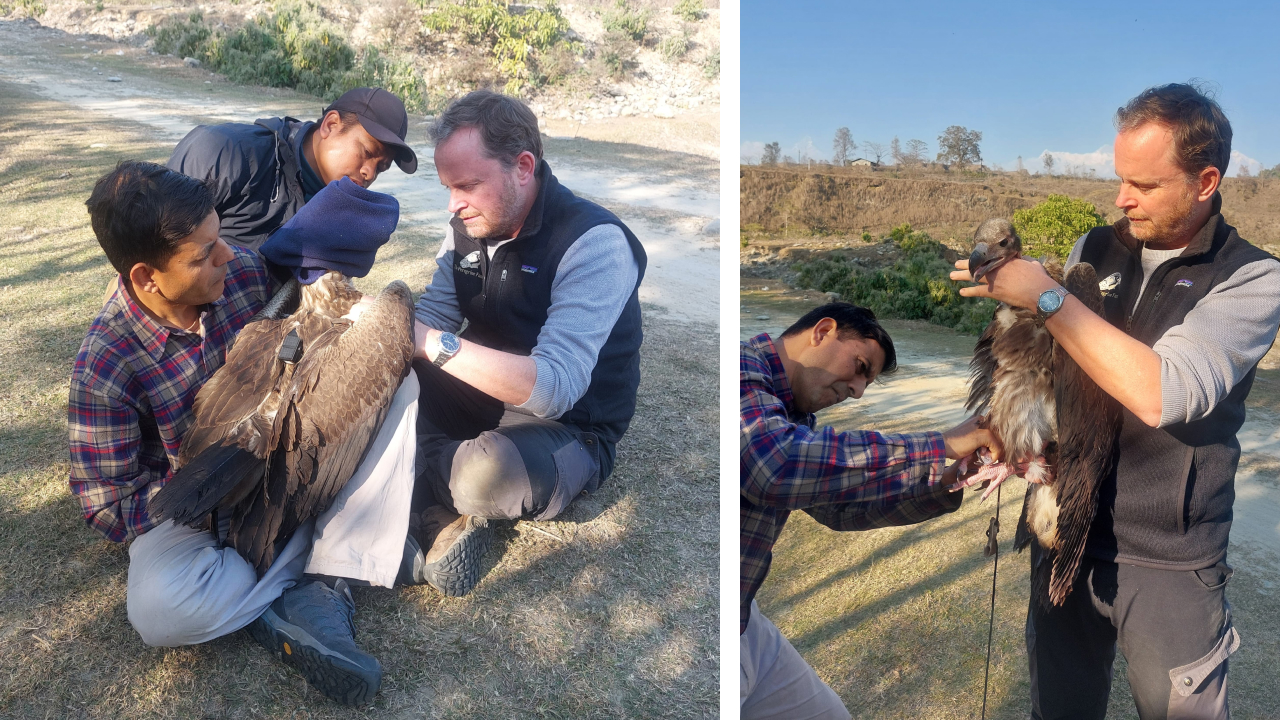
Working through a formal collaboration with Himalayan Raptors, a Nepalese conservation organization led by Dr. Tulsi Subedi, teams plan to deploy GPS transmitters on both species to track their movements, identify critical habitat, and pinpoint threats. This past January and February, Senior Scientist Dr. Ralph Buij traveled to Nepal to join the Himalayan Raptors team in the field. Over two expeditions, the team successfully tagged eight Red-headed Vultures (pictured below). The team plans to continue trapping and deploying transmitters on both Egyptian Vultures and Red-headed Vultures in 2026 and to begin using the tracking data to identify roost sites, nesting areas, feeding grounds, and potential mortality sites.
TPF is also supporting a parallel effort to study Slender-billed Vultures in Nepal through researcher Hemanta Dhakal, in partnership with the Coexistence for Conservation Research Group at Spain's Biodiversity Research Institute. GPS transmitters have been delivered for the project, with an initial trial period using birds in human care to assess how the species responds to the units before deployment on wild individuals.
Beyond the field research, TPF helped support a four-day Raptor Study Design and Research Techniques training in late November 2025, organized by Himalayan Raptors and the Nature Conservation and Study Centre in partnership with Hawk Mountain Sanctuary. Seventeen participants gathered for a mix of classroom instruction and field application. Sessions covered raptor identification, movement ecology, trapping and tagging, breeding study methods, threat assessment, and more. The training addressed a real gap: raptor research in Nepal has historically concentrated on a handful of vulture species, leaving most other raptors understudied and most emerging biologists undertrained in the full scope of raptor science.
Nepal's vultures have survived one existential crisis. TPF’s renewed commitment to Nepal—through field research, equipment, and training—is helping to build the knowledge and partnerships needed to keep these species on a path toward recovery.