
BG photo by Nina Whiting
Peregrine Fund Biologists Win Two Andersen Awards at RRF Conference
The annual Raptor Research Foundation Conference was held this past October in Costa Rica, and as might be expected from the name, The Peregrine Fund was well represented as both attendees and presenters. But two of our staff members came home with their suitcases a little heavier than when they arrived. Each year, the William C. Andersen Memorial Awards are given to the best student oral and poster presentations—and Peregrine Fund biologists swept both oral presentation awards!
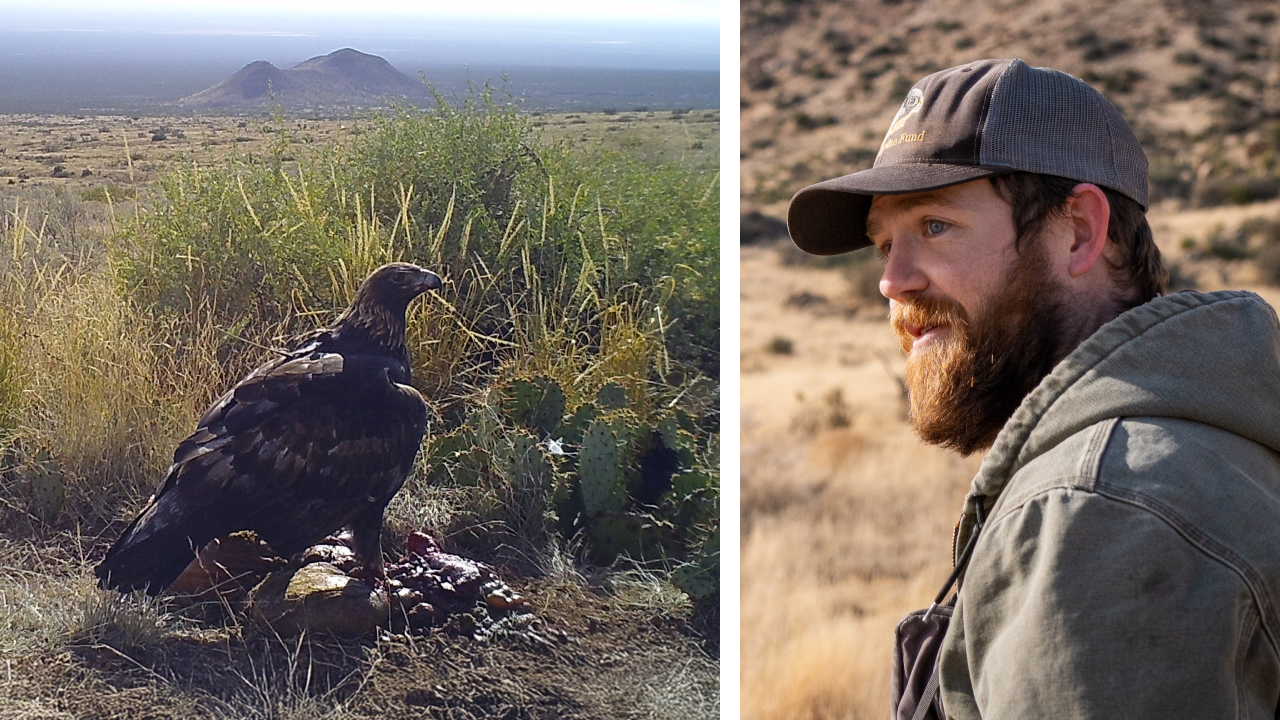
Conservation Field Biologist Tom Hudson won the Master’s / undergraduate student category with his presentation titled Efficacy of voluntary use of lead-free ammunition to reduce lead exposure to Golden Eagles on White Sands Missile Range, New Mexico, USA. “Lead exposure to scavenging wildlife can be mitigated by hunters choosing to use lead-free ammunition,” Tom explains. “During the study period, we found that about a quarter of hunters in WSMR were using lead-free ammunition, and estimated that this prevented two to three Golden Eagle deaths in the range each year.” The study further indicated that if the number of hunters using lead-free ammunition increased to 80%, six to eight eagle deaths could be prevented. “The estimates produced not only show the difference conservation-minded hunters are already making to prevent lead exposure to wildlife, but the potential for a greater impact to be made by more hunters voluntarily switching to lead-free ammunition.”
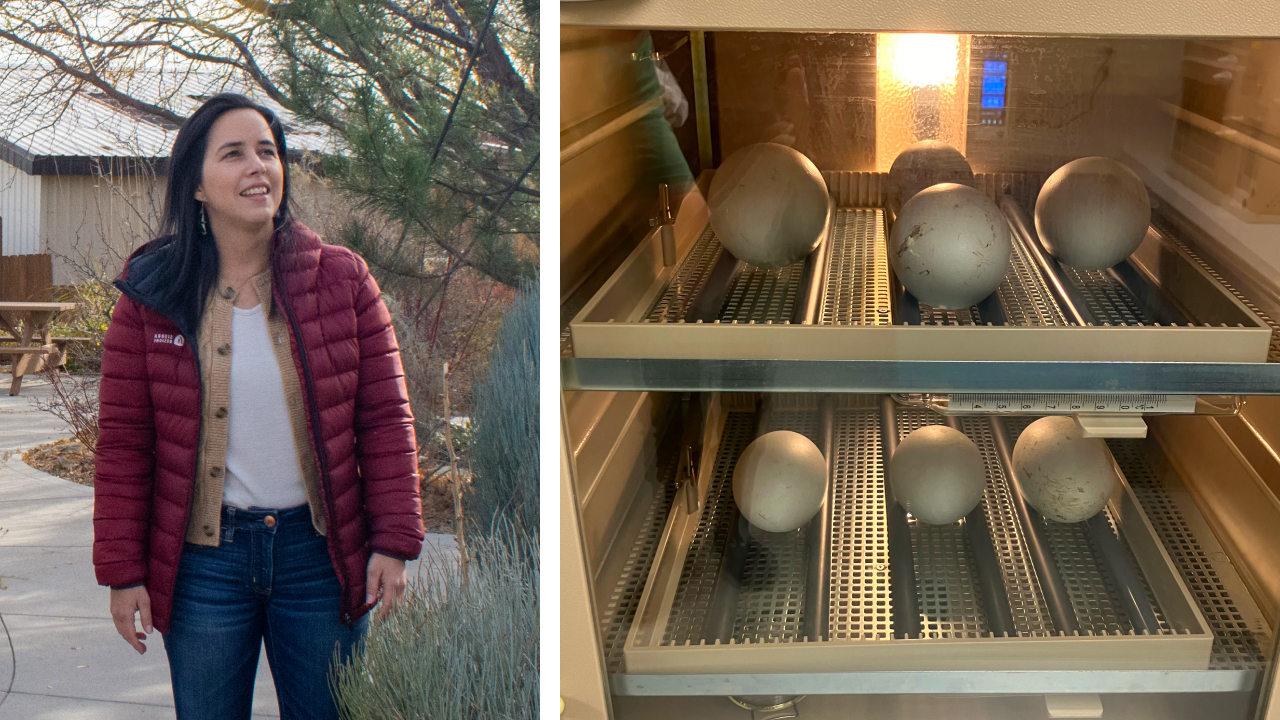
Meanwhile, Research Coordinator Carolina Granthon—who served on our propagation team for several years before moving to her current position—brought home the Andersen Award in the PhD student category with her presentation titled Factors affecting hatchability in a captive population of California Condors. “Our propagation facility at the World Center for Birds of Prey has been breeding Critically Endangered California Condors for over 30 years, but on average, 1–2 fertile eggs don’t hatch annually,” shares Carolina. “To understand these losses, we conducted an analysis on eggs in which embryos develop in the wrong position. We found these abnormalities occur more often when breeding pairs are closely related, eggs receive limited parental incubation, or eggs are unusually round. These findings can directly inform management of the captive flock by identifying egg characteristics associated with higher risk. This will allow staff to closely monitor vulnerable eggs and intervene early, maximizing hatching success.”
“Congratulations on receiving these awards!” says Vice President of Domestic Conservation Programs Paul Juergens. “What a statement to the quality of work coming out of our organization, and of the dedication of our staff to see that top-notch research and conservation work is represented so well in a professional venue. Excellent work, my friends!”