
Jordan Rudeen
The People of The Peregrine Fund: Curtis Evans
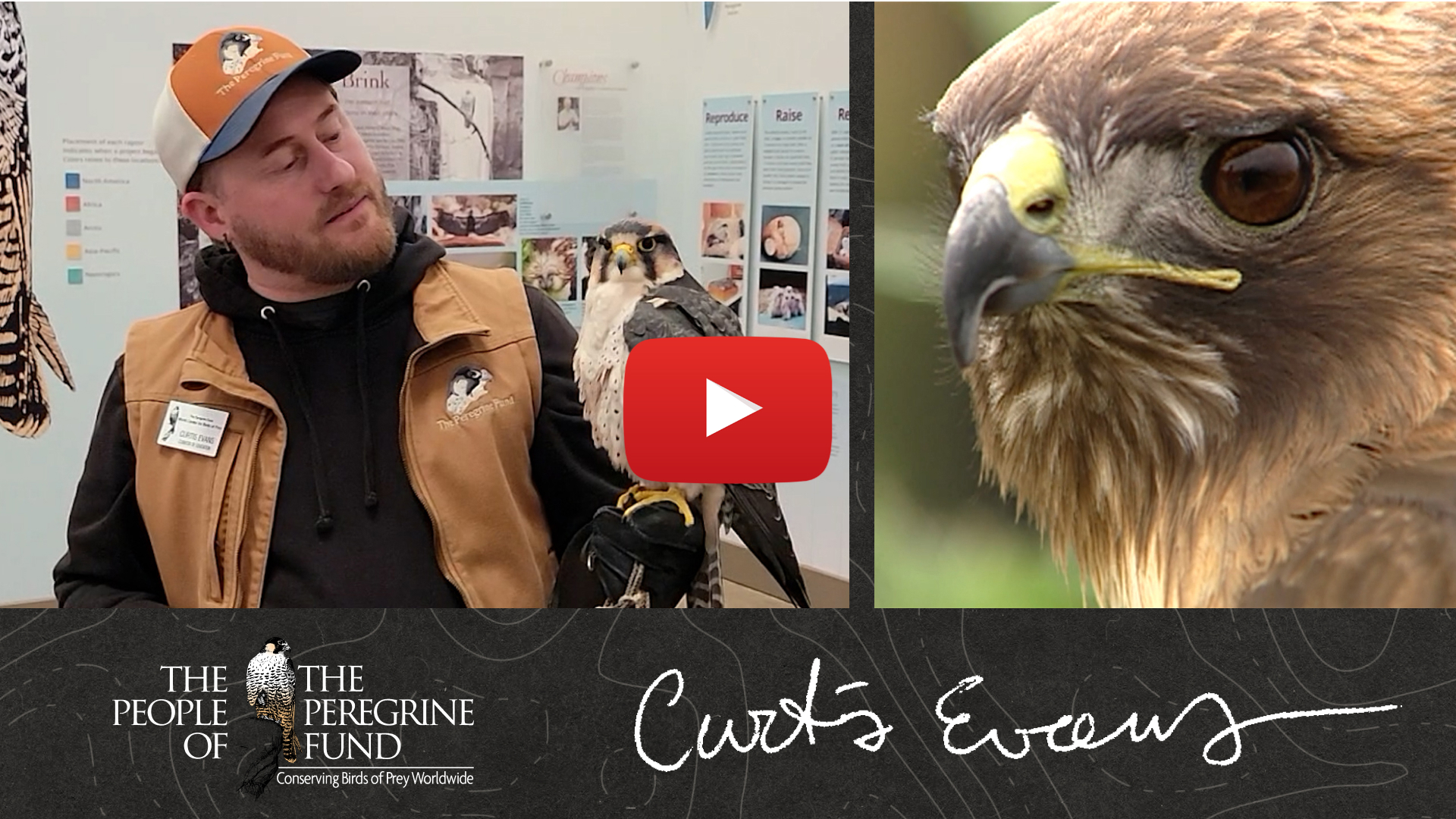
“One of my earliest memories is visiting my grandfather here in Boise,” reminisces Curtis Evans, the Curator of Education at our World Center for Birds of Prey (WCBP). “He raised pigeons out in the foothills, and every summer I’d come help take care of them.” Curtis shares that one year, he picked one out of the flock to be designated “his” pigeon, and his grandfather obliged. “I’m sure he thought that was the end of it, but every summer, I’d come back and ask which of the thousand pigeons in the coop was mine,” Curtis laughs. “He’d point at a random one. I always believed him.”
Curtis didn’t know it yet, but these moments—and the interest in birds they inspired—would go on to shape the direction of his life. “Growing up, I wanted to be an eye doctor,” he shares. “But in college, I took an elective ornithology class because of how much I enjoyed birds. And after learning more about them, I knew my career was on a different path.”
Curtis landed (pun intended) at The Peregrine Fund in 2014, first as a volunteer and then as a staff member, and he’s been with us ever since. Curtis helps coordinate all of the WCBP’s education programming, from developing exhibits, leading school tours, presenting avian ambassadors, and more. “I have the best job in the world,” he smiles. “I get to take all of the things that our many different science projects are learning, and then share their discoveries with the public.”
Raptors, he continues, are a great stepping stone for people to discover more about the world around them. “Birds of prey are part of our communities,” he explains. “They’re charismatic. They’re powerful. They perform feats we can only dream of. They’re long-lived, so people see them year after year and wonder about them.” This curiosity brings thousands of visitors to the WCBP every year, and the work of Curtis and the rest of our education team sends them home with a greater love and responsibility for these special birds and for conservation in general—a direct example of the thought leadership that is a core pillar of TPF’s conservation philosophy.
“At its core, raptor conservation doesn't rely on changing raptor behavior—it relies on humans changing our behavior,” says Curtis. “When people are excited about raptors, they are inspired to conserve these birds in their own lives.”