
Paul Juergens
Partnership Fueling Habitat Restoration in South Texas
Though historically found in other regions throughout the southwestern states, the Aplomado Falcon today can only be reliably found in the US in southern Texas, and even here, their continued existence remains tenuous. Over the last few years, our research has uncovered a key reason why: the encroachment of woody shrubs into the falcons’ coastal prairie habitat is allowing larger predators such as Great Horned Owls to move in. Removing these shrubs has therefore been identified as key to strengthening the falcons’ foothold in the region—and it’s a challenge that we and our partners are facing head-on.
“Funding has been provided to The Peregrine Fund through the USFWS Coastal Program,” says Vice President of Domestic Conservation Programs Paul Juergens. We’ve used this funding to add two seasonal technicians to our team: Braden Hollis and Bella Dulaney (pictured below). But while the pair are officially Peregrine Fund employees, they’re still working very closely with the USFWS. “Laguna Atascosa National Wildlife Refuge (LANWR) is an integral partner in the work given much of the habitat restoration is occurring on the refuge,” Paul adds. “Their refuge biologist works with [our Aplomado Falcon Program Director Brian Mutch] to direct the awesome work Braden and Bella are doing.”
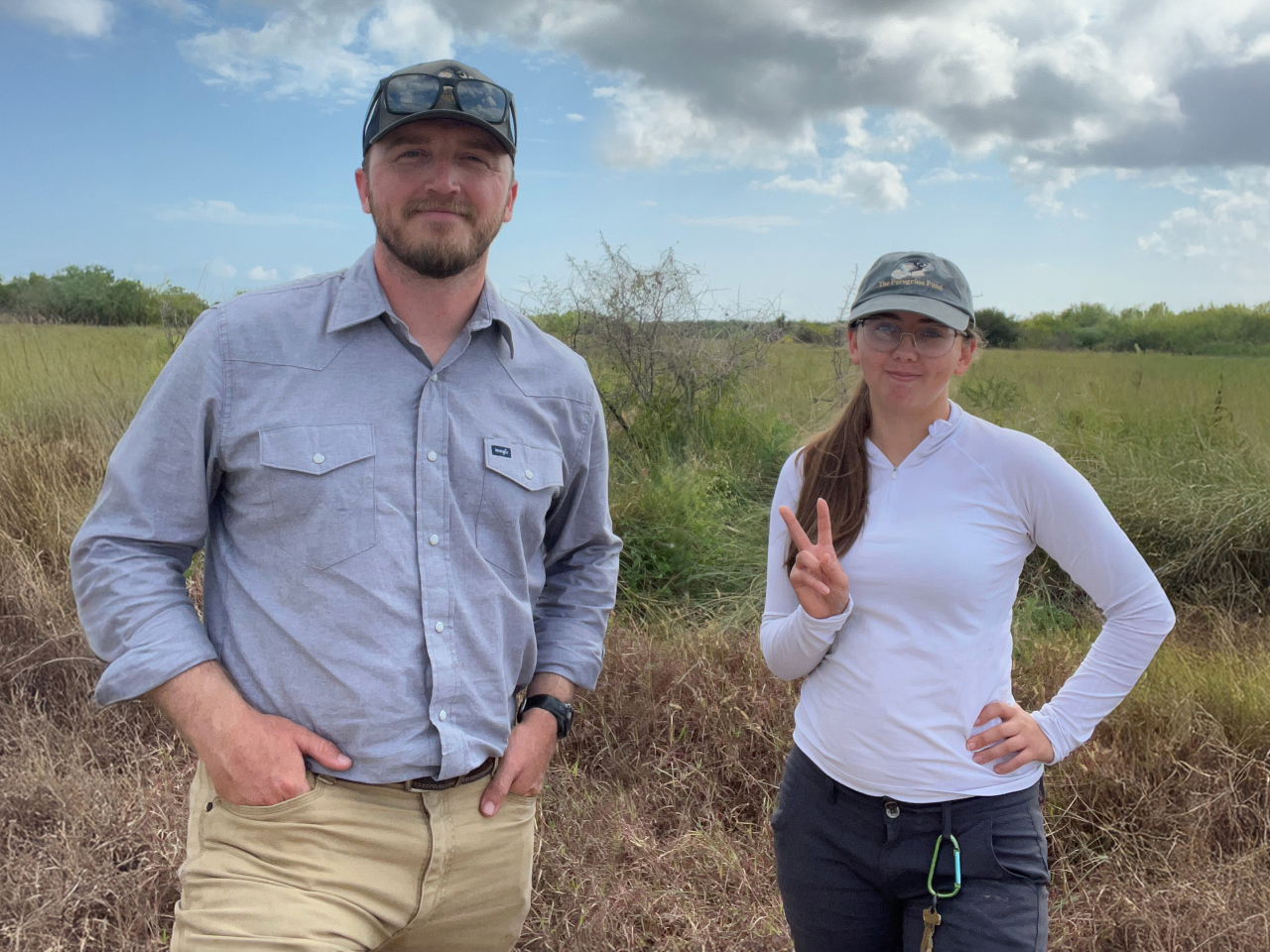
Braden and Bella are taking part in every aspect of habitat restoration in the area, assisting in pre-treatment monitoring of falcon territories through point counts and vegetation surveys, as well as post-treatment photo point monitoring. And in the middle, the pair take to the field, in feels-like temperatures ranging from 40–110°F (4–43°C), armed with backpack sprayers and an indomitable attitude.
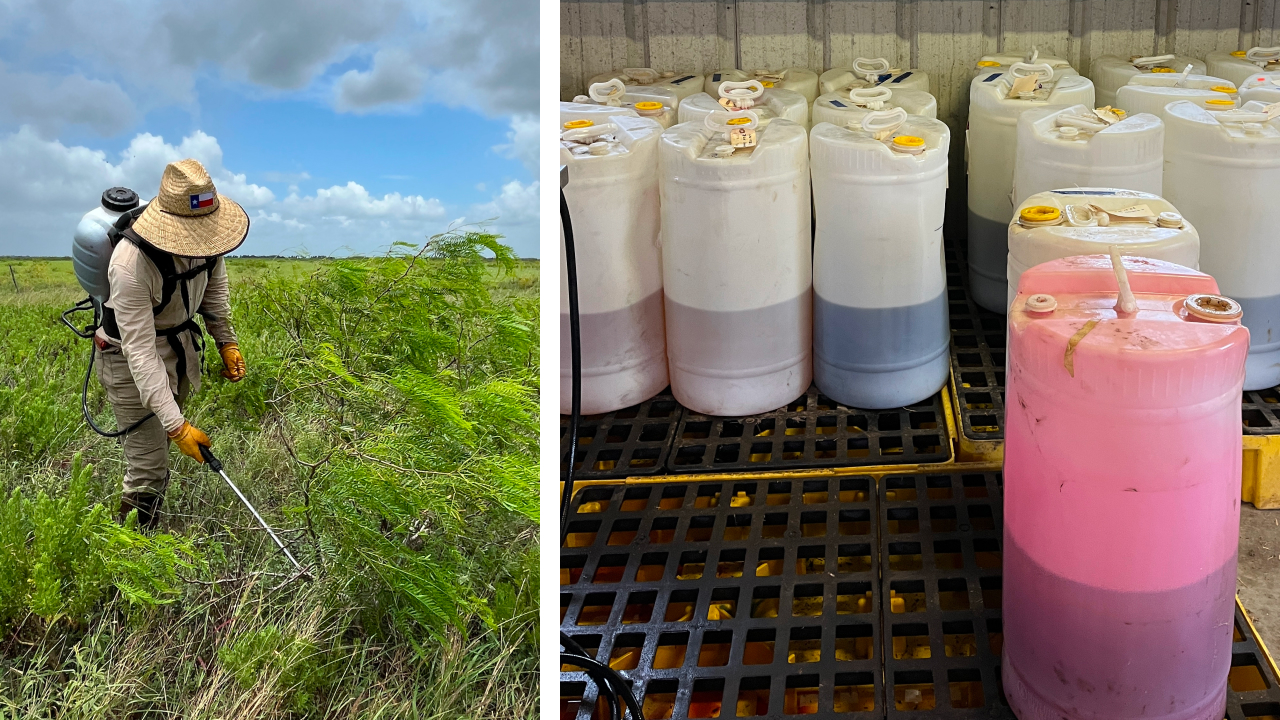
“We’re walking transects in coastal prairie and applying herbicide to encroaching honey mesquite and huisache,” explains Bella. The process is pictured above, along with some of the copious amounts of herbicide required. “Smaller plants can die just from the treatment. We still spray the large plants, but they mostly must be handled with mechanical treatment. This will be done with chainsaws when we’ve received additional training and certifications.”
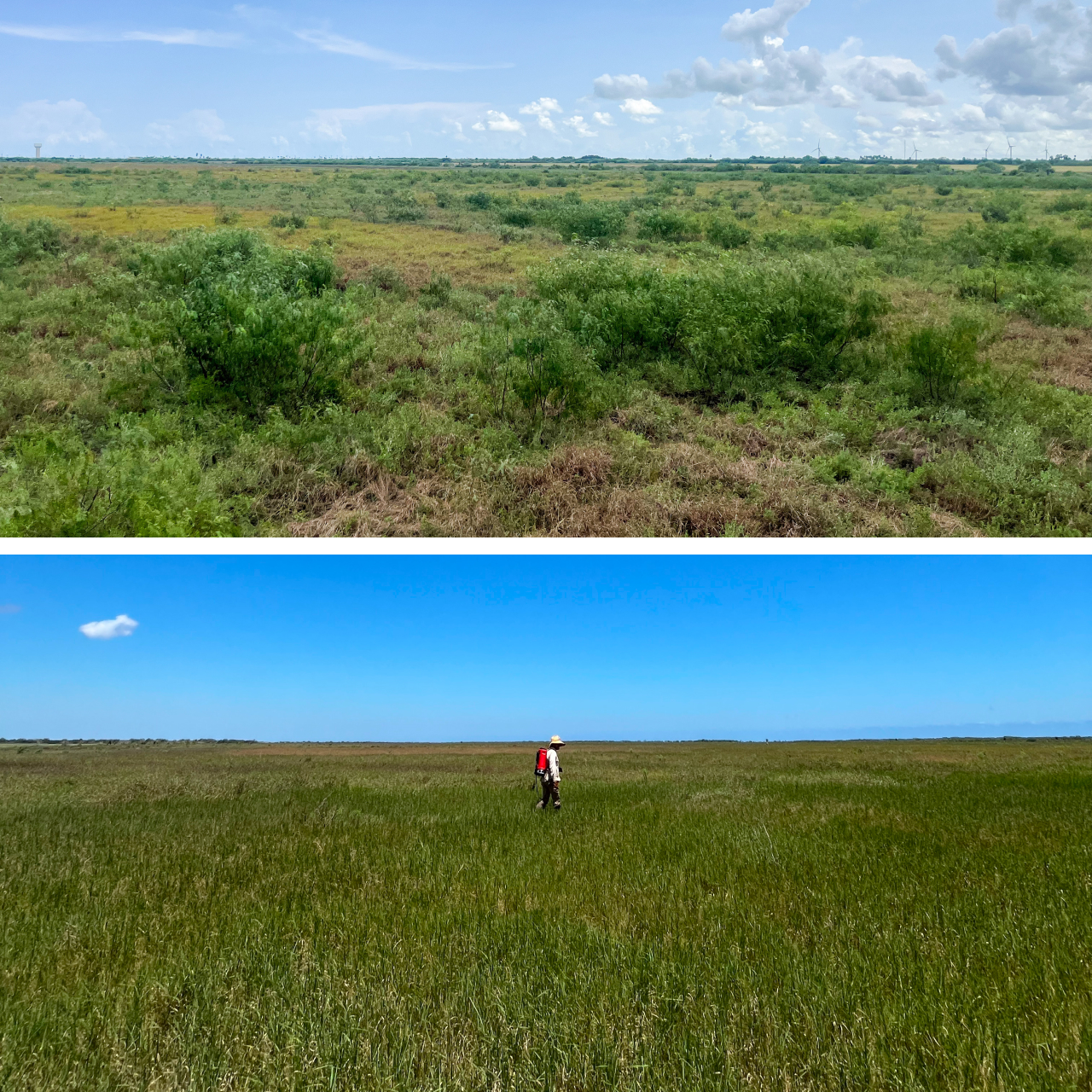
Habitat dotted with woody shrubs prior to treatment is seen below in the top photo, while Braden walks across healthy coastal prairie in the bottom photo below. “The primary deliverable under [our agreement with the USFWS Coastal Program] is to positively impact 1,000 acres of coastal grassland habitat for the benefit of the Aplomado Falcon and other grassland-dependent species,” delineates Aplomado Falcon Program Director Brian Mutch. Bella shares that she and Braden are well on their way to this goal, having already covered over 550 acres of prairie across LANWR and other land in the area. And Braden reports that it seems likely they’ll be able to surpass the 1,000-acre goal in the next few months.
“I would also like to note that Aplomado Falcons have been seen in treated areas where they haven’t been seen regularly in quite some time,” Braden adds. “It’s pretty motivating to see firsthand the impacts of our hard work.”