
Munir Virani
New Study Sheds Light on Community Attitudes Toward Hooded Vultures in The Gambia
The Gambia is home to one of the highest density of the Hooded Vulture in Africa. A new study published in African Zoology examines how the people living alongside them feel about the vultures.
Led by Michael Bode Agunbiade—whose PhD research was supported through The Peregrine Fund's Conservation Leadership Program alongside a grant from Dallas Zoo—the study surveyed 200 people across 20 communities in The Gambia. Co-authors include our Northeast Africa Program Director, Dr. Darcy Ogada, along with researchers from Brandenburg University of Technology Cottbus-Senftenberg, The Gambia’s Department of Parks and Wildlife Management, and the West African Bird Study Association.
The findings offer some encouraging news: most respondents recognize Hooded Vultures' ecological value, from disposing of animal waste to preventing the spread of disease. Nearly 90 percent called vultures important, and many said they'd like to see more of them in their communities.
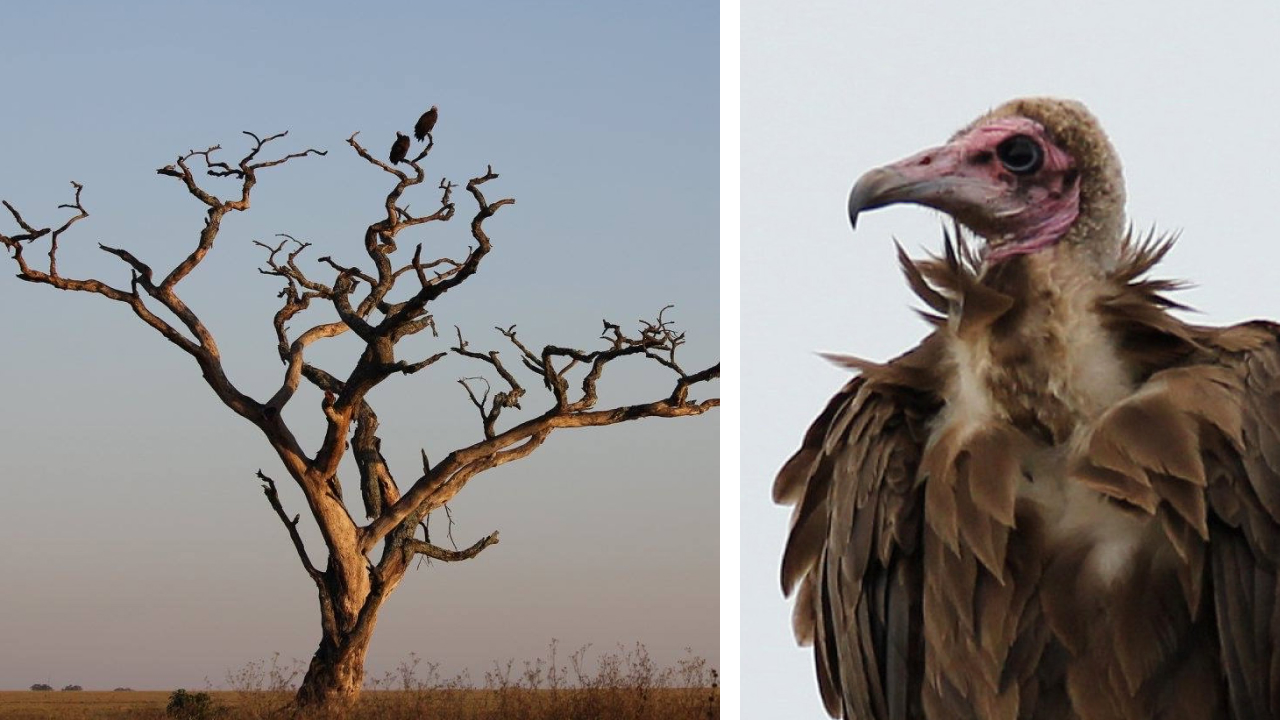
But the study also surfaced real challenges. More than half of respondents view vultures as spiritual agents, a belief that can complicate conservation efforts. Poisoning, habitat loss, and belief-based use, the practice of using vulture parts in traditional medicine and cultural rituals, were the most commonly cited threats. Awareness of belief-based use was widespread: two-thirds of respondents knew it happened, most commonly learning about it through friends, family, or personal experience. Hooded Vultures were by far the species most sought after for this purpose, with their heads, feathers, and legs considered especially valuable. Many respondents linked vulture parts to curing disease, and nearly half associated them with attracting wealth.
The good news is that these attitudes don’t have to be permanent. The study's authors found that culturally-sensitive education, especially in communities where belief-based use is common, could meaningfully reduce harm to vultures.
They recommend a mix of solutions: working with traditional healers and community leaders, phasing out the veterinary drug diclofenac in favor of safer alternatives, improving carcass disposal practices, and establishing Vulture Safe Zones in high-density areas.
This kind of community-informed research is exactly what shapes The Peregrine Fund's on-the-ground conservation. Understanding how people perceive vultures, and why, is often the first step toward conserving them.