John Matthew Erickson; licensed under CC BY 4.0
Hidden Hybrids: What Genetic Testing Revealed About Captive Macaw Breeding
Great Green Macaws (pictured below left) and Military Macaws (below right) look so much alike that they were once considered a single species. Both are large, mostly green parrots, but their outlook in the wild differs; the IUCN lists the Military Macaw as Vulnerable, while the Great Green Macaw is listed as Critically Endangered. A new study in Conservation Science and Practice shows how that resemblance, along with missing records, led to problems in captivity that no one could see without genetic data.
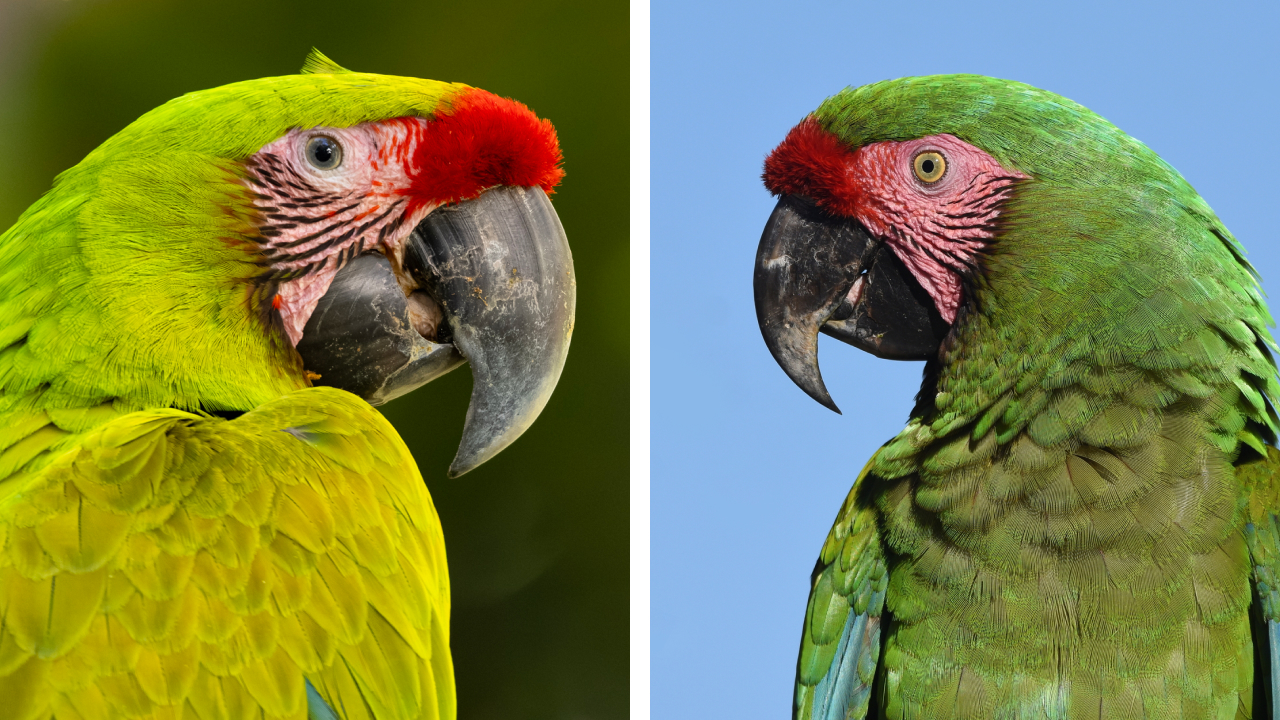
A Collection With Missing Pieces
The study focused on one of the largest private macaw collections in the United States. The flock came together in 2014 and 2015, just before both species were listed under the U.S. Endangered Species Act. Birds arrived in groups from breeders across the country, often with no records of their age, origin, or parents.
The study was the vision of the late Janice Boyd, who founded the Buffon’s Macaw Conservation Center in Texas where the flock was housed, and who initiated and funded the genetic work before her death in 2022. George Olah of The Australian National University and The Peregrine Fund’s Jeff Johnson then carried the project through to publication, working with colleagues from Michigan State University and Texas A&M’s Schubot Center for Avian Health. The team sampled all 45 macaws and screened more than 4,000 genetic markers in each bird’s DNA.
What the DNA Revealed
The results told a story no one expected. Seven birds recorded as Great Green Macaws were actually hybrids of the two species. Another bird thought to be a Great Green Macaw was a pure Military Macaw. Every hybrid had a Military Macaw mother, and many may have come from one mixed pair kept by an earlier breeder.
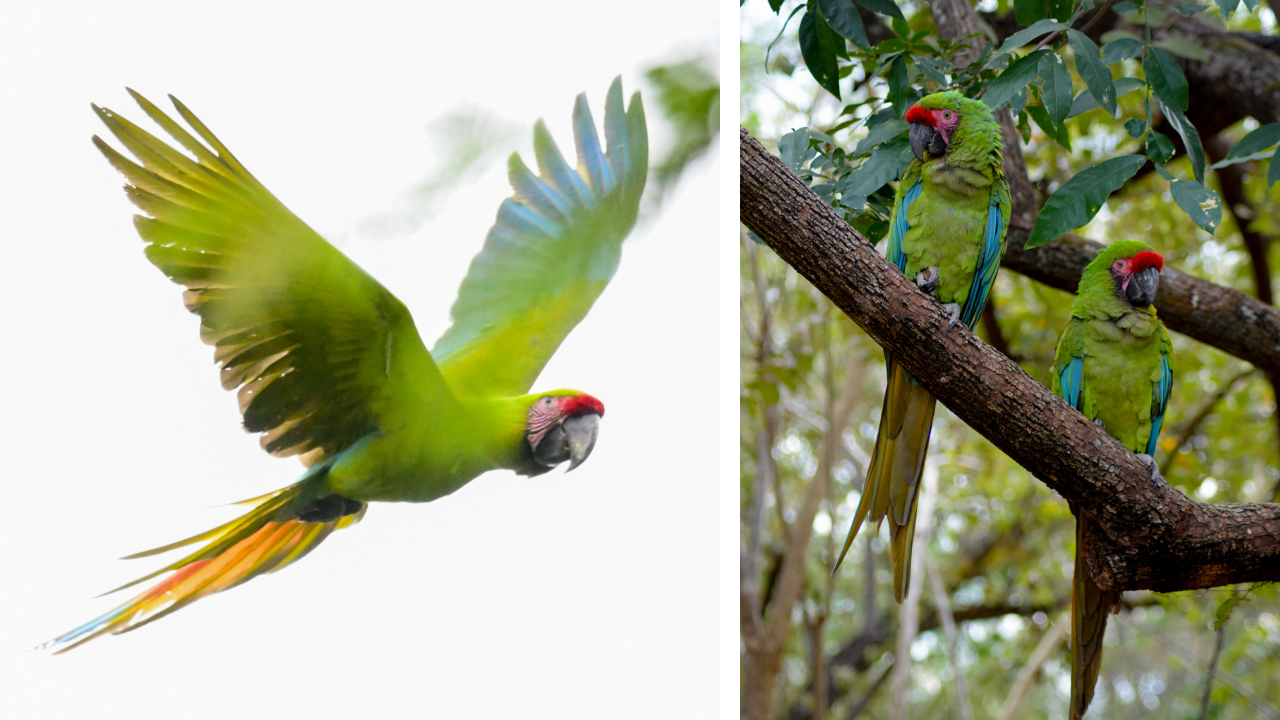
The birds were also far more closely related than anyone knew. On average, birds within each species were at least as related as half-siblings. The Great Green Macaws were nearly twice as closely related as those in a wild population in Costa Rica. Such close kinship can lead to inbreeding, which can threaten a population’s health over time.
The Military Macaws held one more surprise: they were split into two groups, one with roots in Mexico and one in South America, likely Bolivia. A few birds carried ancestry from both lines, a sign the two had been interbred in captivity.
A Roadmap for Captive Breeding
With the Endangered Species Act listing barring interstate sales, the authors see the flock’s greatest value in its genetic data. They recommend using these results to build an accurate studbook and share it with the international studbook keepers for both species. They also suggest keeping hybrids out of conservation breeding, managing the two Military Macaw lines separately, and using the genetic data to choose better breeding pairs. Above all, they make the case that genetic screening should be standard in every captive breeding program. That lesson reaches well beyond parrots, which is why one of our raptor scientists joined the team. The Peregrine Fund’s own breeding work, from Peregrine Falcons decades ago to California Condors and Aplomado Falcons today, relies on the same careful attention to how birds are related.