The California Condor is a remarkable bird and one of the most imperiled. North America's largest flying land bird, it has soared over this continent for millennia, filling a role as a keystone scavenger that no other species can replicate. Yet by 1987, only 22 remained. The entire wild population was brought into human care as a last resort, and the fate of the species hung by a thread.
Over the last 30 years, The Peregrine Fund has run the largest California Condor captive propagation program in the world, led reintroductions in Arizona, and monitored and managed the Arizona–Utah population. Despite this progress, lead poisoning remains the #1 cause of condor mortality. When a lead bullet strikes its target, small fragments break away and remain in the carcass and gut pile. Scavengers, including California Condors, feed on those remains and ingest the lead along with them. Identifying that threat was the first step toward overcoming it—and we are working to eliminate it at the source.
Recovery is real. But it is not finished. Today, more than 600 California Condors exist, with nearly 100 flying free across Arizona and Utah. Here is how we are doing this work.
Our Solutions
Captive Breeding and Release
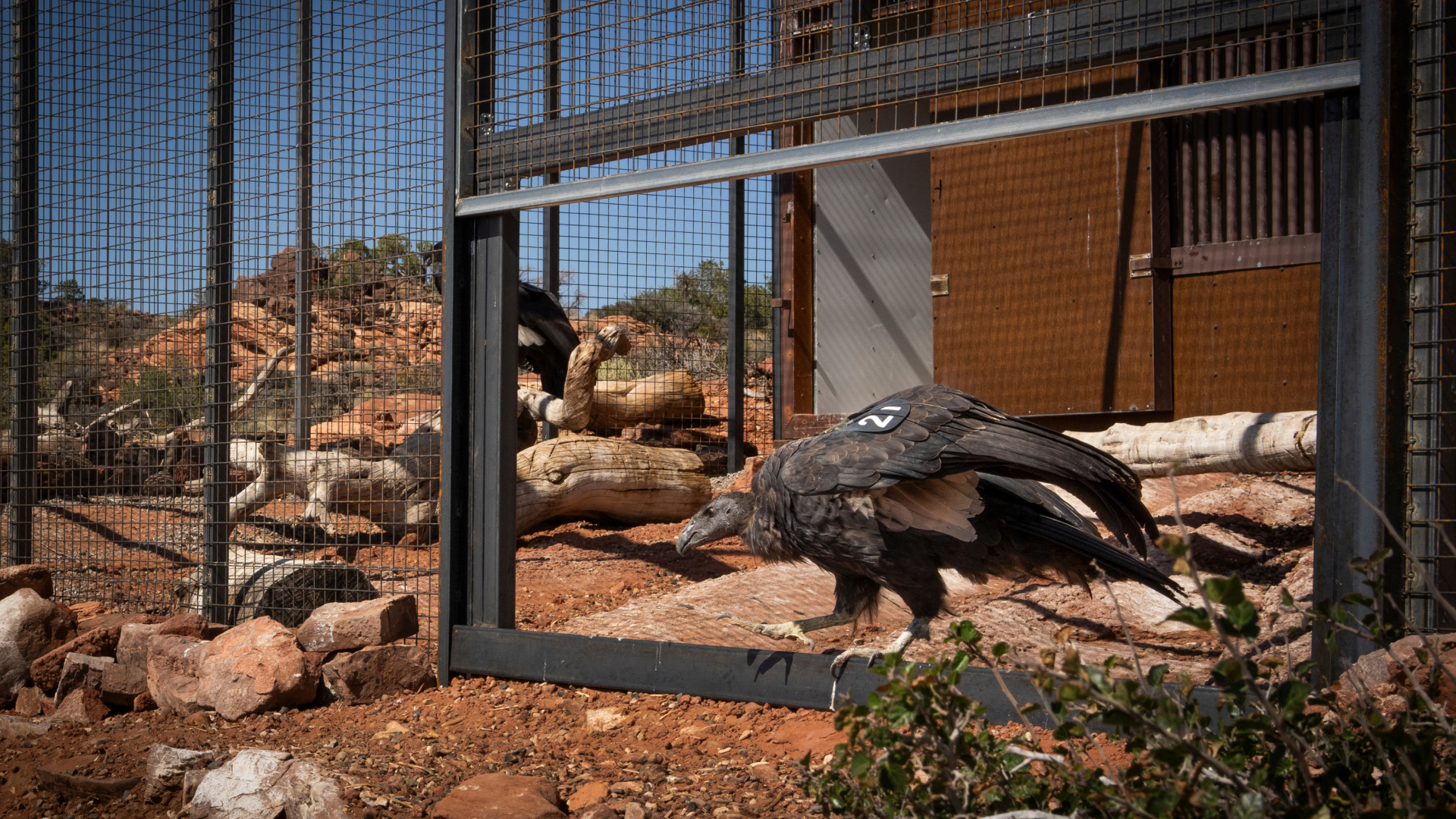
The Peregrine Fund's California Condor propagation program began in 1993 with just 12 birds, which at the time represented a significant portion of the entire world population. In 1996, our facility achieved its first successful captive hatch: California Condor 150, who was later released into the wild. Since then, our propagation facility at the World Center for Birds of Prey in Boise, Idaho, has successfully hatched more than 340 California Condors. Today, The Peregrine Fund manages the largest California Condor captive breeding program in the world.
But hatching condors is only half the work. Each year, young condors raised at our Boise facility are released into the wild at Vermilion Cliffs National Monument in Arizona, or at release sites in California, depending on where they are needed most. The Peregrine Fund is one of five institutions breeding California Condors in captivity, and each year a genetic analysis determines which birds from each facility should be released into which wild subpopulation to maximize genetic diversity across the recovering population. Since the first release at Vermilion Cliffs on December 12, 1996, The Peregrine Fund has released nearly 300 condors into the Arizona–Utah flock.
Population Monitoring
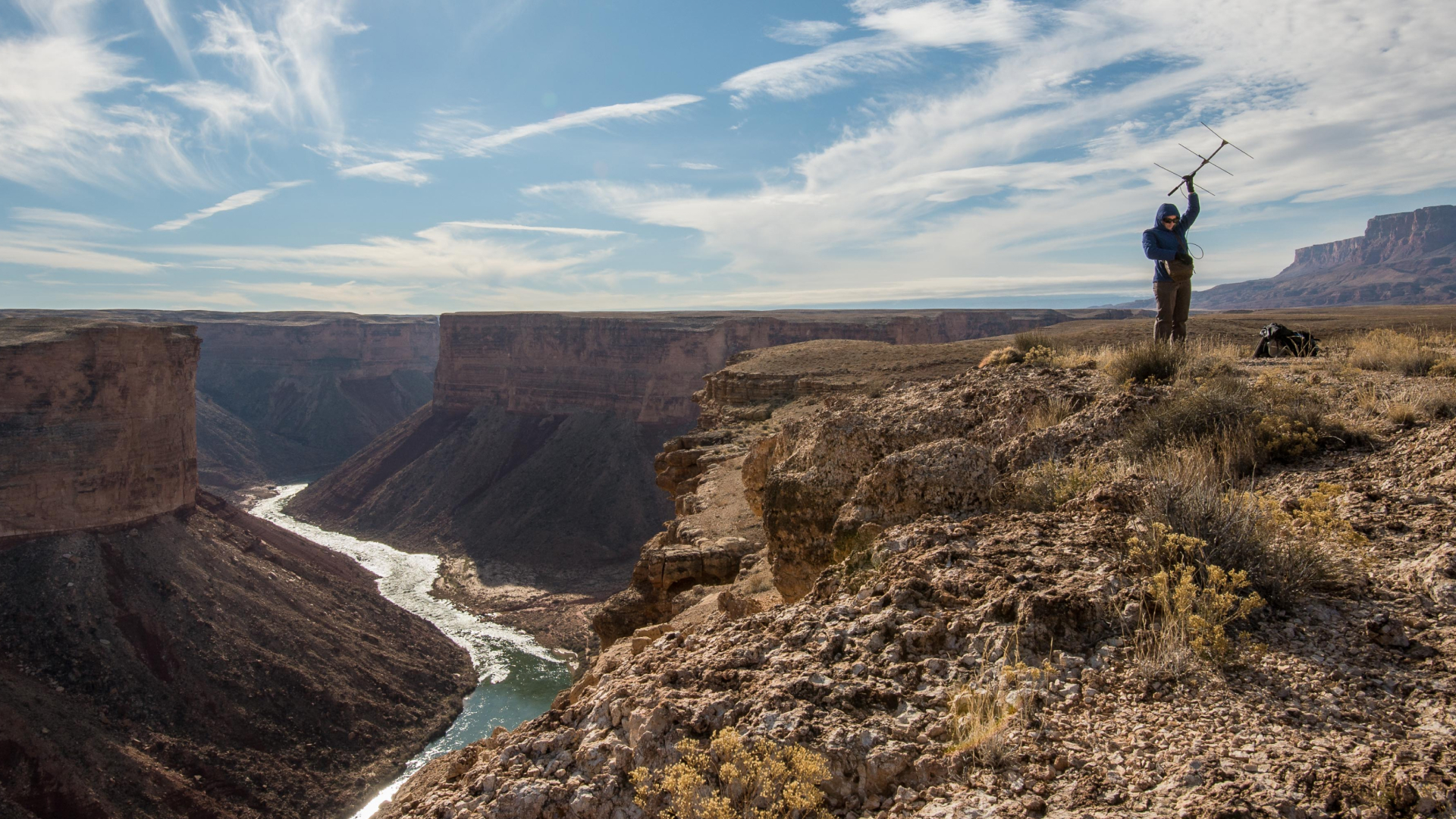
The Peregrine Fund has monitored the Arizona–Utah condor population continuously since our first release in 1996, an unbroken record of observation that informs every decision we make. Most condors in the population carry a GPS transmitter and a VHF radio transmitter, allowing our field team to track where individual birds are roosting, foraging, and breeding across a vast and rugged landscape. That data tells us where lead exposure is most likely occurring, where new territories are forming, and when a bird may be in trouble. When a condor's signal goes still, our team responds. Some of our biologists have been monitoring the same birds for more than a decade, and that depth of individual knowledge has proven to be one of the program's most valuable assets.
Each year, condors from the Arizona–Utah population are trapped for comprehensive health checks. Our team measures weight, checks body condition, collects blood samples to test for lead exposure, and replaces worn or damaged transmitters and wing tags.
Nest Monitoring
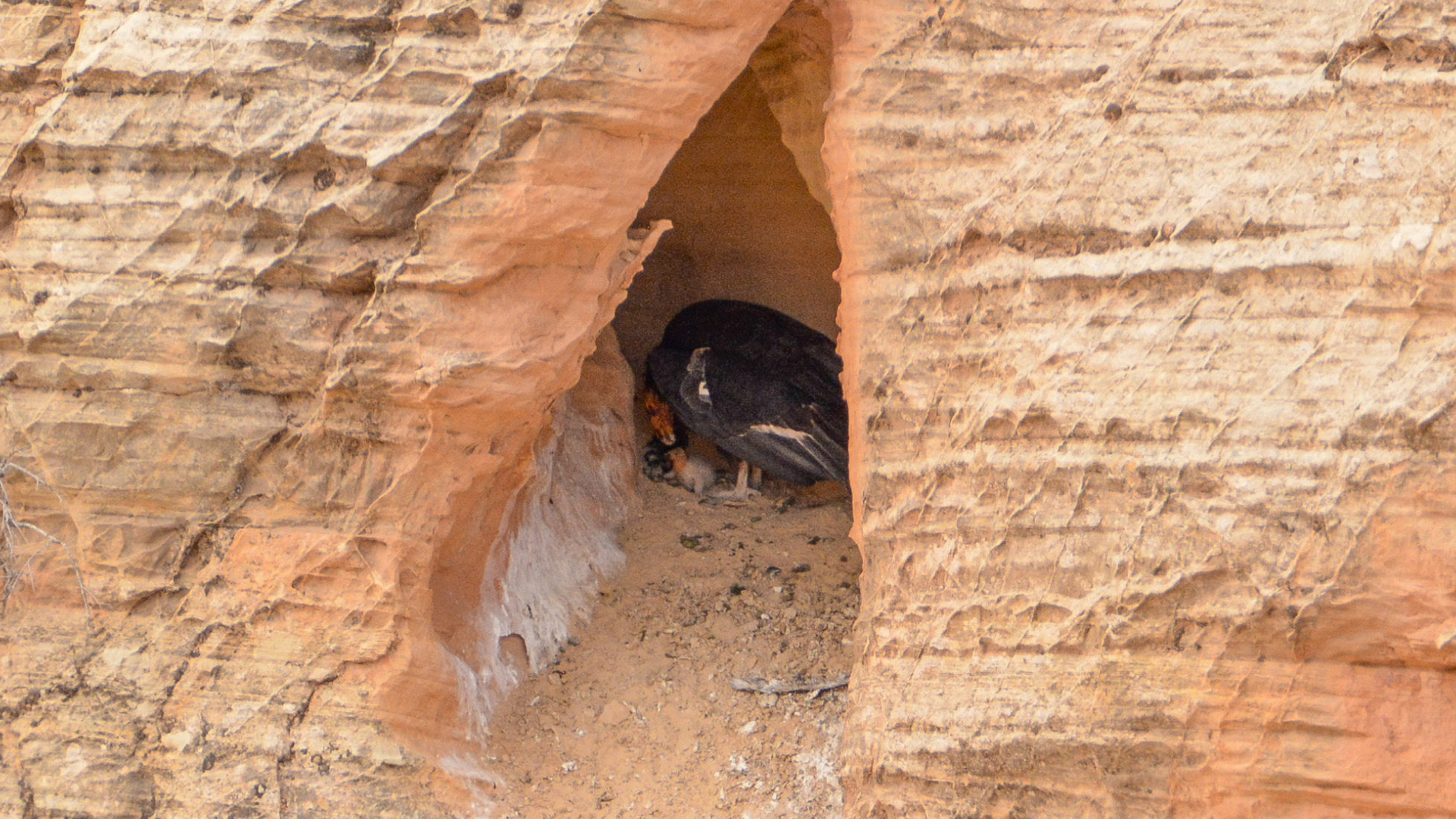
California Condors typically raise just one young every other year, making every nest critically important to the recovery of the species. Our team tracks nesting activity through a combination of field observations and GPS transmitter data. When a female begins incubation, her solar-powered GPS goes offline due to the lack of sunlight inside the cave—usually a strong indication that nesting has begun. This pattern continues throughout incubation as both the male and female take turns on the egg. Visually confirming what is happening inside is much harder, since condors nest high in cliffside caves that are often difficult to view clearly. Our biologists monitor from a distance, setting up with spotting scopes across the canyon to watch for feeding behavior, parental activity, and the first signs of a growing nestling.
Treating Lead Poisoning
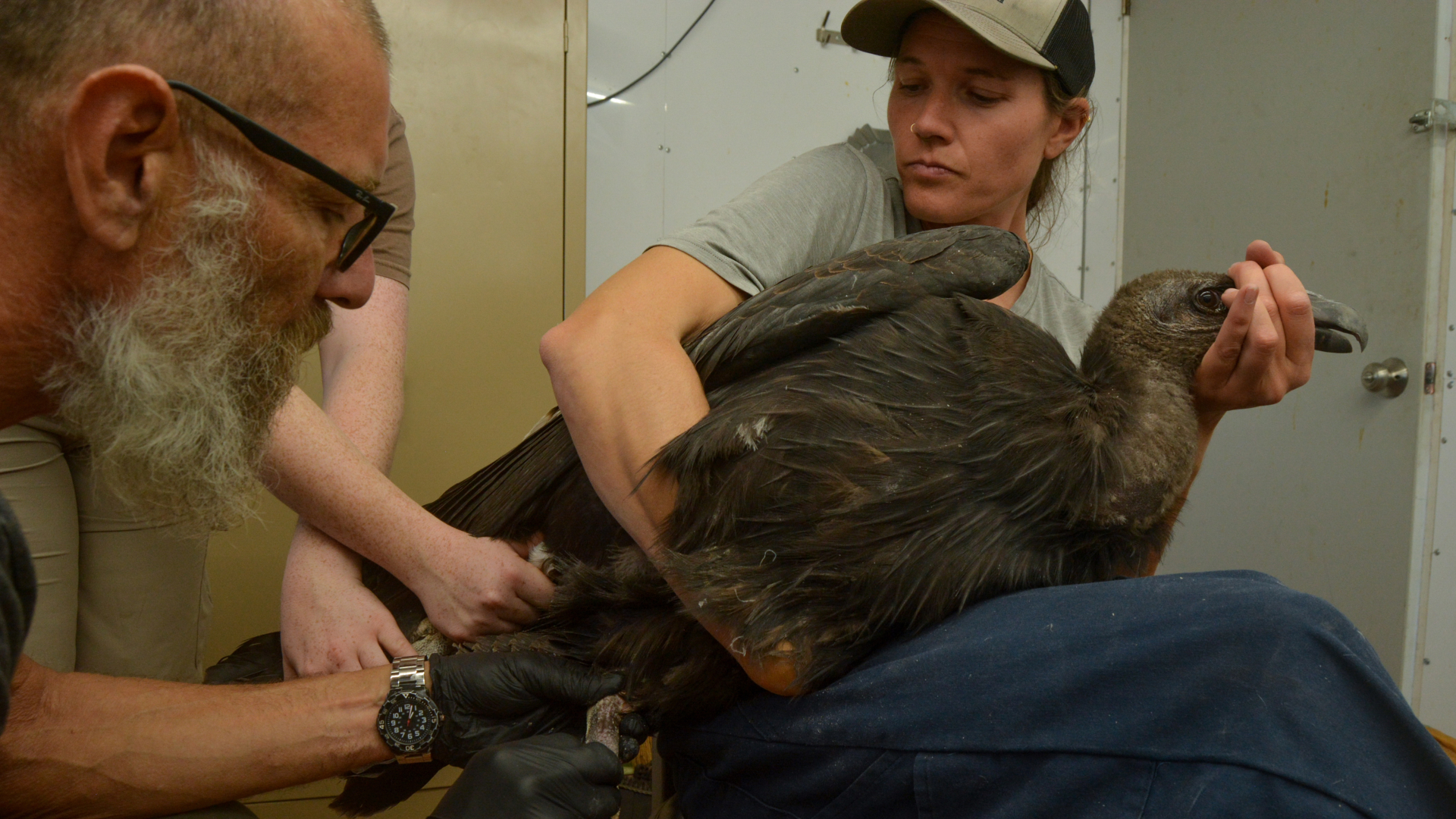
Lead poisoning is the single greatest obstacle standing between the California Condor and full recovery. Beginning each November—when lead levels in the population historically spike alongside hunting season—our field team begins systematically trapping and testing condors. Blood samples are analyzed for lead levels, and any bird testing above our threshold is brought in for chelation therapy, a treatment that binds to lead in the bloodstream and allows the body to flush it out. In a typical season, our team traps and tests 80 percent of the population, on average. Birds with the most severe symptoms—for example, crop stasis or neurological impairment—are transferred to Liberty Wildlife, a rehabilitation hospital in Phoenix with the veterinary staff and facilities to provide around-the-clock care.
Hunter Outreach
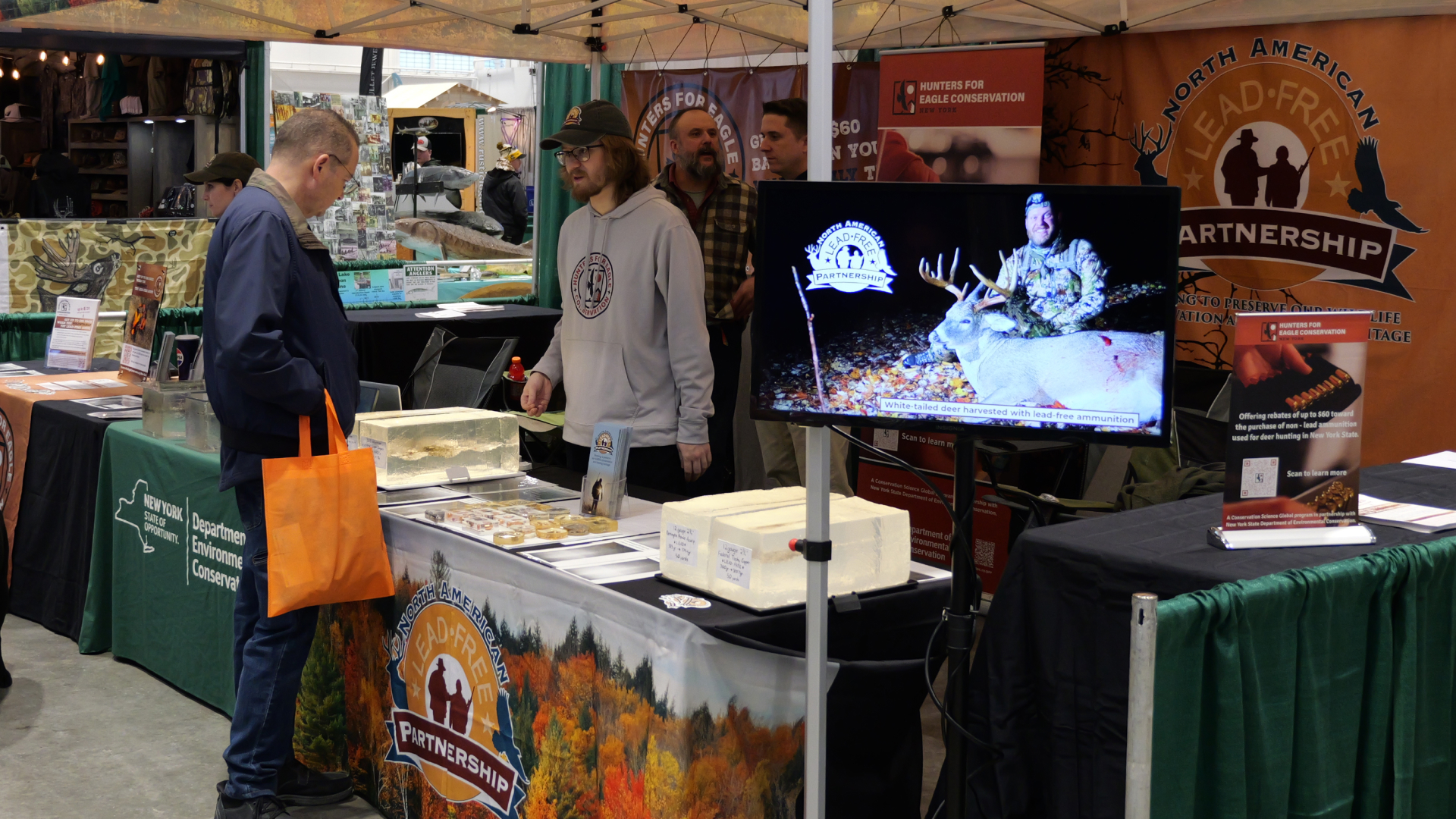
Treating lead poisoning keeps individual condors alive—but preventing it will ultimately secure the species' future. In 2018, The Peregrine Fund co-founded the North American Lead-Free Partnership, a coalition of more than 70 hunting, conservation, and wildlife management organizations united around a voluntary, incentive-based approach to transitioning hunters to lead-free ammunition. This effort was built by hunters and works with hunters, grounded in the belief that protecting wildlife and honoring our hunting and conservation traditions are not competing goals. When hunters choose lead-free alternatives, like copper bullets, the threat is dramatically reduced. It is one of the most direct and meaningful actions anyone can take for condor recovery.
To learn more, find lead-free ammunition options, and hear from hunters across North America who have already made the switch, visit the North American Lead-Free Partnership at leadfreepartnership.org.

Wendy Savage
Our Impacts

Rin O'Connell
Our Impacts
More Information
Learn about the North American Lead-Free Partnership
Read the Audubon Magazine article about how HPAI impacted the flock in 2023
Watch the American Southwest film, featuring our California Condor Program
Watch Lead It Go, which follows hunter and conservationist (President & CEO of The Peregrine Fund) Chris Parish’s mission to prevent unintentional lead poisoning in wildlife
Read about our work in Arizona
Watch past California Condor releases