
Kelsey Tatton
New Study Narrows Search for Drivers of American Kestrel Decline
The American Kestrel, North America's smallest falcon, has been disappearing at roughly 1–2% per year since the 1960s. Despite decades of research, the underlying causes have remained unclear. A new study published in Ecosphere, co-authored by TPF’s Quantitative Ecologist Dr. Brian Rolek and Executive Vice President of Science & Conservation Dr. Chris McClure, identifies survival rate as a potential driver.
To get there, the researchers built a large-scale population model drawing on data from various bird banding records, nest monitoring programs, and bird surveys spanning 1986 to 2019. This includes data from the American Kestrel Partnership (AKP), our former community science kestrel nestbox monitoring program, as well as Cornell Lab of Ornithology’s NestWatch, which absorbed the AKP in 2024. Together with many others, these sources allowed the team to extrapolate kestrel population trends across North America and examine potential causes of the decreasing population.
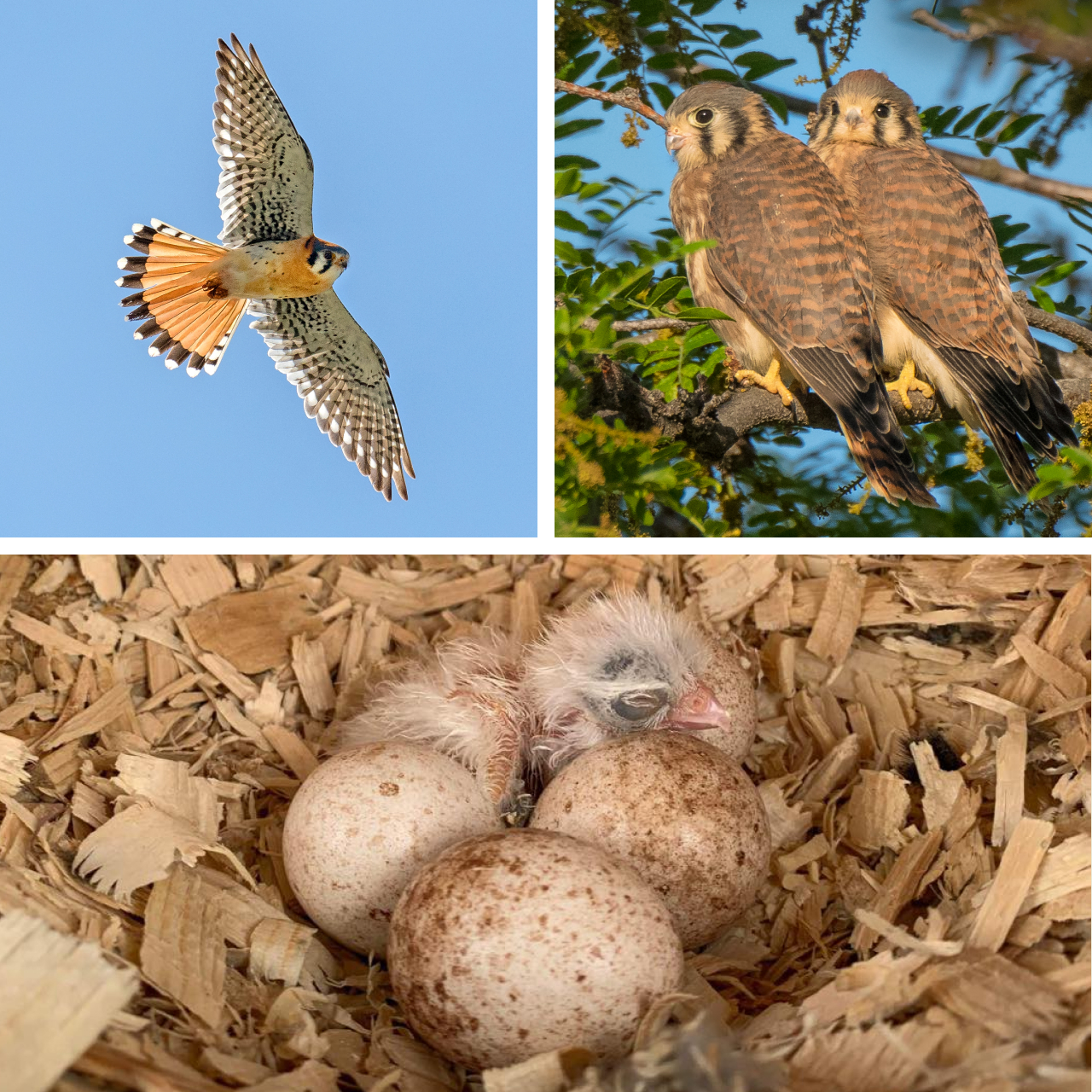
Overall, the analysis estimated a 29% reduction in population size over the study period. The steepest drops in survival were concentrated in summer, particularly among juvenile birds and adult males. Adult females fared somewhat better in summer but showed low annual survival overall.
What is causing this decrease in survival? The study does not point to a single answer, but highlights several probable factors, including reduced availability of insect prey, exposure to rodenticides and pesticides, and increased predation from Cooper's Hawks. The research team is now working to scale the model down to regional levels, where the extent and causes of decline are likely to differ.
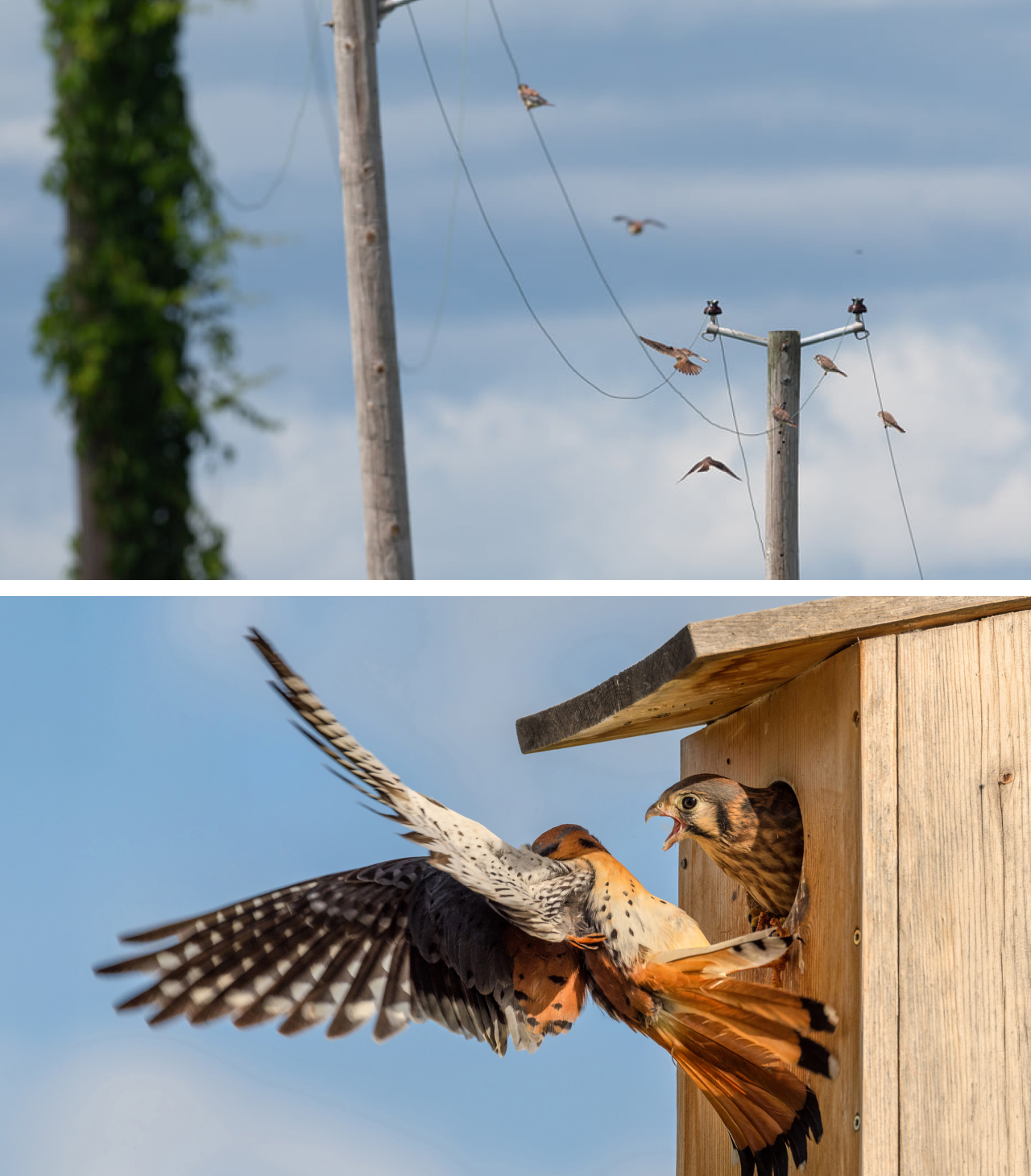
Though the decline is concerning, the American Kestrel remains classified by the IUCN as “Least Concern,” with a North American population of more than 2.5 million. The authors note that identifying the causes of a population decline before a species reaches crisis status makes conservation action more effective and less costly. For the American Kestrel, that window of opportunity is still open—for now.