Photo by Wouter Beukema; licensed under CC BY 4.0
Mapping Philippine Eagle Habitat to Guide Mining Decisions on Mindanao
High in the mountain forests of Mindanao, Philippine Eagles return to the same nests year after year. Some nests are even used by one generation after another. Mindanao is the main stronghold for this Critically Endangered raptor, but its forests are also rich in gold and nickel. A new study in Bird Conservation International maps where eagle habitat and mining overlap, showing where careful planning matters most.
Why the Philippine Eagle Matters
The Philippine Eagle lives only in—you guessed it—the Philippines. It ranks second on the Top 10 EDGE raptor species. EDGE looks at two things: how unique a species is, and how close it is to extinction. A high score means a bird carries history found nowhere else on Earth and faces urgent risk. The Philippine Eagle is one of the birds the world can least afford to lose.
Building a Map From Decades of Fieldwork
Luke Sutton of RaptorLab led the study with scientists from the Philippine Eagle Foundation, the University of the Philippines Mindanao, and The Peregrine Fund. The team began with 48 nest sites the Philippine Eagle Foundation has found since 1978. They added location data from seven nesting adult eagles wearing GPS transmitters, all stored in the Global Raptor Impact Network. (A Philippine Eagle wearing a GPS transmitter is pictured below; the device is visible high on the bird's back between its shoulders.)
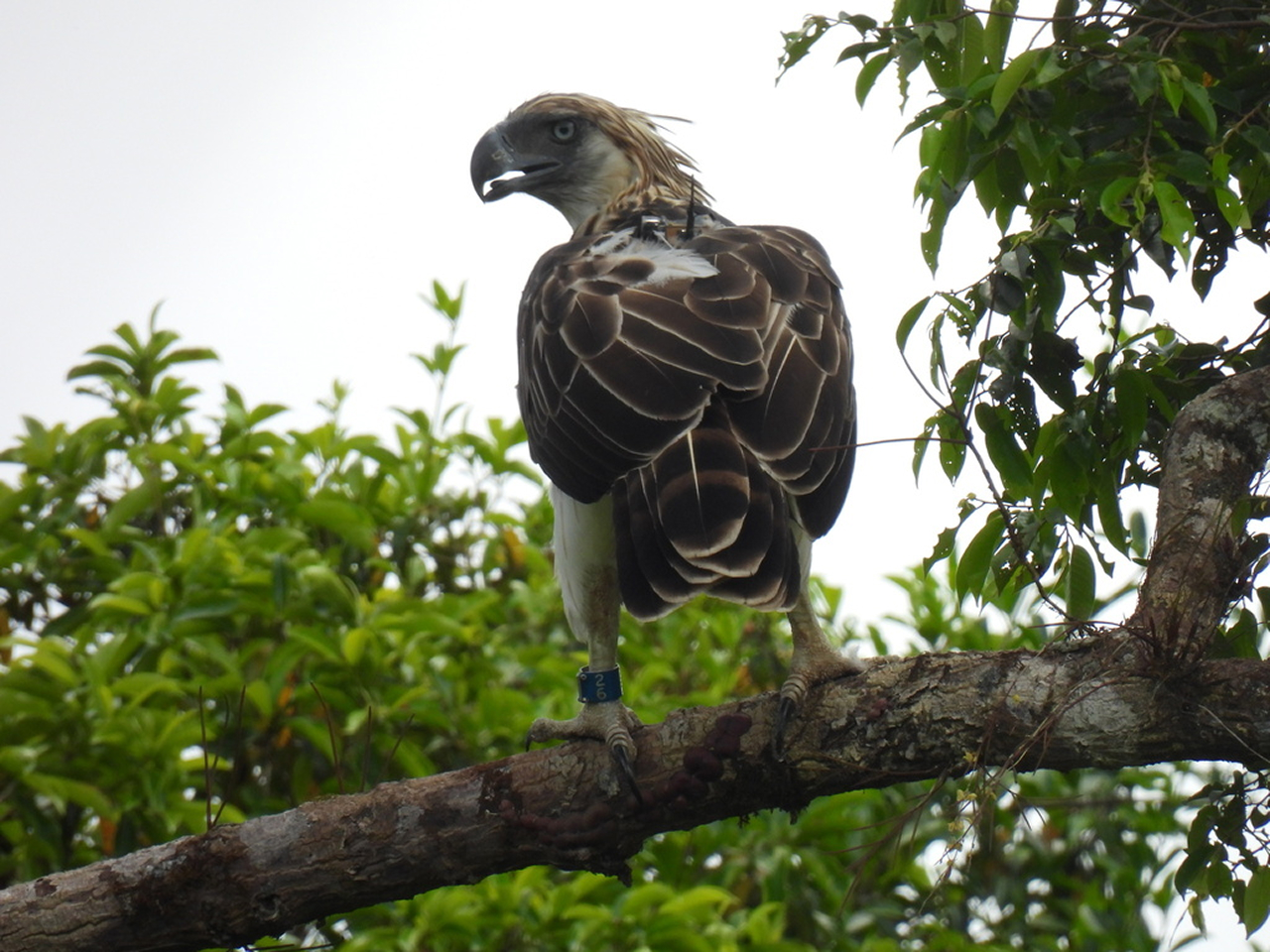
With these records, the team built a species distribution model. This tool compares where eagles live with satellite data on forest structure, canopy cover, vegetation, and terrain. It then predicts where else good nest habitat is likely to be. The best areas were in the mountain forest areas of the Kitanglad, Pantaron, and Diwata Mountains and on the Bukidnon Plateau.
Where Eagle Habitat and Mining Meet
Next, the researchers zoomed in on the Eastern Mindanao Biodiversity Corridor. This region has more Key Biodiversity Areas than any other part of the island. It also has the most mining concessions, or areas licensed for mining. The study found that 41% of the land in approved mining concessions is high-quality eagle nest habitat. In the corridor’s protected areas, that figure was about 35%.
Lands managed by Indigenous communities, called ancestral domains, stood out even more. About 46% of these lands held high-quality nest habitat. Many community members already work as forest guards and nest wardens, serving as a first line of defense against illegal logging and hunting.
From Map to Action
The authors named 15 priority mining concessions where they recommend pausing work until nest surveys show whether eagles are present. Where active nests are found, they suggest legal protection and buffer zones to protect the eagles. They also call for stronger teamwork among mining companies, government agencies, conservation groups, and Indigenous communities.
The authors note that mining projects vary widely in their effects, and careful planning can reduce harm. They also warn that habitat with no eagles is still important habitat. The Philippine Eagle Foundation recently found at least three new pairs settling into suitable forest. Two of the females had been tagged as young birds and had only just reached breeding age.
Each nest found and each partnership built with the communities who know these forests best brings the Philippine Eagle closer to a lasting future on Mindanao.