
Hana Weaver
Egg-straordinary Care: Propagation Updates Both Large and Small
Eggs. For some, a small section at the grocery store. But during the breeding season, for our propagation teams in Boise and Puerto Rico, eggs are practically their entire world. And for the developing embryos inside, this is quite literal.
From the moment an egg is laid, the embryo inside has everything it needs. The yolk provides energy, slowly shrinking as the developing bird absorbs it. Tiny pores in the shell allow gas exchange—the embryo’s way of breathing—while blood vessels carry nutrients and gases throughout. It is a quiet process, unfolding over weeks in a protected space no bigger than your hand. But protected though it may be, there’s still a lot that can go wrong, and for endangered birds, the margin for error is razor-thin.
Our propagation staff tends to each egg with extraordinary care. Eggs are weighed daily and rotated every 1–2 hours, mimicking what parent birds do naturally to prevent the embryo from sticking to the inside of the shell’s membrane—and monitored closely throughout incubation.
Candling is exactly what it sounds like: using light to see inside an egg. The technique has been around for centuries, though today our team uses specialized equipment rather than actual candles. A bright light shines through the shell, giving staff a view of the embryo as it develops, without causing any harm. It offers a remarkable window into a process most people never witness, allowing our team to check for healthy development, catch potential problems early, and sometimes intervene when an embryo is not positioned correctly. It is patient work—and it matters enormously.
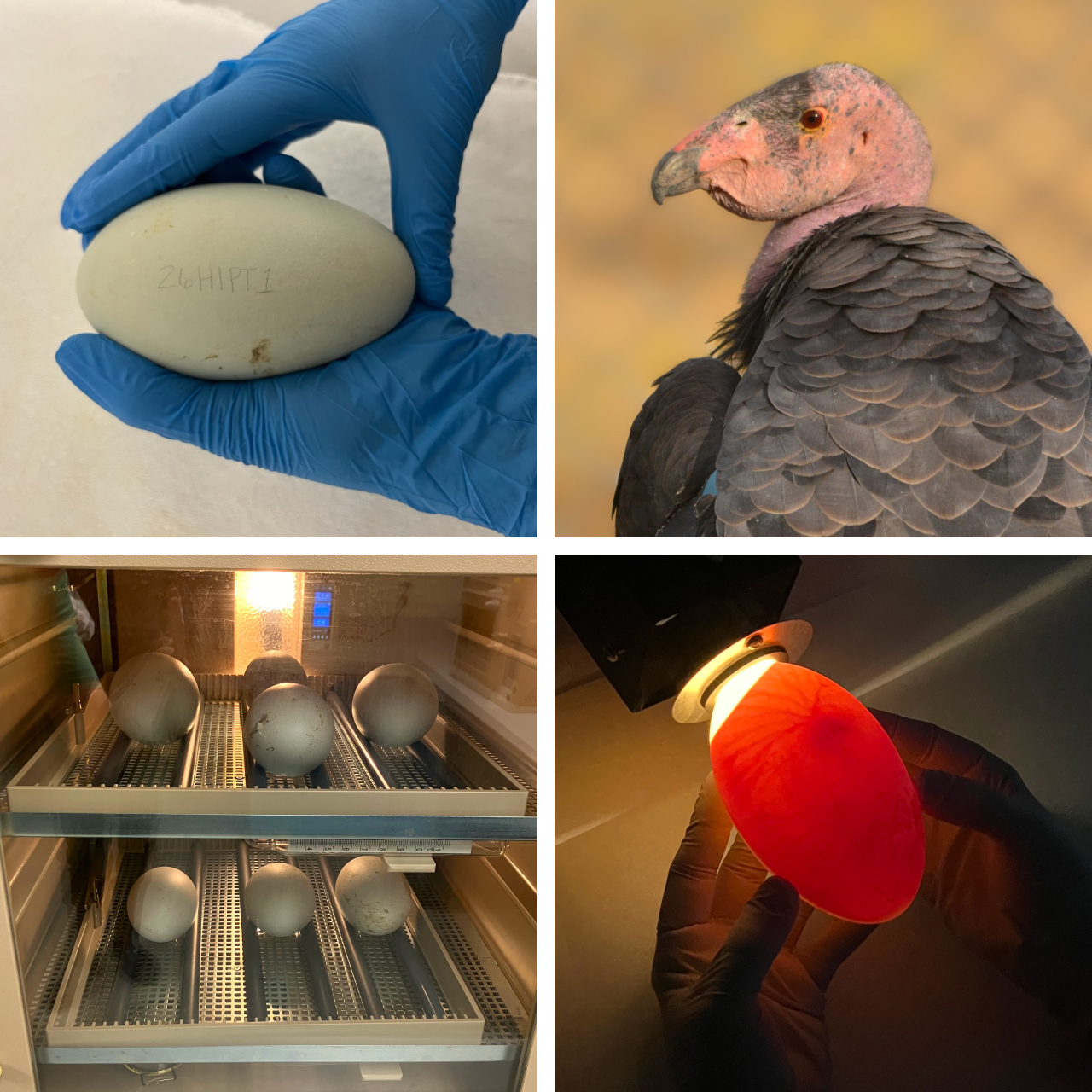
In Boise, our team carefully tends to small breeding flocks of Taita Falcons and Aplomado Falcons, as well as the world’s largest captive breeding flock of Critically Endangered California Condors. As of May 5, 18 condor eggs have been laid at our Boise facility, and seven have already hatched. Each one represents years of careful breeding and the round-the-clock attention of a team that understands what is at stake. With condors still recovering from near-extinction—only 22 birds remained on Earth in the 1980s—every egg counts.
The process is slightly different in Puerto Rico, where our staff does not maintain captive breeding flocks. Instead, the team manages a wild population of Critically Endangered Puerto Rican Sharp-shinned Hawks using a technique known as double-clutching. When a wild pair lays their first clutch of eggs, our team carefully collects those eggs and brings them to our propagation facility in Puerto Rico, where they are artificially incubated, monitored through hatching, raised, and later released back into the wild. Meanwhile, the wild pair lays a second clutch on their own, effectively producing twice as many young in a single season. As of May 5, 12 eggs have been collected with all confirmed fertile, and three of the four wild pairs are already incubating their second clutches.
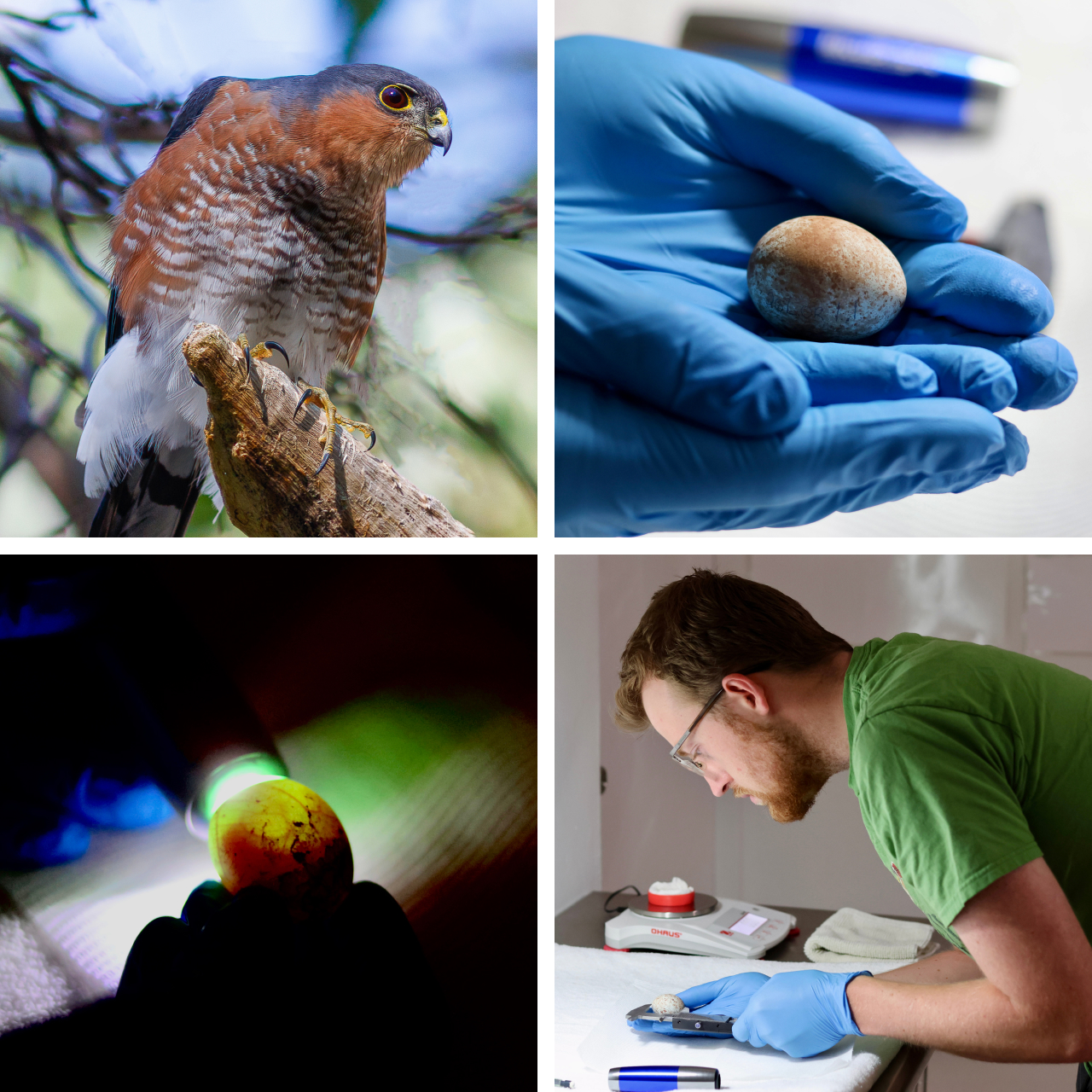
From huge 270-gram condor eggs in Boise to tiny 15-gram hawk eggs in the mountains of Puerto Rico, this is what recovery looks like in its earliest, most fragile form. In our scientists’ capable hands, breeding techniques that have been around for centuries, used previously by our team to bring back the Peregrine Falcon and Mauritius Kestrel, continue to evolve and save species today. It is meticulous, hopeful work. And it would not be possible without the dedication of our propagation teams and the generosity of supporters like you.
Stay tuned for more from our propagation teams in the coming months!