
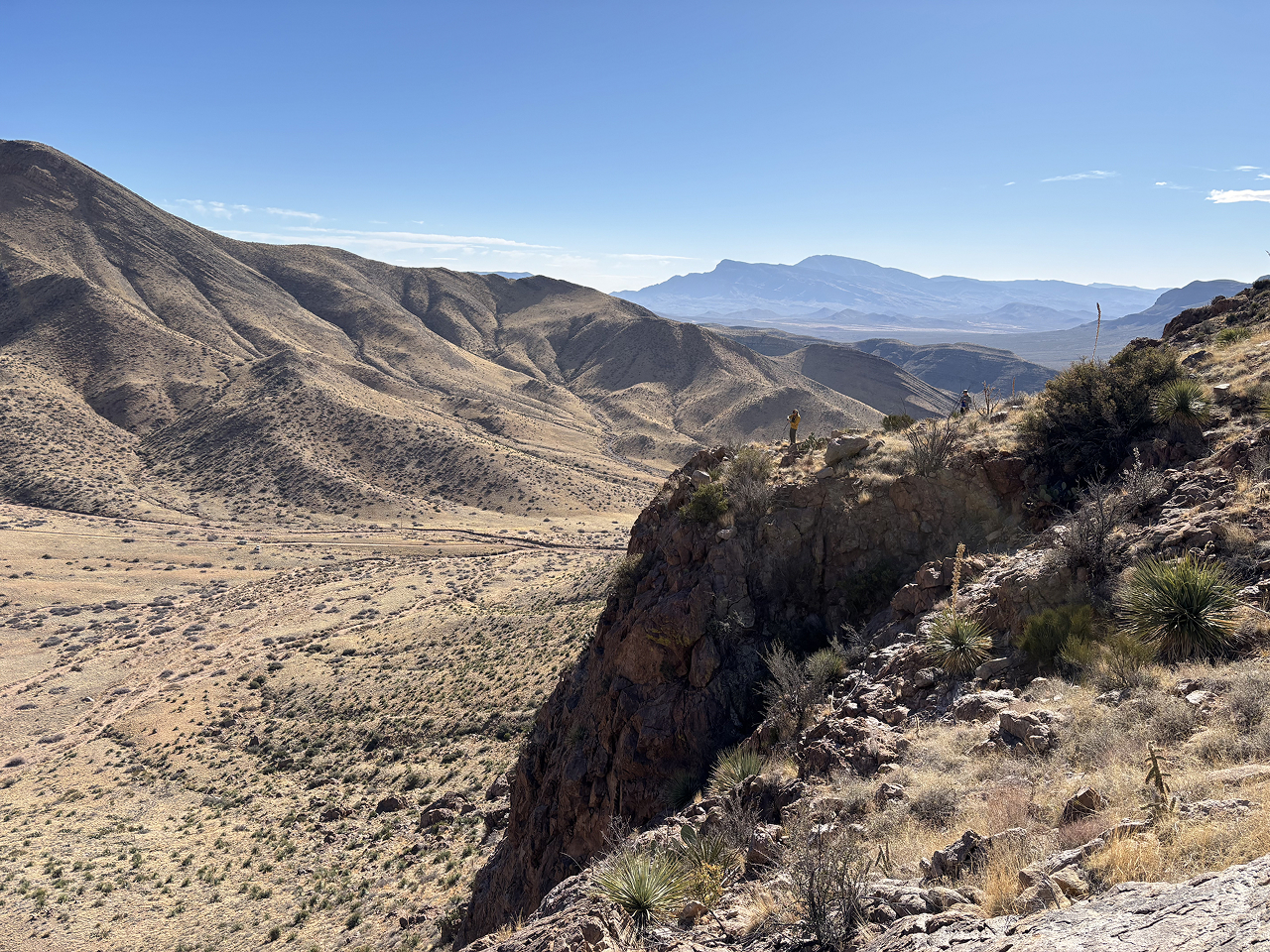
courtesy of The Peregrine Fund
Collaboration Drives Golden Eagle Research at White Sands Missile Range
Since 2012, The Peregrine Fund has partnered with White Sands Missile Range (WSMR) in New Mexico to monitor Golden Eagles, Birds of Conservation Concern that face a range of preventable human-caused threats. Our team conducts occupancy surveys to determine which territories are actively used by eagles, breeding surveys to track reproductive success, prey studies to understand food availability, and research to better understand the risk scavenging poses to eagles being exposed to contaminants like lead. Taken together, this work builds a comprehensive picture of the Golden Eagle population on WSMR, informs wildlife and land management decisions, and serves as a model for raptor conservation efforts worldwide.
“Our fieldwork in 2026 revealed that Golden Eagles are occupying all 33 identified territories surveyed,” says Paul Juergens, Vice President of Conservation—Domestic Programs. “This 100% occupancy rate is an encouraging sign for the local population.”
These surveys are directly tied to the graduate research of TPF Conservation Field Biologist Tom Hudson, who is pursuing a Master of Science degree in Fish and Wildlife Conservation at Virginia Tech. Tom is using data from both the occupancy and wintering eagle density surveys for his thesis, which investigates how hunters voluntarily switching to lead-free ammunition can reduce Golden Eagle fatalities. Lead poisoning is a significant threat to Golden Eagles, often the result of eagles scavenging carcasses or gut piles left behind by hunters using lead-based ammunition.
“During the study period, we found roughly a quarter of hunters on WSMR were using lead-free ammunition,” explains Tom. “Our preliminary findings estimate that the percentage of hunters who chose to use lead-free ammunition prevented two to three eagle deaths each year. These findings highlight both the impact hunters are already making and the potential for even greater change.”
To support Tom's thesis and strengthen the program's scientific foundation, our Quantitative Ecologist Brian Rolek, PhD, and Energy Scientist Vince Slabe, PhD, made their first-ever visits to WSMR this past January. The two came out to test-drive transect survey methods for estimating wintering Golden Eagle density on the range and assisted with occupancy surveys.
“For scientists who work closely with data from this program, time in the field is invaluable,” shares Tom. “Seeing the birds, the habitat, and the conditions firsthand deepens their understanding of the system and the data they analyze.”
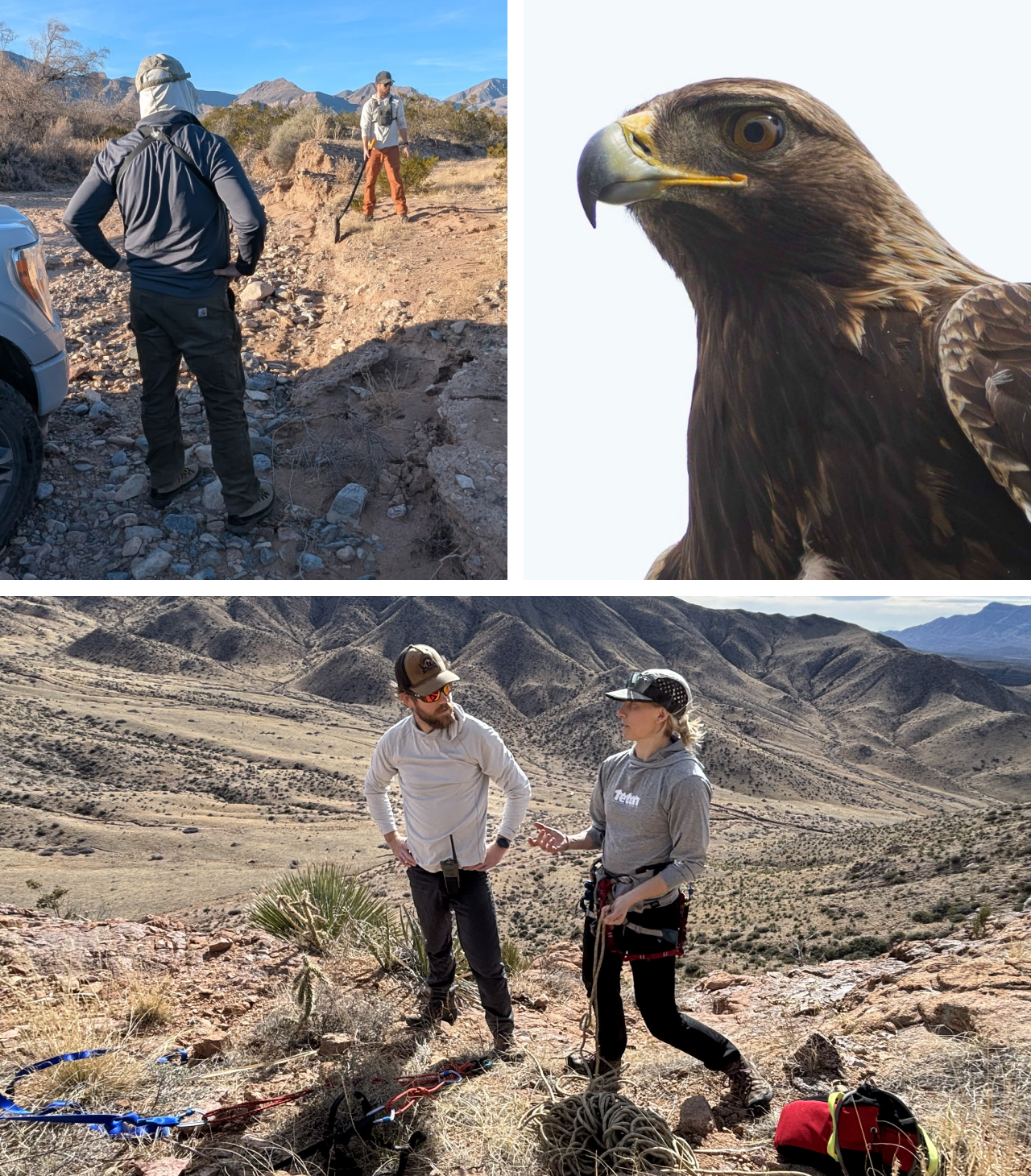
That spirit of collaboration extended across the field team as well. Kara Beer, Program Coordinator for our Gyrfalcon and Tundra Conservation Program, assisted with occupancy surveys for the second consecutive year. "Her expertise in monitoring cliff-nesting raptors has meaningfully improved both the survey effort and its results," says Tom, who is seen with Kara in bottom photo above. Additional field support comes from colleagues across our California Condor Recovery Program (Tim Hauck and Kirsten Fuller), Puerto Rico Program (Hana Weaver), and Aplomado Falcon Program (Jeffrey Grayum).
“This kind of cross-program collaboration is one of The Peregrine Fund's greatest assets,” Paul says. “It ensures that our collective knowledge and experience are always working in service of the birds and maximizing our impact in conservation.”
WSMR approved for public release on 7 April 2026. Distribution is unlimited.