

Munir Virani
A Balancing Act: How Egyptian Vultures Manage Molt, Migration, and Breeding
For birds, replacing worn feathers (a process called molt) is one of the most energetically demanding events in their lives. Many songbirds replace all of their feathers every year, but for raptors, whose larger body size makes molting more energetically demanding, it often takes several years. And for the Egyptian Vulture, it's especially complex: the species takes 4–6 years to complete the transition to adult plumage, meaning young birds are essentially molting continuously while also learning to migrate and breed. How do different populations juggle these competing demands? A new study published in the Journal of Avian Biology, co-authored by TPF's Vice President of Conservation—International Programs, Evan Buechley, examined molt patterns across the species' range to find out.
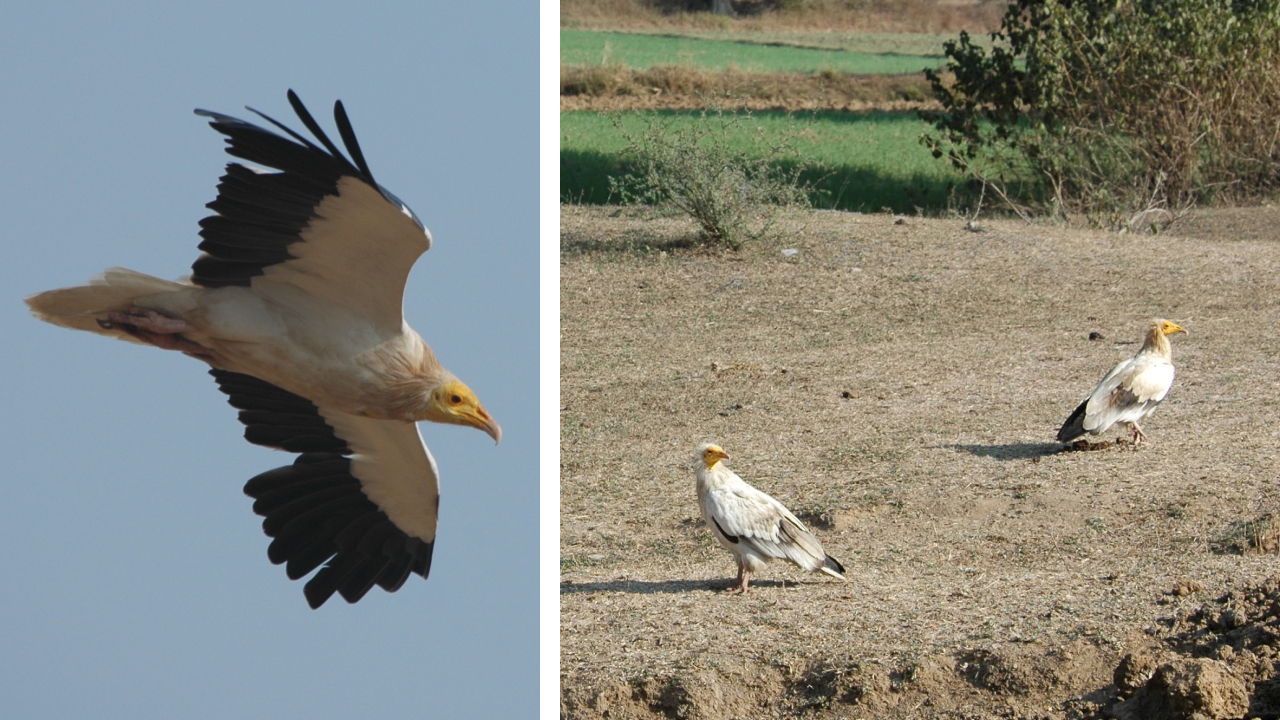
The team analyzed 740 detailed records of feather condition and replacement drawn from birds across Europe, Africa, and Asia. Different populations of this Endangered but wide-ranging species employ different movement strategies, with some migratory, others sedentary (remaining in one location all year), and still others displaying a mix of the two. Analyzing data from birds in these different populations allowed researchers to compare how factors like migration distance and local climate shape the timing and extent of feather replacement.
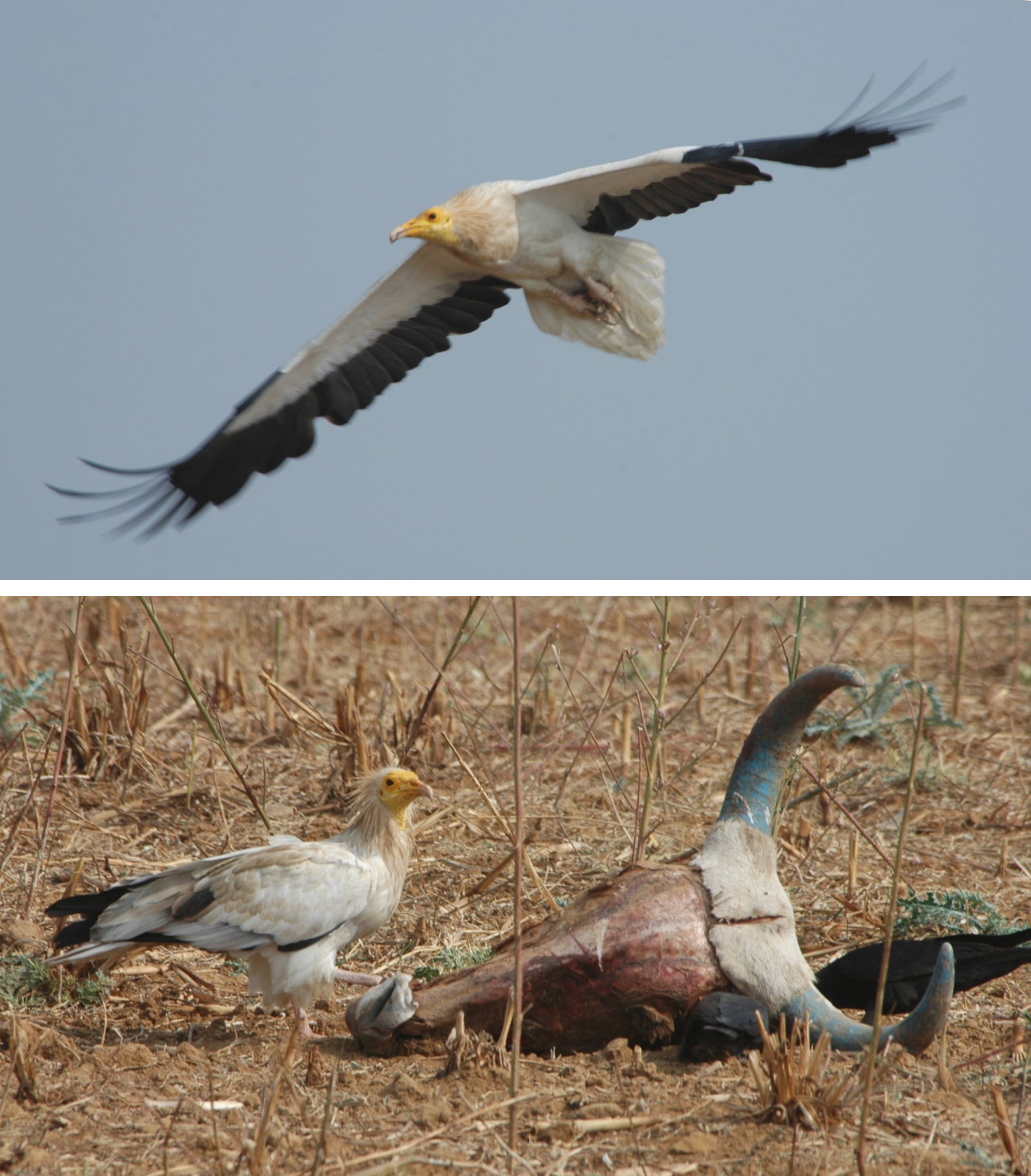
The results reveal a striking contrast between sedentary and migratory birds. Sedentary vultures on the Canary Islands began molting earlier and replaced more feathers annually than their migratory European counterparts. Meanwhile, Egyptian Vultures wintering in western Spain showed the least feather replacement of any population studied, potentially because the harsh winter conditions there demand more energy for basic survival, leaving less energy available for molting. Surprisingly, migration distance itself had little effect: birds undertaking the longest migrations did not show meaningfully reduced molt compared to those traveling shorter routes.
The study adds to a growing picture of the Egyptian Vulture as a remarkably adaptable species whose populations have evolved distinct strategies for balancing their feather conditions with other biological needs. That flexibility may prove important as the species continues to face threats across its range.