
Hana Weaver
Puerto Rican Sharp-shinned Hawks Have Their Best Season Yet
In the dense, rugged forests of Puerto Rico, finding a single Sharp-shinned Hawk nest can take a field biologist weeks and even months of hiking, scanning the canopy, and a lot of patience. This year, that patience paid off in ways our team hasn't seen since before Hurricane Maria tore through the island in 2017.
Our Puerto Rico Program is nearing its most productive breeding season on record for the Endangered Puerto Rican Sharp-shinned Hawk. Field crews counted 50 individual hawks this season, the highest number since the storm reduced sightings to just 19 individuals in 2018. The team also located 12 nesting pairs by combing the island's forests for these elusive birds, with 27 young hawks fledged into the wild in 2026, the most we’ve ever recorded.
Raising a Record Number of Nestlings
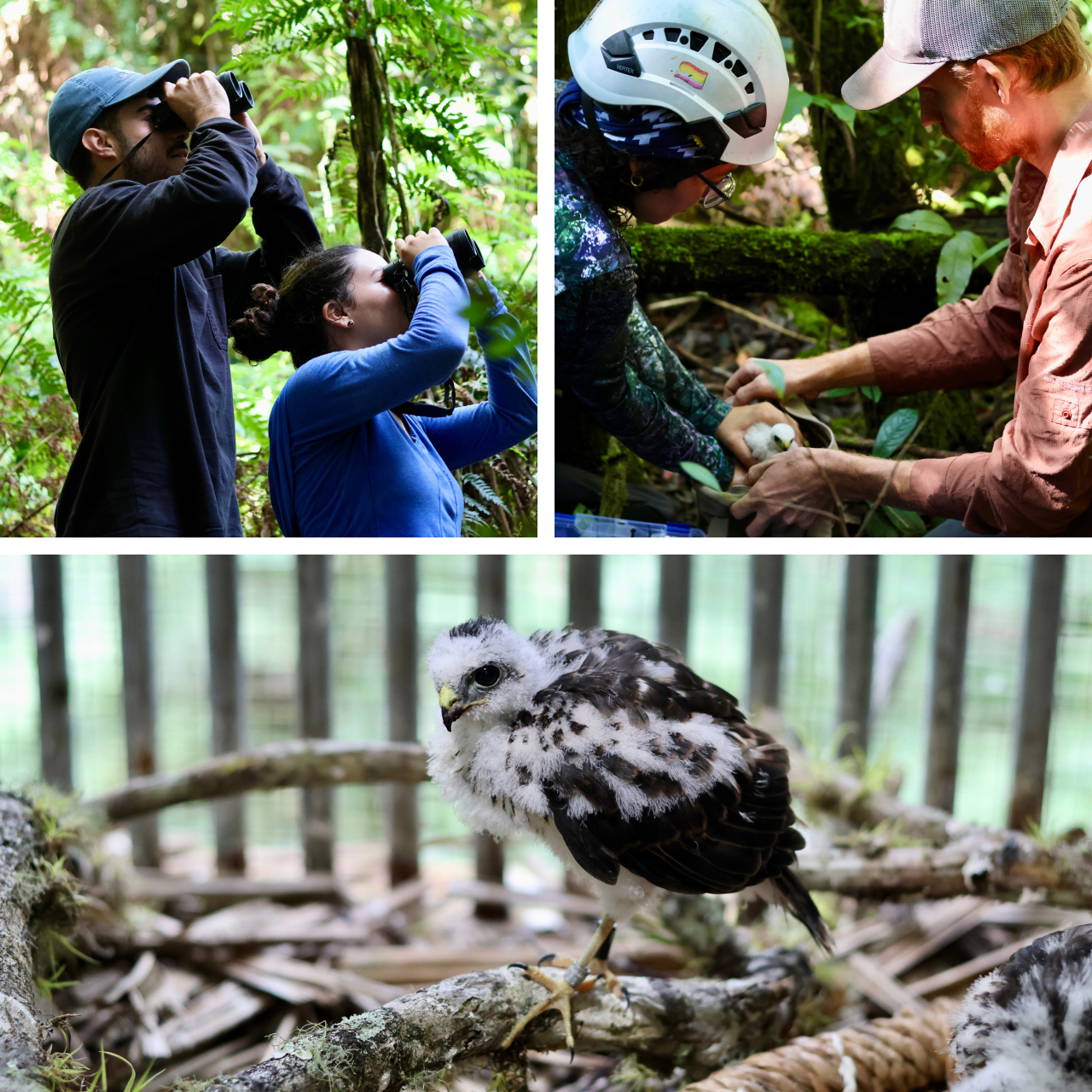
Our team collected 12 eggs from wild pairs and brought them to our Puerto Rico propagation facility, where nine nestlings hatched. Each one was hand-raised and released at a hack site, where they're now learning to hunt and fend for themselves. Two more young hawks joined them under more difficult circumstances: their father had disappeared, leaving their mother unable to feed all three of her nestlings. To give the family the best chance at survival, our team carefully removed the two smallest nestlings, hiked them out of the forest, and raised them at the hack site while their mother stayed behind with a single, strong nestling of her own. Both paths worked. The two relocated nestlings acclimated quickly and were released within a week, and the mother went on to fledge her remaining nestling entirely on her own, the first time this has ever been documented for the subspecies.
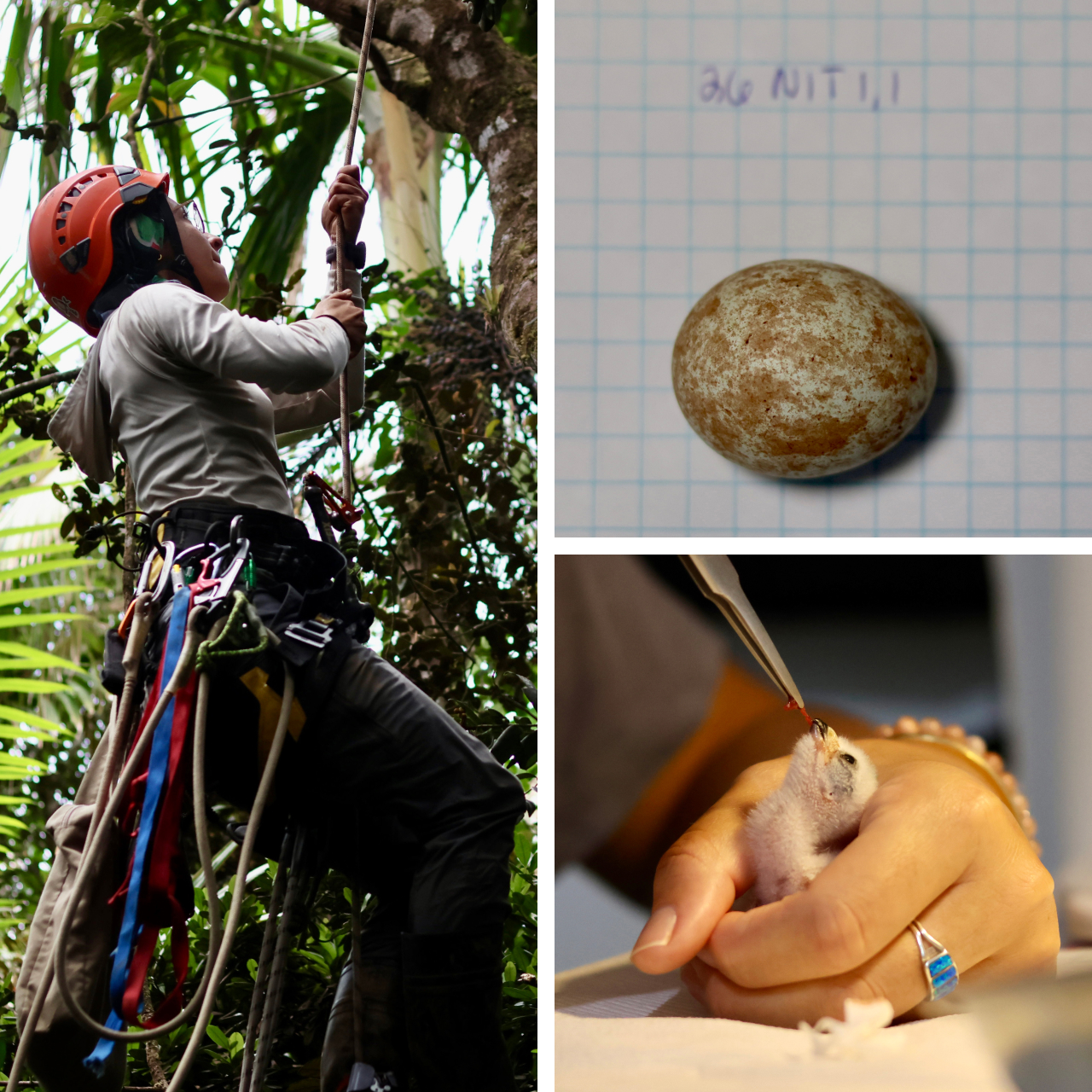
Wild nests thrived too. Nine pairs fledged 16 young this season, equaling the best single-season total the program had recorded in more than a decade. Add the 11 hawks raised and released through our propagation program, and 2026 becomes the most productive year Puerto Rico's Sharp-shinned Hawks have had since we began this work in 2015.
A Hawk We've Followed for Years
One hawk's story, in particular, has stayed with our team. We rescued a nestling known by her band as Black 9/B back in 2024, after her mother disappeared and her sibling died of starvation. After several days of care at our field house, we fostered her into a new nest with two nestlings of similar age. She could be a demanding sibling, showing aggressive behavior over food, but her foster parents took exceptional care of her, and the other two nestlings tolerated her tendencies without much concern. All three successfully reached independence and fledged the nest.
A year later, in 2025, we resighted 9/B, still in her juvenile plumage, paired with an adult male and incubating her first two eggs. Then trouble struck again—she was attacked on the nest, likely by a Red-tailed Hawk, a known threat to Puerto Rican Sharp-shinned Hawks on the island. She lost a significant number of feathers and survived without any life-threatening injuries, but the stress caused her to abandon the nest, and her eggs were lost.
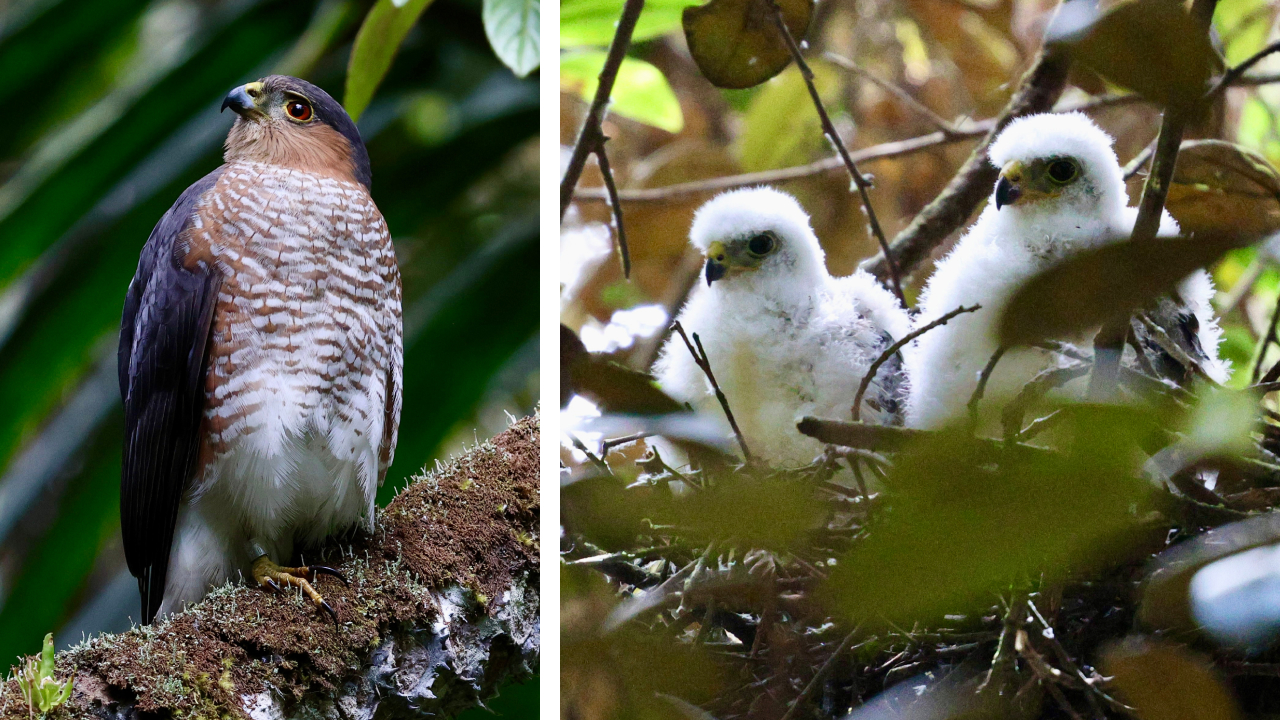
In February 2026, 9/B turned up again, this time in full adult plumage, nesting in one of the island's most pristine breeding habitats. This season, she incubated, hatched, and raised two nestlings with her mate, fiercely mobbing any Red-tailed Hawk that came near. One of her young was tragically killed by a domestic cat (free-roaming cats are a leading threat to wildlife worldwide), but the other, banded Black V/1, has since reached independence and dispersed into the forest on his own.
It's rare to witness the long-term outcome of a single decision to save one individual. With 9/B, we're reminded that no action is too small to make a difference.