
Darcy Ogada
A Historic First: Protecting Kenya's Raptors from Power Pole Electrocution
When Kenya Power announced it had retrofitted power poles at Soysambu Conservancy, in partnership with US-based Kaddas Enterprises, it marked a historic moment: the first time distribution power poles in Kenya have been modified specifically to increase grid reliability by reducing bird electrocutions.
Behind the headline is a story that spans years of research, relationship-building, and collaboration among scientists, energy companies, and conservation groups, including The Peregrine Fund.
The Threat Is Real and Growing
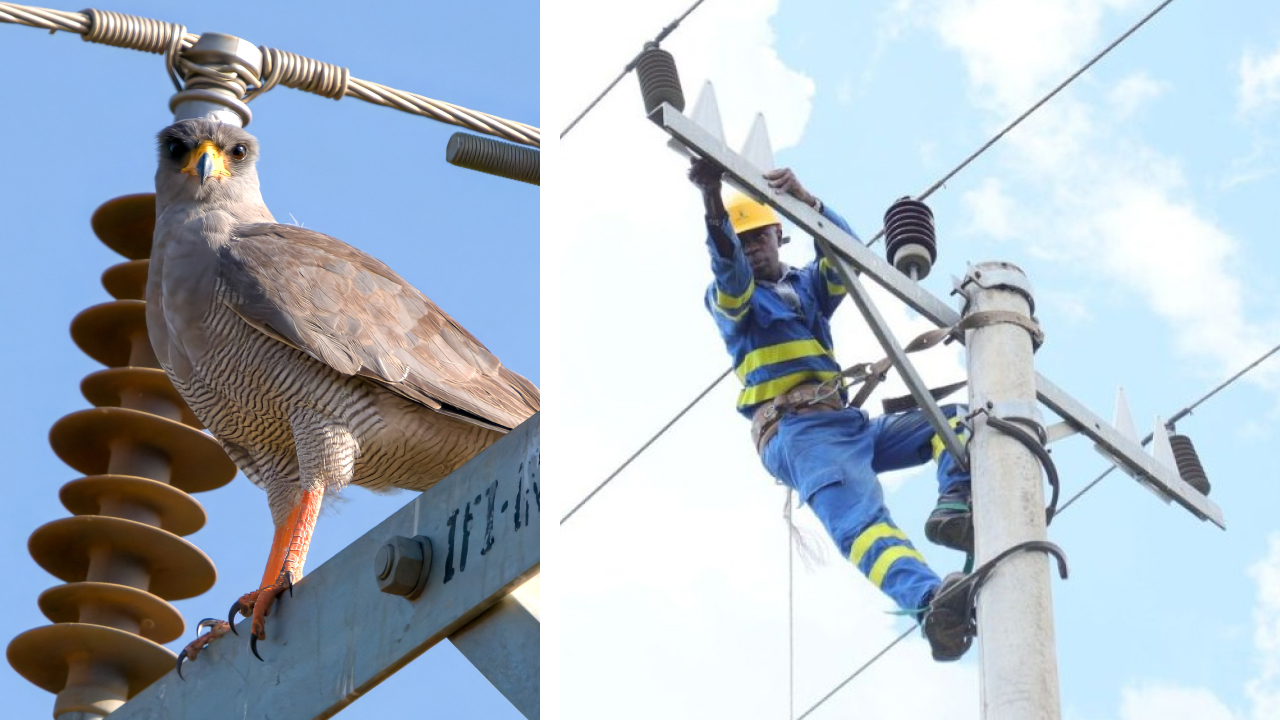
Power line electrocution is one of the biggest threats facing raptors around the world, and Africa is on the front lines. In Kenya, rapidly expanding energy infrastructure has made this threat more urgent. Raptors like the Long-crested Eagle, Augur Buzzard, and Eastern Chanting-goshawk use tall structures—including power poles—to scan for prey below. Poorly designed poles can turn these perches into deadly traps.
Our partners at the Kenya Bird of Prey Trust see this threat firsthand, treating raptors that survive electrocution and documenting those that do not. These losses add to the pressures raptors already face from habitat loss, persecution, and poisoning. The Peregrine Fund is currently studying the impact of powerline electrocutions in Soysambu Conservancy and the nearby Rift Valley. Over the past year, we fitted 30 Augur Buzzards with tracking devices. Six were electrocuted over a few months, confirming an unsustainably high mortality rate. This data will help guide future mitigation efforts.
The fix requires more than awareness. It depends on identifying the most dangerous pole designs, engaging the utility that owns the infrastructure, and installing equipment designed to prevent birds from completing an electrical circuit when they perch.
Years of Groundwork
Getting to this mitigation milestone took years of groundwork. The Peregrine Fund's Northeast Africa Program, led by Dr. Darcy Ogada, worked with partners who each brought unique expertise: a survey by Stephen Githenya that mapped and risk-rated power poles across Soysambu Conservancy, an educational video by Jo Scofield made with Soysambu Conservancy, and outreach materials for the energy sector, an audience that has proven surprisingly receptive.
A pivotal meeting, co-hosted by The Peregrine Fund and several partner organizations, brought Kenya Power, KETRACO, Kenya Wildlife Service, and mitigation companies like Kaddas Enterprises and TE Connectivity to the same table. Their shared goals: improve power reliability, cut maintenance costs, and protect wildlife. Former Peregrine Fund program directors Simon Thomsett and Dr. Munir Virani laid the foundation for this work years earlier, engaging the energy sector long before the first pole was retrofitted.
The Win, and Who Made It Happen
Today, 18 power poles at Soysambu Conservancy have been retrofitted with equipment donated by Kaddas Enterprises and TE Connectivity, turning years of research and relationship-building into a practical field solution. More retrofits are planned using newly donated equipment from Sicame Group. A grant from the National Geographic Society helped launch the effort.
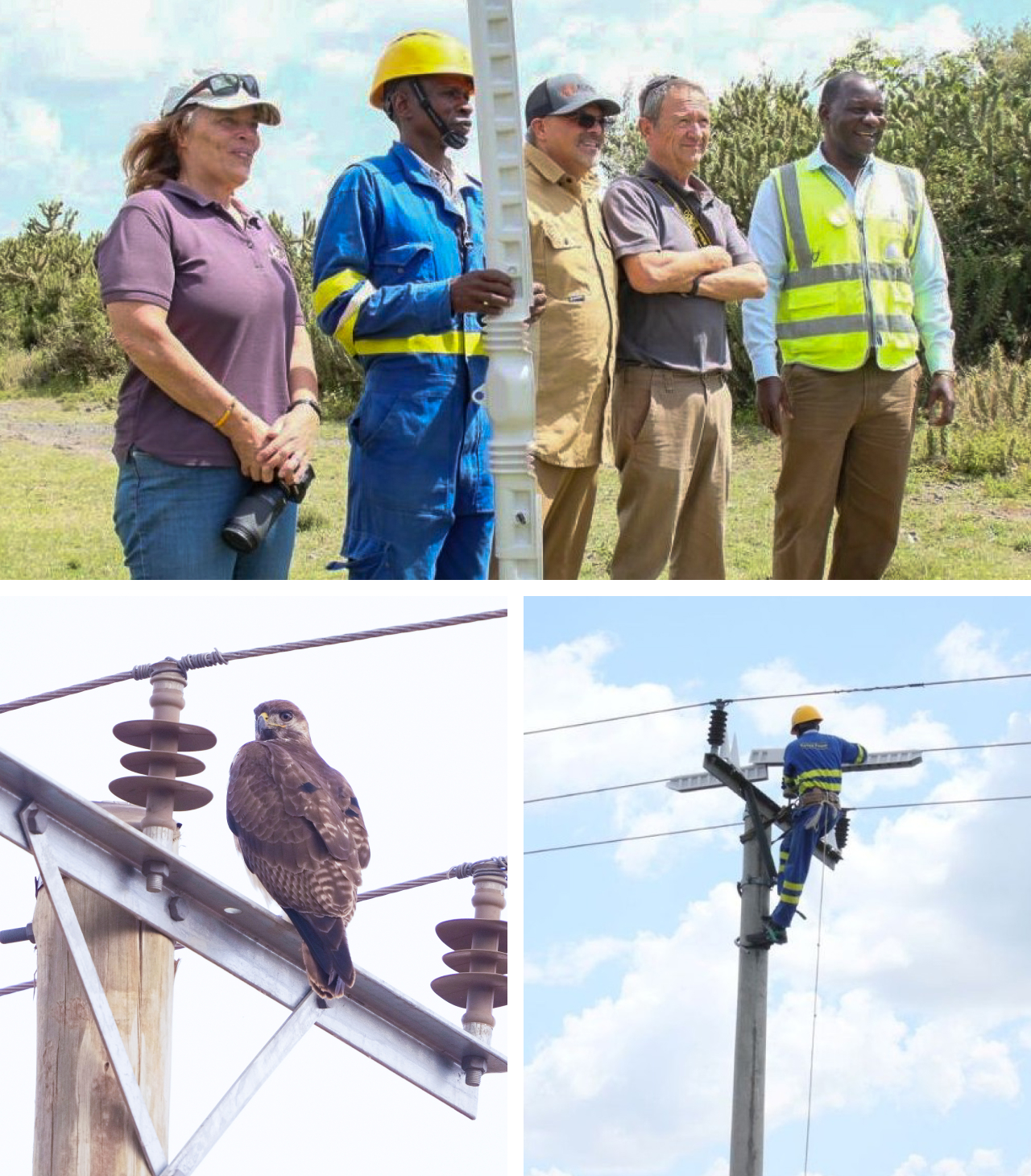
"Seeing the first retrofitted poles at Soysambu is a real joy. Simon and I started knocking on the energy sector's door years ago, but it was the recent work of a lot of patient partners who turned those conversations into hardware on the ground," says Dr. Munir Virani, COO of the Abu Dhabi-based Mohamed bin Zayed Raptor Conservation Fund and former Executive Vice President of The Peregrine Fund. "At the Mohamed bin Zayed Raptor Conservation Fund, we've insulated around 28,000 poles in Mongolia and cut raptor electrocutions there by 95 percent. So we know this works when utilities and conservationists pull in the same direction. Kenya has made a brilliant start, and we'd be glad to share anything we've learned along the way."
This is a win for everyone. Kenya Power reports that wildlife may cause up to 30 percent of the country's power outages, so retrofitting poles improves grid reliability while also protecting raptors. Kenya's tourism sector, which depends on its wildlife, benefits too.
A Small Step with Large Implications
Eighteen poles are just the beginning. The Peregrine Fund and its partners plan to support more retrofits, engage with energy policy, and raise awareness about a threat that remains underrecognized. Kenya's raptors are safer today because of years of dedicated, collaborative work, and that work continues.