

Matthew Danihel
A Season of Growth for California Condors, and a Celebration to Come
This year's California Condor breeding season brought hard-won progress and a few reminders of just how difficult it is to bring back North America’s most endangered raptor. Now we're getting ready to celebrate the newest generation of condors at our 30th Annual California Condor Release on September 26!
Going into the 2026 season, our team was tracking 13 established condor pairs in the Arizona–Utah population. Four of those pairs spent the season caring for their 2025 fledglings instead of nesting again, a reminder that raising a condor to independence can take over a year. All four of those young birds from 2025 were trapped, tagged, and tested for lead exposure earlier this year. Unfortunately, two needed treatment for lead poisoning before being released back into the wild.
Among the nine remaining pairs, seven showed signs of nesting, and we believe five hatched successfully. Determining this isn't an exact science. Our team tracks nesting through field observations and by utilizing GPS transmitters attached to most of the breeding condors. When the female begins incubation, her solar-powered GPS goes offline due to the lack of sun inside the cave, usually a strong indication that nesting has begun. This pattern continues throughout incubation as both male and female take turns sitting on the egg. Visually confirming what's actually happening inside is much harder, since condors nest high in cliffside caves that are often difficult to view clearly.
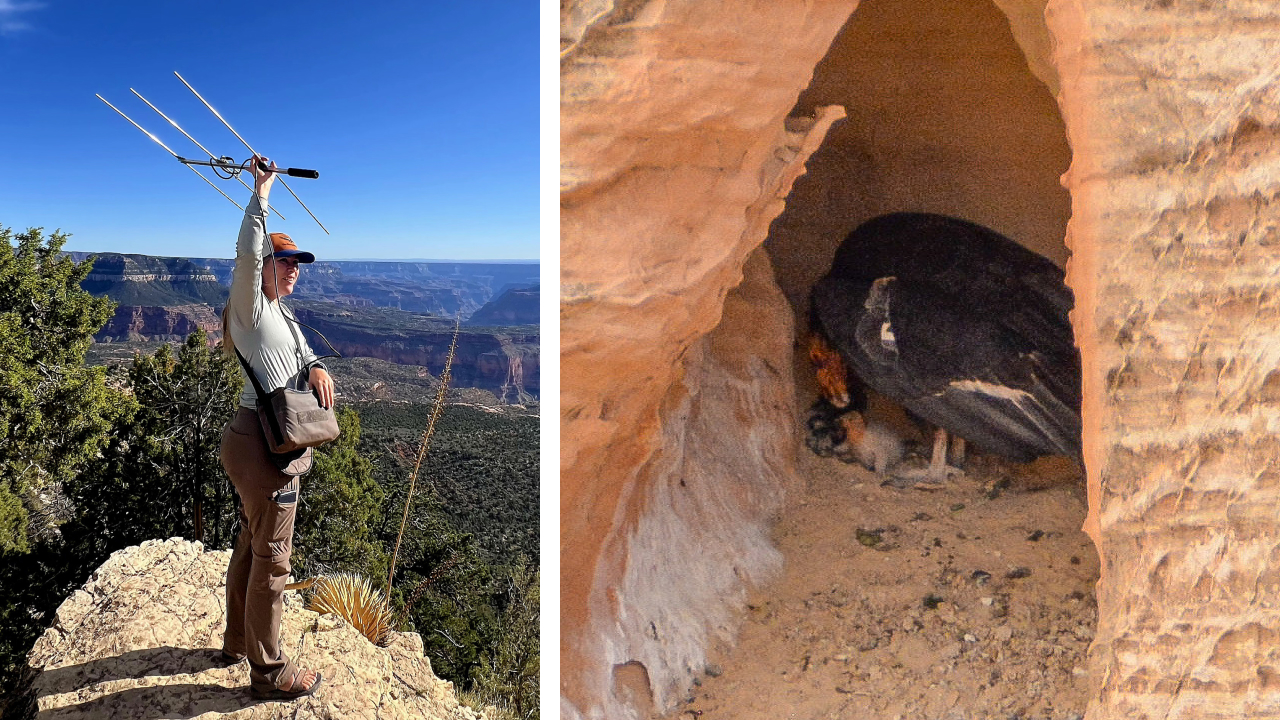
Of the confirmed nestlings, one was lost within its first month for reasons that remain unclear. Another nest shows signs that its young may not have survived, though our team hasn't been able to confirm that in person yet. As of this summer, our field team is closely monitoring three confirmed nestlings, all progressing well and expected to fledge later this fall. We have officially welcomed to the flock Condors 1440, 1446, and 1453. Even a strong season for condors comes with real losses. It's part of what makes each surviving nestling so significant.
That significance is exactly what we'll be celebrating on September 26, when The Peregrine Fund and the Bureau of Land Management host our annual California Condor release at Vermilion Cliffs National Monument in Arizona. Held on National Public Lands Day, the event gives the public a rare chance to watch young condors take their first flight into the wild. This year’s release is extra special, as it recognizes the 30th anniversary of the first condor releases in Arizona back in 1996.
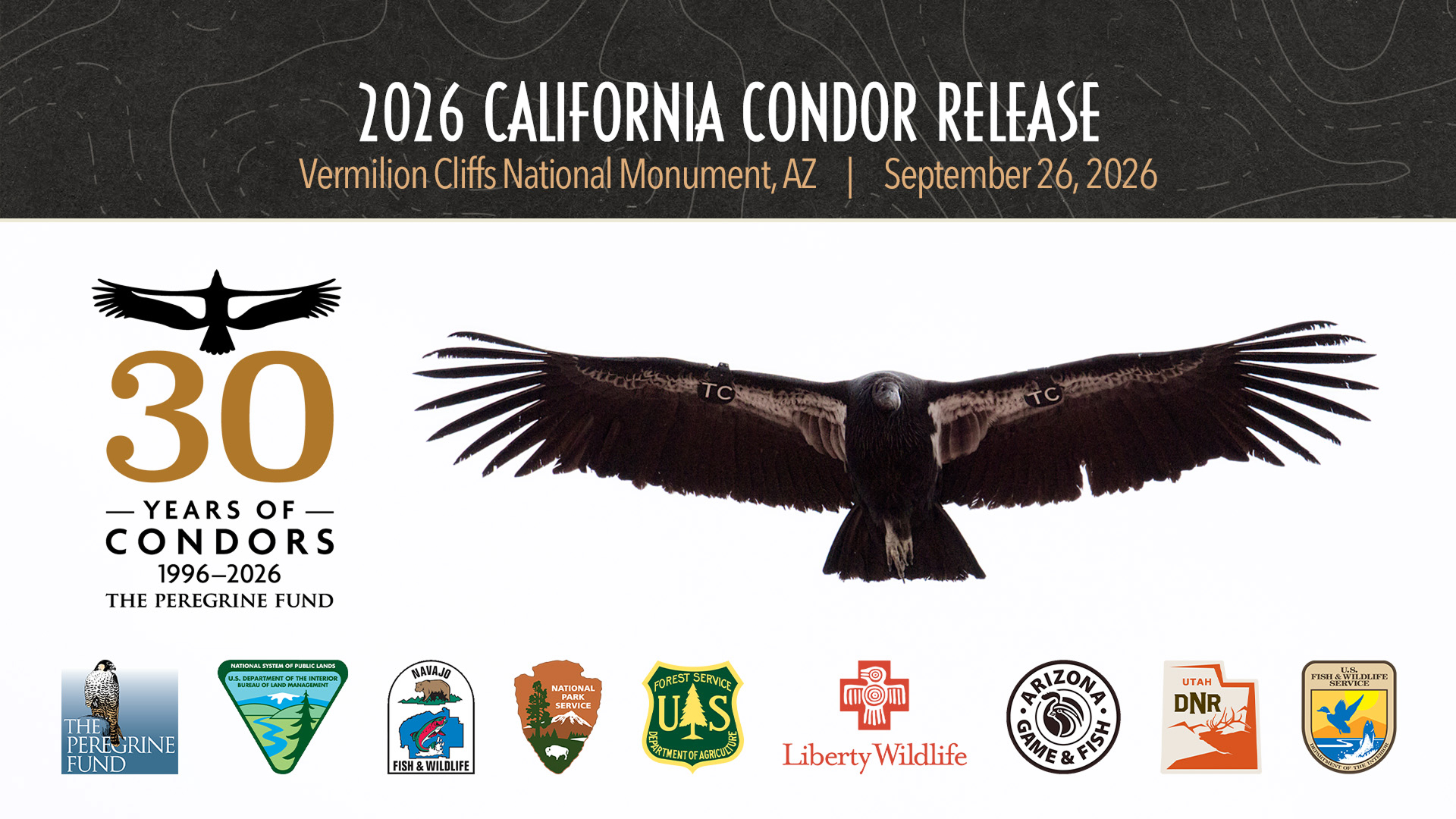
The celebration kicks off at 10 a.m. MST, with the release pen opening at 11 a.m. Attendees can talk with condor biologists, learn about the recovery program, and enjoy a festival atmosphere while waiting for the big moment. Can't make it to Arizona? The event will be livestreamed on The Peregrine Fund's YouTube channel starting at 11:30 a.m. MDT, complete with a live Q&A for virtual viewers.
More than 40 years after California Condors nearly disappeared, each nesting season and every release contributes to the same goal: a future where this species no longer needs our help to survive.